November 7, 2012

Yesterday was a good day for M2M.
TeliaSonera’s M2M Symposium 2012 was a well organized full-day event in Stockholm with almost 30 exhibitors, over 300 conference delegates and a number of great speakers. Telia’s CEO Lars Nyberg stated that M2M is the third wave of mobile communication with massive impact on society and businesses. Hans Dahlberg, Head of M2M Globally at TeliaSonera dressed this in numbers and expect one billion connected devices in the Baltics and Nordics by 2020, with 100 million of them using a SIM card. He also announced that TeliaSonera signed an agreement with Ericsson to implement the Ericsson Device Connection platform (EDCP) to prepare for the market take-up.
This was a good day for M2M since it manifested continuous development of the M2M market. But several speakers said that the M2M questions now have reached the board rooms which I believe to a large degree is wishful thinking. Decision makers need to understand the potential implications of M2M to their industry and business but unfortunately few do that today. But we are working hard to evangelize them and I gave my pitch about “data being the gold of M2M” also yesterday.
 Leave a Comment » |
  M2M, M2M Service Enablers | Tagged: 2020, B3IT, EDCP, Ericsson, Hans Dahlberg, Internet of Things, Lars Nyberg, M2M, SIM, Telia, TeliaSonera |
  Permalink
 Posted by magnusmelander
October 30, 2012
 ITS World Congress in Vienna is over. A well organized high-profile event with ministers, a grand opening event and a grand ball. The large exhibition halls were full of technology and complex drawings, the seminar program extensive and ministers from all over the world attended. We have seen the movie before: there was full agreement among delegates, speakers and exhibitors also at the 19:th ITS World Congress that ITS is important to save the world, increase safety and security and improve efficiency for people, organizations and societies. A lot of things are happening in the field but still too many “one road here and one road there pilots”.
But there are three fairly new enablers in the ITS market that can make things happen big way:
- – the smartphones and pads allowing us to visualize complex things and deliver relevant real-time information for powerful decision-making
- – the Open Data initiatives carried out in Europe and elsewhere enabling developers to access enormous amounts of relevant data for innovative ITS solutions
- – the rapidly growing M2M market is feeding Service Enablers with data and together with the Open Data sources this enables faster and more cost efficient development and maintenance of applications.
We have what we need to start taking real advantage of ITS now. Decision makers need to be brave enough to make the right decisions: ensure a strategy for management of data, use of M2M, etc. then go from pilots to action, open up the data and let the entrepreneurs figure out what users want. This will help us realize the benefits of ITS in terms of efficiency, sustainability, security and convenience.
Leave a Comment » | ITS, M2M, M2M Service Enablers, Safety and Security, Transportation | Tagged: B3IT, convenience, ITS World Congress, M2M, Open Data, pads, PSI, security, smartphones, sustainability, Traffic, Transportation, Vienna | Permalink
Posted by magnusmelander
October 11, 2012
 Services Enablement is the magic that turns generic communication into specific M2M applications and as such absolutely key to a positive development of M2M. In order to educate the market about the importance of Services Enablement and to promote Swedish Services Enablers I initiated Swedish M2M Services Enablers – SMSE – in March 2012. With the most recent additions we are now eight companies in the alliance.
The Mobile Future conference followed by Mobilgalan award dinner is the key mobile industry event in Sweden since many years and includes the most prestigious mobile awards ceremony. Yesterday the organizers of the event, Mobil and Mobil Business, announced nominations to the
Guldmobilen (Golden Mobile) awards 2012. M2M was introduced as a new category for 2012 which underlines the importance of M2M to the mobile industry and progress in market penetration. Four of the five nominated companies in the M2M category are members of the SMSE alliance which clearly communicate the importance of Services Enablement for the M2M market to develop well. This is all very good news and a concrete evidence of progress. Please join me congratulating
Maingate, Kombridge, Info24 and Springworks for their nominations!
Leave a Comment » | M2M, M2M Service Enablers | Tagged: Awards, B3CC, B3IT, Guldmobilen, Info24, Internet of Things, IoT, Kombridge, M2M, Machine-to-Machine, Maingate, Mediaprovider, Mobil, Mobil Business, Mobil Future, Mobilgalan, Services Enablers, SMSE, Springworks | Permalink
Posted by magnusmelander
October 8, 2012
 We connected businesses and people to the Internet to get mail and web. That was an easy sell! We got it and we discovered a lot of more important things to use the Internet for, increasing productivity and efficiency in organizations across the globe tremendously. Then, clever people started to utilize the data created to invent new applications and business models. Google, Amazon, eBay and Facebook are just a couple of well-known examples. Since nobody had a clue about what the Internet would bring, ignorance was often an acceptable reason for failure at the time.
Now we are connecting also things to the Internet. Once again we focus on connectivity and operational values. Efficiency, Security, Sustainability and Convenience are the key values that M2M and the Internet of Things offer. Soon we will start to see clever people utilize the data created to invent new applications and business models. Well, some have already started. We have seen the movie before and the early warning systems works perfectly well this time why ignorance will not be an acceptable excuse.
It’s about time for decision makers to get on top of the M2M development and what it can do to their organization and industry. There are many ways to find information including articles, blogs, conferences and reports (I obviously recommend M2M Business Strategy & Planning which I am the proud author of) but the important thing is to get going, now.
Leave a Comment » | Business Models, M2M | Tagged: Amazon, B3CC, B3IT, Business model, business models, convenience, decision maker, early warning systems, eBay, efficiency, Facebook, Google, increasing productivity, Internet of Things, IoT, M2M, Machine-to-Machine, security, sustainability | Permalink
Posted by magnusmelander
October 3, 2012
 The magic between the generic communication services and the specific application providing desired value to the users business is what we call M2M Services Enablement. This component of a M2M solution is absolutely vital since it shortens time and effort to develop the solution and minimize the effort to maintain and further develop the solution. The more robust and complete the Services Enablers become, the more users will decide to use M2M solutions. Services can be applied in three different ways: communication providers can add it on top of the connectivity, owners of the connected things can run Services Enablement in-house and one can use an independent third-party.
From a pure technical point of view Services Enablement platforms are generic but the successful providers of these services will be very focused on a specific niche or industry. If we look at a straight forward consumer solution like sleep monitoring, there are several solutions available. But one day there will be a market leader and that solution will definitely include some kind of intelligence applied on the information gathered in the cloud. It could typically be world-class sleep experts who can look at your data and give advice or comparisons to relevant indexes. With such services available it will be difficult to sell a plain stand-alone sleep monitoring solution. What is done with the information collected will differ from industry to industry but the logic will still be the same: players in an industry will benefit from using the Services Enabler who can add most value to their business and they will most likely end up using the same one. Following this logic there will be a large number of Services Enablers each focused on a specific industry, application or niche. The marked development for Services Enablers seems likely to follow Geoffrey Moore’s theories about “crossing the chasm”. Targeting a specific pin in bowling alley is the way to cross the chasm. When on the other side, it’s possible to target another pin, using the first pin as reference.
I continue develop the Swedish M2M Service Enablers (SMSE) alliance and we just included two more companies: Springworks and Episcope. They both follow the logic above and focus on the Automotive industry and Process Industry respectively. I continue to believe that M2M Services Enablement will be a forte for Swedish start-ups.
1 Comment | Cloud computing, M2M, M2M Service Enablers | Tagged: apps, B3CC, B3IT, chasm, crossing the chasm, Episcope, Geoffrey Moore, Internet of Things, M2M, Machine-to-Machine, SMSE, Springworks, Swedish start-ups, Traffic | Permalink
Posted by magnusmelander
September 27, 2012
The oneM2M Partnership was established this summer to drive creation of international standards for M2M Services. The Open Mobile Alliance (OMA) has now joined oneM2M as its first Type 2 partner. The seven founding partners are the Association of Radio Industries and Businesses (ARIB), the Telecommunication Technology Committee (TTC) of Japan, the Alliance for Telecommunications Industry Solutions (ATIS), the Telecommunications Industry Association (TIA) of the USA, the China Communications Standards Association (CCSA), the European Telecommunications Standards Institute (ETSI) and the Telecommunications Technology Association (TTA) of Korea.
Every single initiative to establish interoperability between M2M services and devices across networks helps speeding up development and deployment of M2M solutions. Since the M2M market is tremendously fragmented the standardization efforts are quite difficult. But every step taken will make the M2M service layer more robust.
Leave a Comment » | M2M | Tagged: ARIB, ATIS, B3IT, CCSA, ETSI, Internet of Things, interoperability, IoT, M2M, Machine-to-Machine, OMA, oneM2M, Open Mobile Association, TIA, TTA, TTC | Permalink
Posted by magnusmelander
September 17, 2012
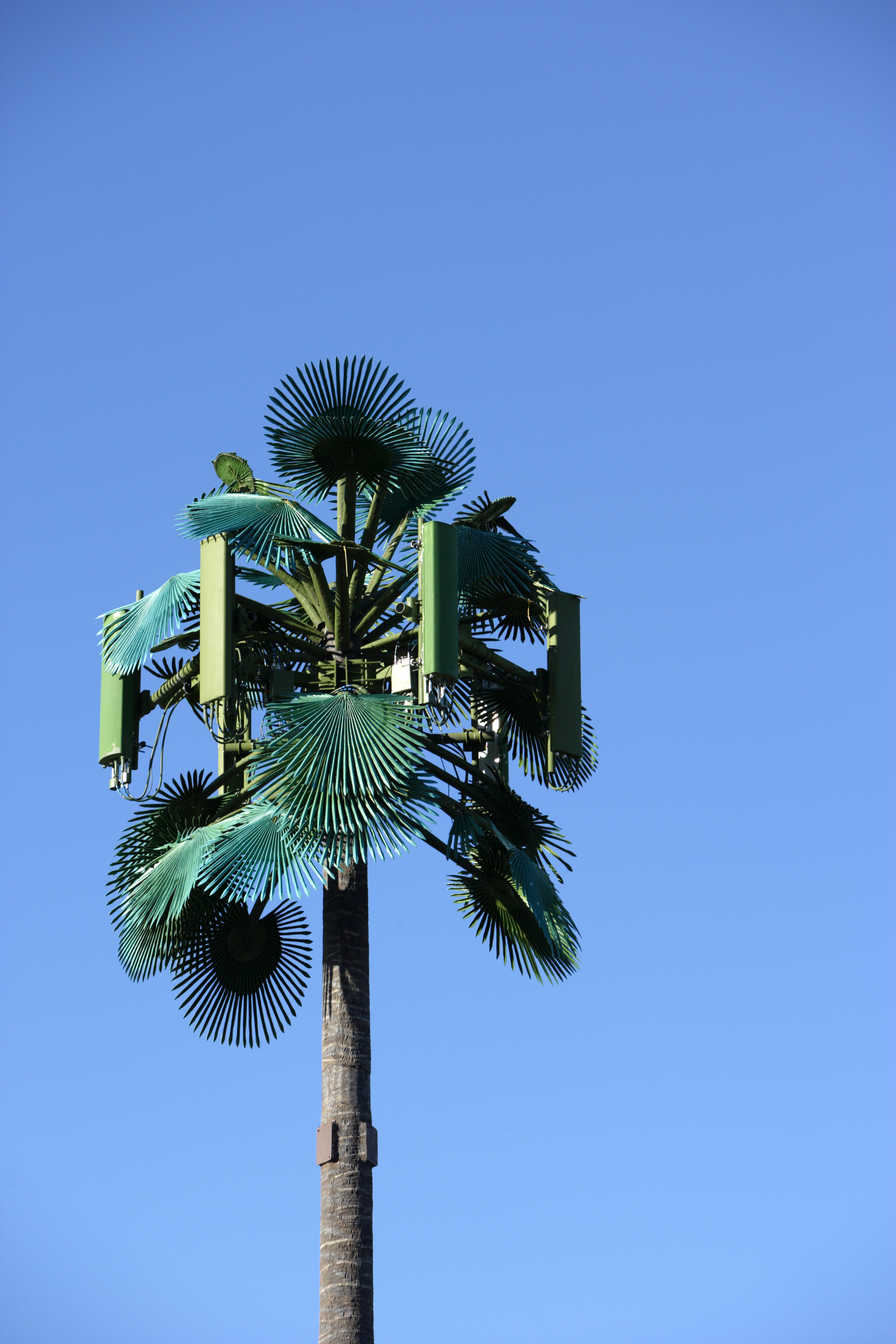
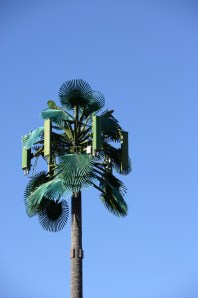 The recent announcement from AT&T that they will shut down their 2G network latest year-end 2016 has been discussed a lot lately. It is safe to say that mobile operators in developed markets will continue transitioning their handset users and networks towards 3G and 3G LTE. But mobile operators in general have a growing number of M2M terminals in their networks and they know that over 90% of them are using 2G modules today. Many of them are recently deployed and expected to run without intervention for maybe another five to ten years. Going there, changing SIM, terminal or in worst case the entire device is a very costly thing to do. This is probably why mobile operators in general don’t talk about when they plan to terminate their 2G networks. And I don’t think we will see many announcements like the AT&T one for the next few years, especially not in Europe. Also, let us not forget that many operators in developing countries only have 2G so it will definitely be around for quite some time.
Over the air provisioning of SIM-cards will solve some of the 2G sunset problems but if you need another module in your terminal it will obviously not help. One or two operators in a market, or why not an MVNO, can gather all the 2G terminals and continue service them until the bitter end. The remaining operators would lose some clients but free themselves to go wild on 3 and 4G.
More and more new M2M solutions are using 3G and 3G LTE now. This is natural especially when applications are data rich and require low latency. At Qualcomm IQ last week in Berlin, Steve Mollenkopf, President & COO Qualcomm, stated that one million new 3G connections are added each day. Most of them are not M2M but it means that 3G network capacity and coverage is rapidly improved around the world. And modules and components are coming down in price as volumes grow. And even 3G LTE is spreading. According to Global mobile Suppliers Association (GSA) 96 operators have launched commercial LTE services in 46 countries so far. But the recent announcement of iPhone 5 reminds of the fragmented frequencies of 3G LTE which needs to be taken into account when looking at a specific M2M 3G LTE solution. 3G LTE uses frequencies between 698 MHz – 3800 MHz, divided in 25 bands for FDD (Frequency division duplex) and 11 bands for TDD (Time division duplex).
Leave a Comment » | M2M, Networks | Tagged: 2G, 3G, 3G lte, 4G, AT&T, B3CC, B3IT, Berlin, FDD, GSA, Internet of Things, latency, LTE, M2M, modules, Mollenkopf, MVNO, OTA, over-the-air, Qualcomm, Qualcomm IQ, SIM, TDD | Permalink
Posted by magnusmelander
September 11, 2012
 Keeping track of things can create a lot of value. It has already been exploited in various ways to keep track of things like goods, cars, boats, kids, containers and pets. But combinations of weight, cost, size and technology have been limiting the use significantly.
I always claim that as long as we know what we want to achieve, we have technology today to solve it. In the case of real-time tracking, spectacular progress has been made over the last few years. Let me share an exciting example.
A traditional way to track birds has been to secure an RF transmitter on the bird and manually detect the radio beacons by using at least two receivers with directional antennas on ground. This difficult and all manual process is disturbed by bad weather and each individual bird needs to have a transmitter using a unique frequency. The poor data provides little information about each bird’s movements and life.
Today birds in the Balkans are tracked real-time by using an ultralight and ultra-efficient M2M-solution sending information every ten or five minutes to a monitoring central. The solution on the bird includes a GPS receiver, solar panel, battery, an accelerometer, a micro processor and a GSM module using GPRS to send the data. The weight of the gear is 70 grams, the dimensions are 90 x 46 x 15 mm and it is supposed to work for at least 3 years.
Animal tracking devices must in general weigh less than 5% of the animal’s weight so the solution can be carried by birds heavier than 1,4 kg. But there is already an effort to bring down weight of the tracking device to 25 grams for birds heavier than half a kilo.
Now the researchers can leave their rubber boots and directional antennas at home to focus on understanding the great information collected. And the important efforts to protect rare birds hopefully give better results. But what could be tracked in your organization to create value and maybe change the game?
Leave a Comment » | Inspiring example, M2M | Tagged: B3IT, bird tracking, GPRS, Internet of Things, M2M, Machine-to-Machine, power efficiency, real time tracking, solar panel, ultralight | Permalink
Posted by magnusmelander
September 8, 2012
 The key deliverables of M2M are efficiency, security and sustainability. M2M can also deliver convenience which mainly is relevant for the people involved. Well designed M2M implementations often deliver across all of these areas.
Public bus transportation is an important part of the transportation system. To pick the bus should be safe, energy-smart and help improve efficiency in the city. And except for peak hours when buses might be full, the ride should be convenient. But even though buses are quite similar the drivers have different driving style. A recent study at the University of Lund concludes that it is more dangerous to go by bus than by car in cities. Injuries from traffic accidents with buses are rare but a lot of people hurt themselves when they fall during the ride, when jumping on or off the bus or at the bus stop. This is one area where the driver makes a difference. Energy consumption, impact on traffic flow and convenience for the passengers are other areas where the bus drivers knowledge and style makes difference.
The public bus company in the city of Borås in Sweden are now installing a M2M system in the buses which measures how well the drivers drive. The metric used is passenger comfort and a lamp indicates performance: red means poor, yellow is ok and green is great.
I like this a lot since it’s an easy way to improve something in many different ways. Just by showing the performance the drivers will improve their driving – it is an old truth that what is measured gets better. The project makes the company and it’s employees aligned to what is considered important. And last but not least, the “red drivers” get training and the “green drivers” a bonus. What a wonderful way to make things better.
Leave a Comment » | Inspiring example, ITS, M2M, Safety and Security, Transportation, User Interaction | Tagged: B3CC, B3IT, Borås, bus driver, bus stop, convenience, eco driving, efficiency, Internet of Things, M2M, Machine-to-Machine, passenger comfort, public bus, safety, security, sustainability, Traffic, Transportation, transportation system, University of Lund, User interaction | Permalink
Posted by magnusmelander
August 27, 2012
 M2M For Real™ is my method to help people identify potential value from M2M in their organization. I have used it with different types of organizations and also with 150 people from different companies in a seminar. Short real-life examples are used to inspire and push creativity into the process. The examples are short since we don’t want to educate people about another industry, just create inspiration and ideas. Since they all come from the real world it helps give the feeling that M2M is here now. I have decided to start share examples like that in my blog thus hopefully help people find relevant examples for their own efforts. I will most often not mention the companies involved but sometimes I will. In order for the examples to be easy to search for I will title and tag them “Inspiring example”.
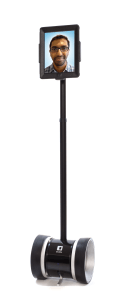
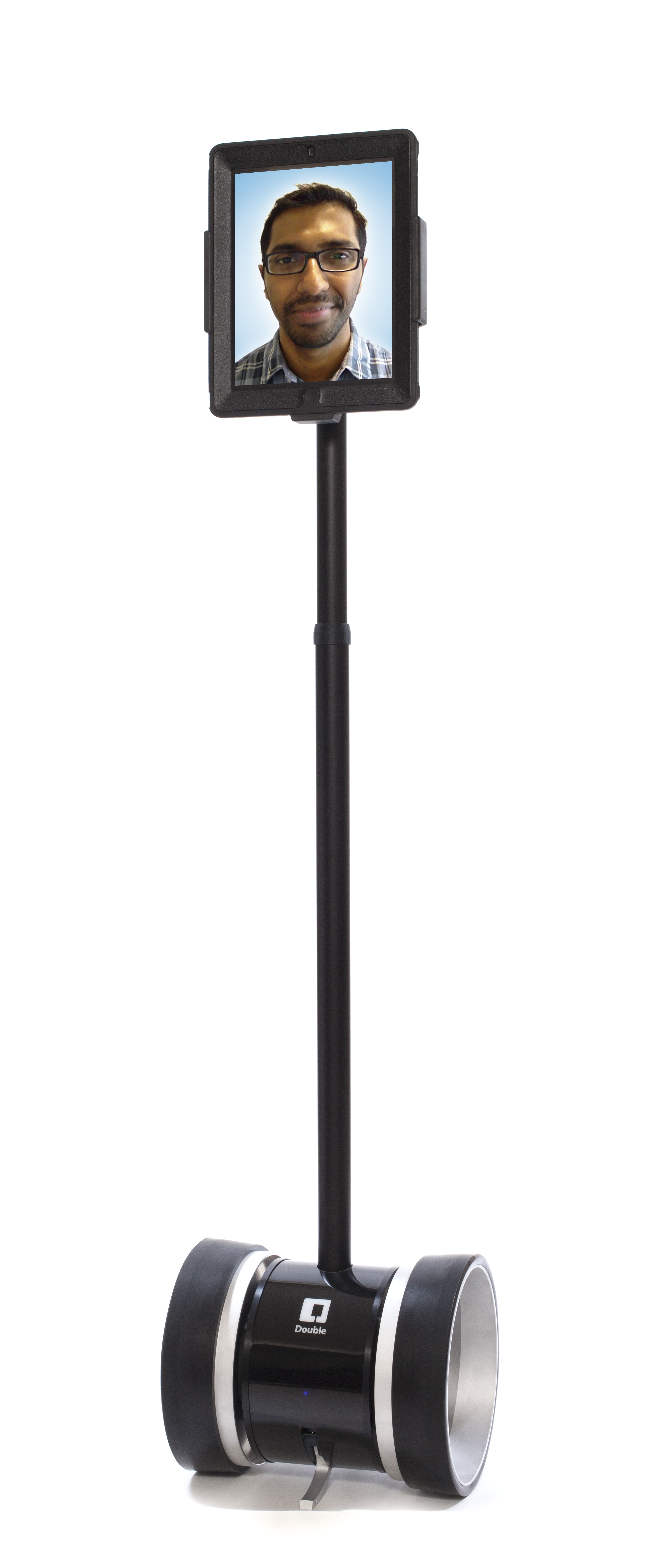
As the first inspiring example I wanted to share something really exciting: Double. It is an elegant minimalistic remotely controlled iPad holder on wheels. It combines elegance and great functionality with the power and ease-of-use of the iPad. You control the small silent robot remotely and can navigate it into any meeting or private discussion you want. Or take a close look at a painting in a gallery. Since the hight is adjustable Double can meet people face to face regardless if they sit or stand. The rechargeable batteries last all day and if you order today and pay US 2000$ you will have your Double early 2013. It is easy to fall in love with Double. Take a look and enjoy the movie.
So why do I mention Double here? It is a wonderfully designed M2M solution and there are serious efforts made to explain what we could use Double for: Video conferencing 2.0, tours without being present, promotion in public places like retail stores, etc. I am not convinced. But I believe a lot of people will buy Double simply because they can turn any home or office into a much cooler place. But the real reason why Double is important is that it creates inspiration and ideas. Just knowing that it is possible to get a nice, easy-to-use, remotely controlled communicating robot for 2.000 dollars (not 100.000 dollars) will make a lot of people come up with ideas where they can use Double to create value for them or their organization.
Leave a Comment » | Inspiring example, M2M, User Interaction | Tagged: B3IT, Inspiring examples, Internet of Things, iPad, M2M For Real™, Machine-to-Machine, Robot, usability, User interaction | Permalink
Posted by magnusmelander
 Yesterday was a good day for M2M. TeliaSonera’s M2M Symposium 2012 was a well organized full-day event in Stockholm with almost 30 exhibitors, over 300 conference delegates and a number of great speakers. Telia’s CEO Lars Nyberg stated that M2M is the third wave of mobile communication with massive impact on society and businesses. Hans Dahlberg, Head of M2M Globally at TeliaSonera dressed this in numbers and expect one billion connected devices in the Baltics and Nordics by 2020, with 100 million of them using a SIM card. He also announced that TeliaSonera signed an agreement with Ericsson to implement the Ericsson Device Connection platform (EDCP) to prepare for the market take-up.





 connectcompute