 The automotive and transportation industries are both significant contributors to our urban and planet challenges. I have been focusing on these two industries for some years since I believe both can change relatively quickly thus become major contributors to our ability to meet the sustainability goals and stop ruin our planet. And even better, they can drive rapid change themselves without being forced by legislators which opens a classic opportunity for innovative players to gain massive brand equity. And this time it’s for a good cause and not just by adding features, design and marketing dollars.
The often used term for the ultimate solution is Mobility-as-a-Service or MaaS, which have been talked about for many years. But up until now we have rather seen more vehicles on the streets and roads than better utilisation of the ones we already have. Car sharing services have been rolled out fighting for the same few parking lots and adding up to the jam already in place. And in many cases they already have been shut down like Autolib in Paris and in Stockholm car2go and DriveNow. Connected bicycles and scooters have been added and in some cases also already been shut down or stopped by city authorities. An average car in a city around the world is used around 3-4% of the time which obviously is massive waste of space, money and the planet.
The second major thing that will happen in the mobility market 2019 is that we finally will see the first mobility ecosystems being launched. This will lead to more data-driven innovation in the mobility market but more importantly the first limited Mobility-as-a-Service offerings being launched. I am involved in discussions with cities who are eager to see MaaS services in their cities as well as enterprises who want to offer their employees MaaS services instead of combinations of company cars, rental cars, public transportation and taxi. In both cases they are going after commercial benefits and to position themselves as doers when it comes to the sustainability challenges and corporate responsibility. The first ones will typically solve the easier parts of a MaaS service like integration of public transportation and parking services but the real challenges are to integrate cars, busses and trucks in the services which is why we at Tantalum started there. An event to recognise is the recent joint Daimler and BMW announcement about combining several vehicle related services including myTaxi, car2go and DriveNow under one umbrella. But there are many other activities in this field and I hope all cities in the world start working seriously on this now. Every single success here will make us all winners!


 Posted by magnusmelander
  Urbanisation continuously increases the challenge for cities to be good places to visit, live and work in. Cities today are more or less always designed around cars and today it is impossible to add roads and parking to meet the ever-growing demand. Investments in public transportation, bicycle lanes and streets for walking to reduce the number of cars in the cities are expensive but even worse, takes long to implement. Since each city has its own unique situation the responsibility to deal with the issue has fallen in the knees of city administrations rather than nations. But at the same time traffic infarct in cities has severe sustainability impact to the country and the planet.
 The next big thing is here even if it is hard to see. It’s Internet again, this time with the real world added to people and organisations already in place. That process is often called Internet of Things – IoT where the “T” refers to the physical world. And this time the impact on society, organisations and people will be even bigger than what Internet had last time since the real world most often is missing from the processes we try to digitalise today. The stock exchanges went through its digital transformation years ago since documents traded was digitalised, brokers on the floor was replaced by systems and money flows freely in cyber space. The remaining connection to the real world includes the companies themselves and some individuals still trading as well as the distance between the computers with the trading systems and the robot trader agents.
 Autonomous cars have been a hot topic for a couple of years now. It is indeed a very interesting and complex technical challenge connected to potential resolution of very serious problems and innovative use cases. But it is also about
  Internet has enabled a new type of business opportunity where an internet based “business system” is used to collect, organise, manage and market a lot of small and local businesses or individuals, across boarders. Popular examples today are taxi, food delivery and renting of private homes. This is obviously a very efficient way of re-organising a business (think replacing hundreds, thousands or millions of business systems and people) and it provides the users with some really neat new features (think use the same taxi app wherever you go, get rated drivers and pay automatically from your credit card). It also provides the people who actually deliver the services advantages (think efficient marketing, rated customers and maybe low barriers to start their business). The most common issue raised by Uber drivers and hotels that I have been talking to lately is that the commission is high (maybe 20-25%). No wonder that investors are working hard to figure out who the winners will be in different market segments.
 The rapid growth of Internet some twenty years ago brought massive innovation across countries and industries. Creative and ambitious people of all sorts gathered around the opportunity followed by enormous amounts of money, people leaving their established employers for startups and a gold-digger style era.
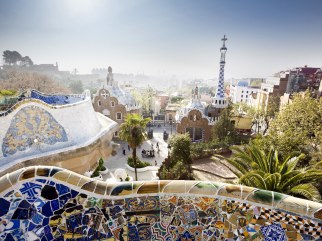 Most cities have jumped on the Smart City train and it is considered an important and good thing to do by virtually everyone. But it is unclear who drives that train, where it is going and when it will arrive. I prefer talking about Great Cities since that is something we all understand, can argue about and contribute to. A Great City to me is a safe, sustainable and efficient city where people are healthy and happy. A place I would like to live in, work in and visit. It takes systematic and continuous innovation to become and stay a Great City, and systematic innovation requires infrastructure and scalable platforms to be in place.
 Digitalisation is frequently used as the name of the game today. But digitalisation, i.e. conversation from analog to digital representation of information, started some 60 years ago and has been going on ever since. When a process is fully digitalised, from end to end, the process will be much more efficient than before. But most processes today are only partially digitalised which is like building a bridge and leve some meters here and there. Let’s take the example of a smart electricity meter, where the collection of usage data is digitalised and hopefully the receiving systems at the energy company. But then the processed details often are put on paper and sent to the customer who hopefully pays in a digital fashion or god forbid calls customer service.


 The car industry has its challenges. From being the ultimate provider of freedom, personal transportation and quality of life it now is supposed to solve the safety and sustainability issues it created. The very complicated and expensive cars of today are not utilised enough (5,5% according to my
  connectcompute