September 17, 2012
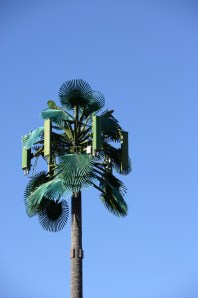 The recent announcement from AT&T that they will shut down their 2G network latest year-end 2016 has been discussed a lot lately. It is safe to say that mobile operators in developed markets will continue transitioning their handset users and networks towards 3G and 3G LTE. But mobile operators in general have a growing number of M2M terminals in their networks and they know that over 90% of them are using 2G modules today. Many of them are recently deployed and expected to run without intervention for maybe another five to ten years. Going there, changing SIM, terminal or in worst case the entire device is a very costly thing to do. This is probably why mobile operators in general don’t talk about when they plan to terminate their 2G networks. And I don’t think we will see many announcements like the AT&T one for the next few years, especially not in Europe. Also, let us not forget that many operators in developing countries only have 2G so it will definitely be around for quite some time.
Over the air provisioning of SIM-cards will solve some of the 2G sunset problems but if you need another module in your terminal it will obviously not help. One or two operators in a market, or why not an MVNO, can gather all the 2G terminals and continue service them until the bitter end. The remaining operators would lose some clients but free themselves to go wild on 3 and 4G.
More and more new M2M solutions are using 3G and 3G LTE now. This is natural especially when applications are data rich and require low latency. At Qualcomm IQ last week in Berlin, Steve Mollenkopf, President & COO Qualcomm, stated that one million new 3G connections are added each day. Most of them are not M2M but it means that 3G network capacity and coverage is rapidly improved around the world. And modules and components are coming down in price as volumes grow. And even 3G LTE is spreading. According to Global mobile Suppliers Association (GSA) 96 operators have launched commercial LTE services in 46 countries so far. But the recent announcement of iPhone 5 reminds of the fragmented frequencies of 3G LTE which needs to be taken into account when looking at a specific M2M 3G LTE solution. 3G LTE uses frequencies between 698 MHz – 3800 MHz, divided in 25 bands for FDD (Frequency division duplex) and 11 bands for TDD (Time division duplex).
 Leave a Comment » |
  M2M, Networks | Tagged: 2G, 3G, 3G lte, 4G, AT&T, B3CC, B3IT, Berlin, FDD, GSA, Internet of Things, latency, LTE, M2M, modules, Mollenkopf, MVNO, OTA, over-the-air, Qualcomm, Qualcomm IQ, SIM, TDD |
  Permalink
 Posted by magnusmelander
September 11, 2012
 Keeping track of things can create a lot of value. It has already been exploited in various ways to keep track of things like goods, cars, boats, kids, containers and pets. But combinations of weight, cost, size and technology have been limiting the use significantly.
I always claim that as long as we know what we want to achieve, we have technology today to solve it. In the case of real-time tracking, spectacular progress has been made over the last few years. Let me share an exciting example.
A traditional way to track birds has been to secure an RF transmitter on the bird and manually detect the radio beacons by using at least two receivers with directional antennas on ground. This difficult and all manual process is disturbed by bad weather and each individual bird needs to have a transmitter using a unique frequency. The poor data provides little information about each bird’s movements and life.
Today birds in the Balkans are tracked real-time by using an ultralight and ultra-efficient M2M-solution sending information every ten or five minutes to a monitoring central. The solution on the bird includes a GPS receiver, solar panel, battery, an accelerometer, a micro processor and a GSM module using GPRS to send the data. The weight of the gear is 70 grams, the dimensions are 90 x 46 x 15 mm and it is supposed to work for at least 3 years.
Animal tracking devices must in general weigh less than 5% of the animal’s weight so the solution can be carried by birds heavier than 1,4 kg. But there is already an effort to bring down weight of the tracking device to 25 grams for birds heavier than half a kilo.
Now the researchers can leave their rubber boots and directional antennas at home to focus on understanding the great information collected. And the important efforts to protect rare birds hopefully give better results. But what could be tracked in your organization to create value and maybe change the game?
Leave a Comment » | Inspiring example, M2M | Tagged: B3IT, bird tracking, GPRS, Internet of Things, M2M, Machine-to-Machine, power efficiency, real time tracking, solar panel, ultralight | Permalink
Posted by magnusmelander
September 8, 2012
 The key deliverables of M2M are efficiency, security and sustainability. M2M can also deliver convenience which mainly is relevant for the people involved. Well designed M2M implementations often deliver across all of these areas.
Public bus transportation is an important part of the transportation system. To pick the bus should be safe, energy-smart and help improve efficiency in the city. And except for peak hours when buses might be full, the ride should be convenient. But even though buses are quite similar the drivers have different driving style. A recent study at the University of Lund concludes that it is more dangerous to go by bus than by car in cities. Injuries from traffic accidents with buses are rare but a lot of people hurt themselves when they fall during the ride, when jumping on or off the bus or at the bus stop. This is one area where the driver makes a difference. Energy consumption, impact on traffic flow and convenience for the passengers are other areas where the bus drivers knowledge and style makes difference.
The public bus company in the city of Borås in Sweden are now installing a M2M system in the buses which measures how well the drivers drive. The metric used is passenger comfort and a lamp indicates performance: red means poor, yellow is ok and green is great.
I like this a lot since it’s an easy way to improve something in many different ways. Just by showing the performance the drivers will improve their driving – it is an old truth that what is measured gets better. The project makes the company and it’s employees aligned to what is considered important. And last but not least, the “red drivers” get training and the “green drivers” a bonus. What a wonderful way to make things better.
Leave a Comment » | Inspiring example, ITS, M2M, Safety and Security, Transportation, User Interaction | Tagged: B3CC, B3IT, Borås, bus driver, bus stop, convenience, eco driving, efficiency, Internet of Things, M2M, Machine-to-Machine, passenger comfort, public bus, safety, security, sustainability, Traffic, Transportation, transportation system, University of Lund, User interaction | Permalink
Posted by magnusmelander
August 17, 2012
 A lot of people and animals are killed and injured in road traffic, road vehicles impact our environment significantly and road traffic is an important part of efficient transportation of people and goods. With the key promises of M2M being safety, sustainability and efficiency there is a perfect match between road traffic and M2M. A lot of research projects are on-going and part of the overall efforts towards the ITS (Intelligent Transportation Systems) vision.
The air traffic system has for many years been developed aiming towards zero accidents. This process has made air traffic very safe and I am told that most of the remaining accidents are caused by human beings. The use of UAV (Unmanned Aerial Vehicle) and UCAV (Unmanned Combat Aerial Vehicle) is increasing mainly to avoid dull, dirty or dangerous flying missions. We have for example all heard about drone attacks (military planes without pilots) in countries like Pakistan and Afghanistan.
If we can fly helicopters and aircrafts without pilots we must be able to modernize the road traffic to make it safer, more friendly to nature and more efficient. And even if humans cause many or maybe most of the problems on the road we still don’t feel comfortable putting ourselves in the hands of technology on the roads or in the air. But this will change. The technical solutions are ahead of what we are willing to accept but carefully managed real life trials together with clear and big benefits will slowly make us humans agree to start using new solutions.
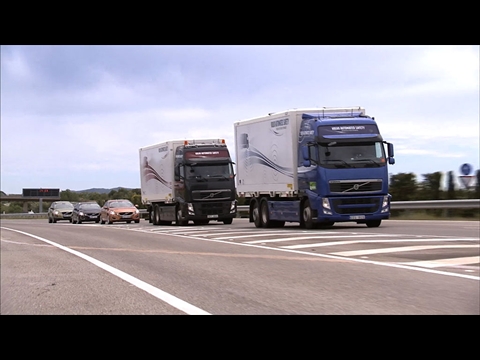
There are many advanced research projects in road traffic continuously pushing the frontier forward. Earlier this summer Volvo successfully led a road train consisting of a Volvo XC60, a Volvo V60 and a Volvo S60 behind a truck on a 200 km journey through Spain as part of SARTRE (Safe Road Trains for Environment). The cars outfitted with cameras, radars and laser sensors were six meters apart and drove safely 85 km/h without any driver interference. The vehicles in the test have covered some 10.000 km on test circuits before the trial. Beyond improved safety and sustainability road trains would allow us drivers to put a professional driver in command for a while, take a bite, check our mail and take a nap before taking control of the car again. Sounds great!Another interesting project is Google Driverless Cars. In May 2012 the first license for a self-driven car was issued in Nevada: a Toyota Prius modified with Google’s experimental driver-less technology. The team just announced that they have completed over 300,000 autonomous-driving miles accident-free, typically have about a dozen cars on the road at any given time, and are starting to test them with single drivers instead of in pairs.
ITS World Congress 2012 in Vienna October 22-26 is an interesting event for anyone interested in where road traffic is going. I’ll be there!
Leave a Comment » | ITS, M2M, Safety and Security, Transportation | Tagged: B3CC, B3IT, driverless, droner, Google, Internet of Things, IoT, ITS World Congress, M2M, Machine-to-Machine, road train, SARTRE, Toyota, Traffic, Transportation, UAV, UCAV, Volvo | Permalink
Posted by magnusmelander
August 8, 2012
 AT&T just announced that they will shut down their 2G network no later then January 1 2017. They want to free up spectrum for mobile Internet network capacity. “Well in advance of this change, we will reach out to our relatively small percentage of 2G customers and offer them options to meet their needs” says a spokesperson to Fierce MobileIT. According to Berg Insight AT&T had 13.1 million M2M subscribers by the end of 2011. It is often stated that the 2G share of the M2M subscriptions are bigger then 90%. I don’t know the AT&T mix but it is likely that at least half of their 13 million subscribers use 2G.
PricewaterhouseCoopers recently made a study and found that 60 percent of wireless operators plan on decommissioning their legacy networks over the next five years. Their study would suggest that more operators would like to make similar announcements as AT&T.
M2M terminals are often expected to be operational 5-10 years which makes the choice of network technology difficult. From a capacity point of view 2G is often enough and 2G modules are cheaper than modules supporting 3G and 4G/LTE. Coverage of the 3G networks are often not as good as the 2G networks. It is far too early for LTE networks to take over. Support for circuit switched connections which are required when moving terminals from the fixed phone networks (PSTN) to mobile networks is only available in 2G. It will be interesting to see what AT&T’s announcement will do to customers, regulators and other mobile operators. And what about countries were mobile networks are all 2G?
I believe this is a challenge for the development of the M2M market. As far as I understand it, AT&T will have to subsidize the remaining 2G M2M customers to replace terminals or loose the customers to other operators. This new situation for ongoing and planned M2M projects might delay or in worst case kill them if the up-front investment becomes substantially bigger. This news also explains why M2M customers need over-the-air provisioned SIMs.
3 Comments | M2M, Networks | Tagged: 2G, 3G, 4G, AT&T, B3CC, B3IT, CSD, Internet of Things, LTE, M2M, PSTN, PwC, SIM | Permalink
Posted by magnusmelander
August 4, 2012
 Single purpose M2M solutions have started to appear in the market. They are typically addressing one specific problem with a combination of hardware, software and communication. If the problem addressed is clear and considered big enough by many people and the solution works well then the willingness to pay should be possible to build a business around. Provided the solution uses the cloud to deliver the service from, then expanding the solution to include generic devices like smartphones, pads and PCs is an interesting next step at least to access the data but maybe to run the entire application on as well.
A good example is Coyote from France who claims over 1.7 million users of their speed camera alert system in Europe. The service is also available as an app for iPhone/iPad, Android, Blackberry and for Parrot. A Coyote device cost about 250€ including one year of service. A solution like this is also interesting for mobile operators since one agreement can sell hundreds of thousands subscriptions of the same type and each deal like this provides opportunities to add service enablement services on top of the connectivity.
The two key success factors of products like these are a high quality solution to a reasonable big problem and ease-of-use out of the box. Then people are willing to pay reasonably well for the service and word of mouth will work for marketing. Easy to buy and use solutions are also interesting in sales channels. It is quite likely that we will see many more single purpose M2M solutions onwards.
Leave a Comment » | Business Models, Cloud computing, Consumer market, M2M, M2M Service Enablers, User Interaction | Tagged: apps, B3CC, B3IT, Business model, Coyote, Internet of Things, IoT, M2M, Machine-to-Machine, speed camera, Traffic, Transportation, usability | Permalink
Posted by magnusmelander
July 3, 2012
The European Parliament just adopted a resolution where they call on the European Commission and Member States to make sure eCall is installed in every new vehicle by 2015. The Parliament consider this resolution a major step towards the roll-out of eCall in Europe that will have a significant impact on citizens’ safety.
This is certainly a good intention and with 35-40.000 Europeans killed and over a million injured in road accidents per year something needs to be done. But it is not obvious that eCall will make a big difference in that regard. Some countries don’t have national response centers which will make implementation more difficult and similar services from car manufacturers haven’t really become commercially popular. I guess the road towards less road traffic accidents starts with better drivers, better cars and better roads but I obviously hope eCall will save a lot of lives.
But connecting all new cars in a similar fashion could potentially make a difference in other ways. If some data would be made more openly available we could see a lot of new innovative services made available to drivers, owners, insurance companies and government agencies. Imagine apps like the Volvo App managing the parking heater etc becoming available for all cars, maintenance data becoming available to third party service companies, real time position data available to ITS systems, etc. And if some of these services really would take off the vehicle M2M retrofit market would be huge. We all know it by now: data is the gold of M2M.
Leave a Comment » | ITS, M2M, Safety and Security, Transportation, User Interaction | Tagged: apps, B3CC, data is the gold of M2M, eCall, European Commission, European Parliament, insurance, Internet of Things, M2M, m2m retrofit, On Call, open api, Traffic, Transportation, Volvo | Permalink
Posted by magnusmelander
June 18, 2012
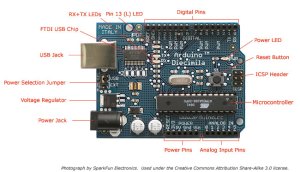 There are many reasons why M2M solutions will hit society, businesses and people with enormous power. Most of them relate to what happens when we connect things and put computing on top but one specific force is democratization of development tools – a similar brutal force that Basic and Hypercard gave to the PC industry, and that Apple provided the mobile industry with the App-concept. When thousands or millions of developers get going, innovation, specialization and competition happens big way.
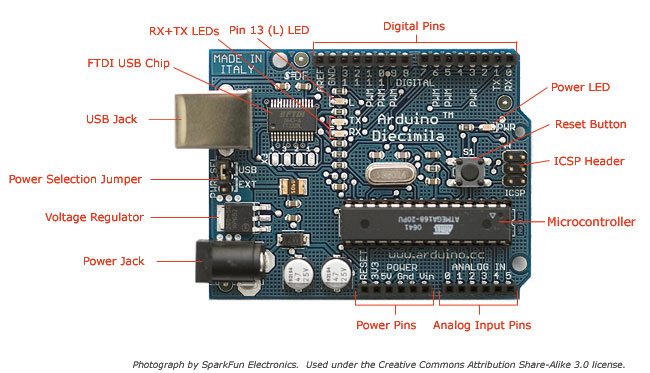
Arduino is an open well documented physical platform developed 2005 in the Olivetti town Ivrea, Italy. It is a platform which collect, compute and communicate data which makes it the perfect prototyping tool for students, hobbyists and professional developers to realize their device ideas. Today the affordable and easy to use development kits can be bought at the Radioshacks of the world. Nobody knows how many Arduino developers there are but over 300.000 boards have been sold, the ratio of cloning is currently estimated to one per original board and Arduino skills are more and more often requested in CVs.
Arduino supports Windows, Mac OS X and Linux and there are a number of boards available. They are really affordable and pre-assembled Arduino modules cost less than $50. The community is rapidly growing and it’s easy to join by for example following the Arduino blog.
Among the companies using Arduino for their tools and services are Google and Telefonica. And the more I dig into the world of M2M the more spectacular examples of Arduino projects I find. Imagine this: a 14 year old boy in Chile developed an Arduino machine which post a Tweet when detecting an earthquake and now this alert is sent to some 30.000 followers on Twitter.
This is only the beginning. The opportunities are massive but some risks are also involved. Many companies will experience difficult competition from unexpected directions and some will leverage these forces to strengthen their position in the market. Governments will see completely new solutions to old and difficult problems. And consumers will be offered new innovative services, many of them replacing products we buy today.
I’m fortunate to work and live in the middle of this period of great change!
Leave a Comment » | M2M | Tagged: Arduino, B3CC, B3IT, democratization of development tools, Google, Internet of Things, IoT, Ivrea, Linux, M2M, Mac OS X, Machine-to-Machine, Olivetti, Telefonica, Windows | Permalink
Posted by magnusmelander
June 4, 2012
 ABB acquires the Wi-Fi mesh pioneer Tropos Networks to strengthen its Utility Communications product group. California based Tropos Networks has delivered a large number of wireless metropolitan and campus networks over the last ten years or so and I would even say that they made Wi-Fi mesh a viable metro network solution to the market.
This acquisition by ABB is very interesting and underline the grande potential for especially smart grids but also other private network applications. Tropos has deployed private networks for applications like meter reading, ITS, mobile workforce, public safety, telemedicine, parking meters, etc.
M2M is required to solve the efficiency problems, the security issues and the sustainability challenges in the world. And many of these applications will use private networks for financial and/or security reasons. Each of these areas will develop to become ICT systems in the size of the Internet which is why really large global players invest early on. I suggest you keep an eye at GE, ABB, Siemens, IBM and similar players.
Interesting move ABB!
1 Comment | Healthcare, ITS, M2M, Networks, Safety and Security, Transportation, Utilities | Tagged: ABB, GE, IBM, ICT, M2M, mesh, meter reading, metro networks, parking meters, Private networks, public safety, Siemens, telemedicine, Tropos, WiFi | Permalink
Posted by magnusmelander
May 18, 2012
 M2M solutions using Mobile operator’s networks are growing quite aggressively. According to Berg Insight we have some 110 Million M2M SIM cards active today. But even if this impressive growth continues we will never reach the connected society within my life time unless generic, cost efficient, easy to install and use alternatives comes to market. It is not primarily a matter of communication technology – it is a matter of connectivity together with services enablement making it cost efficient to develop applications. Such solutions will use fixed or mobile wan connections to connect to the Internet.
At May 16 I stumbled over the first potential solution to the “M2M for the rest of us” solution – Electric Imp. They just left stealth mode introducing a line of Imp cards that can be installed on any electronic device to put it online and control it. The cards connect to the Internet and a cloud based service using Wi-Fi. In their own words: “take the best implementation of hardware, firmware and cloud service, build them into a single mass-produced product, and apply them to any device in the world”. The word Imp is borrowed from Arpanet’s Interface Message Processor. Developer preview Imp cards and developer kits will be available this summer and Imp cards will retail for $25 when available in the market. Electric Imp claim they have invented a solution for configuring Imp devices for Wi-Fi networks in seconds using iOS or Android smartphones.
I find this exciting since it sounds like Electric Imp has what it takes: a generic, cost efficient, easy to install and use solution for connecting things to the Internet. As an evangelist and investor in the early Wi-Fi days I am also exited to see bets on Wi-Fi in the M2M field.
Electric Imp has a great idea, strong founders, capable investors and address a massive market opportunity. Their success will be determined by how fast they will get hardware vendors to adopt their platform and put Imp-slots in their devices.
Leave a Comment » | Cloud computing, Consumer market, M2M, M2M Service Enablers, Networks | Tagged: B3CC, B3IT, Electric Imp, Imp, Internet of Things, IoT, M2M, Machine-to-Machine, SIM, smartphone, WiFi | Permalink
Posted by magnusmelander
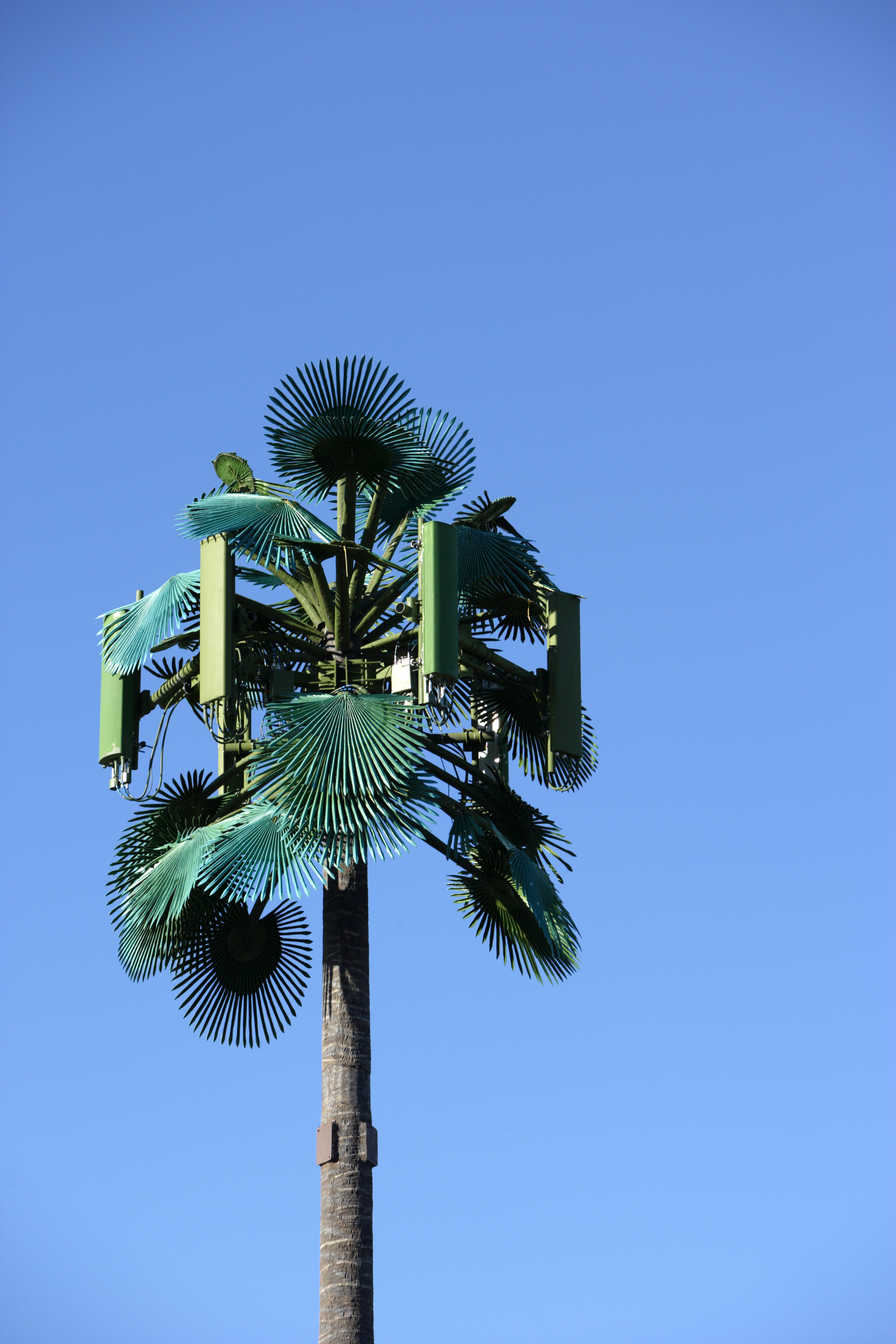 The recent announcement from AT&T that they will shut down their 2G network latest year-end 2016 has been discussed a lot lately. It is safe to say that mobile operators in developed markets will continue transitioning their handset users and networks towards 3G and 3G LTE. But mobile operators in general have a growing number of M2M terminals in their networks and they know that over 90% of them are using 2G modules today. Many of them are recently deployed and expected to run without intervention for maybe another five to ten years. Going there, changing SIM, terminal or in worst case the entire device is a very costly thing to do. This is probably why mobile operators in general don’t talk about when they plan to terminate their 2G networks. And I don’t think we will see many announcements like the AT&T one for the next few years, especially not in Europe. Also, let us not forget that many operators in developing countries only have 2G so it will definitely be around for quite some time.




 connectcompute