January 31, 2014

What a wonderful idea: a cute teddy bear full of sensors to track vital signs of the kid who is playing with it. Vulnerable babies will be measured and monitored without being bothered. And even better, the data collected will be more accurate than when they are bothered by a nurse or doctor. As well as taking measurements, nurses and parents can also communicate with their children remotely by playing songs and recording bedtime stories through the toy.
Two master students from Zagreb, Croatia, Josipa Majic and Ana Burica, came up with the idea and their joint baby, Little Teddy the Guardian, is now for sale at 169 EUR. He keeps an eye on health parameters like heart rate, oxygen saturation, body temperature, and stress levels. The idea behind disguising medical tech in a lovable toy is to provide pediatricians as well as parents with more accurate, consistent and reliable data points that will give a meaningful and complete insight in the child’s health condition. Every time a child takes Teddy The Guardian by the hand or puts Teddy’s paw on his forehead sensors detect the values, capture them and transmit in real-time to a mobile app where data is analyzed, visualized, managed and downloaded by the medical staff and parents.
I can see a lot of applications where sensors embedded in something else could open new possibilities and opportunities.
 1 Comment |
  Consumer market, Healthcare, Inspiring example, M2M, User Interaction | Tagged: babies, children, croatia, eHealth, healthcare, Internet of Things, IoT, M2M, Machine-to-Machine, mHealth, monitoring, sensors, teddy the guardian, User interaction |
  Permalink
 Posted by magnusmelander
December 11, 2013
 Companies are investing a lot of money year after year to communicate with their customers and influence their perception of their company and brands. The budgets are there basically to sow for future sales and they remain on the same level year after year measured as a percentage of sales. The ever-increasing challenge is the growing number of channels to be used, and the constantly changing relative importance of them. But the best channel by all means has always been the product itself. Customers who buy it has it and use it often for a long time. People around them might see them using it. Satisfied users as well as dissatisfied users are happy to tell others about their experience.
All of this is well-known facts. But what is less known is that it has become realistically possible to establish a continuous dialogue with the products and also the users of them depending of what product it is, by using modern M2M or Internet of Things technology. Examples of products that often are connected already are: trucks, electrical meters, cars, alarms, vending machines and coffee machines. They are typically connected for operational benefits like being able to tell the truck driver to go to a service facility and depending on where he is propose which one, for electricity companies to measure and report consumption almost in real-time, for vending machines to understand when it’s time to go there to fill it up and better schedule the service route, for coffee machine rental companies to change recipes over the air and for alarm companies to get the alarms automatically. This is all fine and the normal first phase of an M2M investment. Operational value is easy to realize and make ROI investments on thus easier to get project approval and budgets for.
As we all know by now: data is the gold of M2M. And with these things connected we can gather and interpret the data from the connected things and start use it to create strategic value. Examples could be that the owner of the truck could measure how drivers actually drive, provide training to them and become a more sustainable company, the electricity company could offer customers better price off-peak hours, vending machines would get decision support from real data to know what products to have on weekends and warm days in different parts of the country and to use dynamic pricing, coffee machine companies could tune the choice of coffee for different seasons and learn customer’s coffee drinking habits and the alarm companies could add new adjacent services to their alarm infrastructure to become more competitive. All these things are examples of how the collected data could be used to add brand value, competitiveness, customer loyalty, innovation and attractiveness for employees, etc.
We are in the teen-age of M2M aka Internet of Things and many companies have started to connect their things, mainly for operational reasons. But it is still very rare to see companies using the data to create strategic value. Most consumer goods is not connected and if it is, there is no organized use of the data collected. Most professional equipment isn’t connected either and if it is, the data is rarely used in an organized fashion to create strategic value.
But this is about to change and I think we will see a lot of new examples in 2014. A number of new relevant ways of connecting things are available including the power-efficient and very small Bluetooth 4.0 chips with innovative solutions like iBeacon, networks optimized for connecting millions of autonomous things like Sigfox and a host of different ways to associate real life things with an avatar on the Internet like QR-codes, smart cameras, RFID and innovative solutions from companies like Evrythng.
This isn’t about technology. It is only when clever strategists, progressive marketing directors, creative advertising agencies, determined product managers and innovative business developers really understand what is practically and financially possible today that true innovation beyond operational value creation starts to happen. Interesting examples of creative customer communication through products could be the Evian Smart Drop, Volvo’s On Call app enabling their B2B+B2C model and Apple’s recent launch of an iBeacon based service in all 254 Apple Stores in the US.
1 Comment | Business Models, Consumer market, Inspiring example, M2M, Markeing, User Interaction | Tagged: apps, Bluetooth, Brand, Evian, Evrythng, iBeacon, Internet of Things, IoT, M2M, Machine-to-Machine, On Call, QR condes, Rfid, Sigfox, smart camera, Smart Drop, Volvo, Wbird | Permalink
Posted by magnusmelander
November 10, 2013
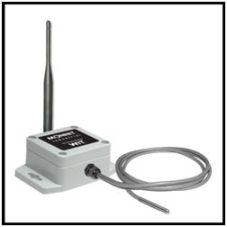 Data is the gold of M2M! Today even “monkeys” can connect a couple of things, collect the data in the cloud and present it in an app. And now, in its teenage, the M2M aka Internet of Everything industry is splitting up in three distinct parts: collecting data (sensors and devices), managing data (analyzing, manipulating, combining data) and distributing data (apps, web, integration in business systems, decision-making systems). Each of these three parts have to be perfectly resolved to make a great M2M solution: efficient and sensitive sensors connected using relevant networks, secure and efficient data management where understanding the context is absolutely required, and great, sticky UX in apps and web interfaces are examples from recipes of culinary M2M dishes.
It is when the collected data cautiously has been transformed into information and delivered into business applications that the value of M2M appears. The cold chain for the lobsters from Canada just delivered to the store is uninterrupted. The car that just alarmed the response center of an accident has three passengers. The route suggested by the navigator has risk for ice on a bridge 2 km from here.
With data transformed to information and delivered in relevant applications being the key for M2M solutions it is obvious that the access networks are secondary. Each solution in the hands of customers should ensure proper information delivery using the best available network option given the situation. Requirements on bandwidth, QoS, cost, latency, SLA, power, size, investment horizon, etc should determine which access network to use for each device and sensor. I see only two ways to deliver on this: either the service providers provide a portfolio of access options to serve the clients or the M2M Service Enablers will have to get access from a mix of service providers. At M2M Summit Scandinavia last week I was glad to hear that both Vodafone and Deutche Telekom share this view and aim to provide a solid portfolio of connectivity options for M2M customers.
Talking about access networks for M2M: Connode was just awarded M2M Company of the Year in Sweden by Mobil Business. Once again a great winner, once again a member in Swedish M2M Association.
1 Comment | M2M, M2M Service Enablers, Networks, User Interaction | Tagged: apps, B3CC, B3IT, Connode, Deutche Telekom, Internet of Things, IoT, M2M, M2M Summit, Machine-to-Machine, Mobil Business, network agnostic, SMSE, User interaction, UX, vodafone | Permalink
Posted by magnusmelander
September 13, 2013
I was chairing Short Range Wireless Forum in Amsterdam 2006 and
NFC was the hot topic of the day since Nokia announced the first NFC phone the day before. But the combination of its limitations and the fact that only some vendors decided to implement NCF seriously made it yet another promising technology that never took off. These days Apple is introducing iPhone 5C / 5S and iOS7. This launch is as always followed and debated by a lot of people but still very few seem to have captured
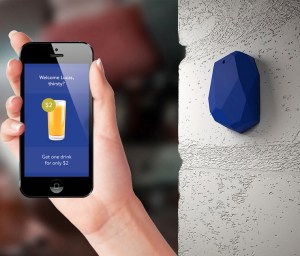
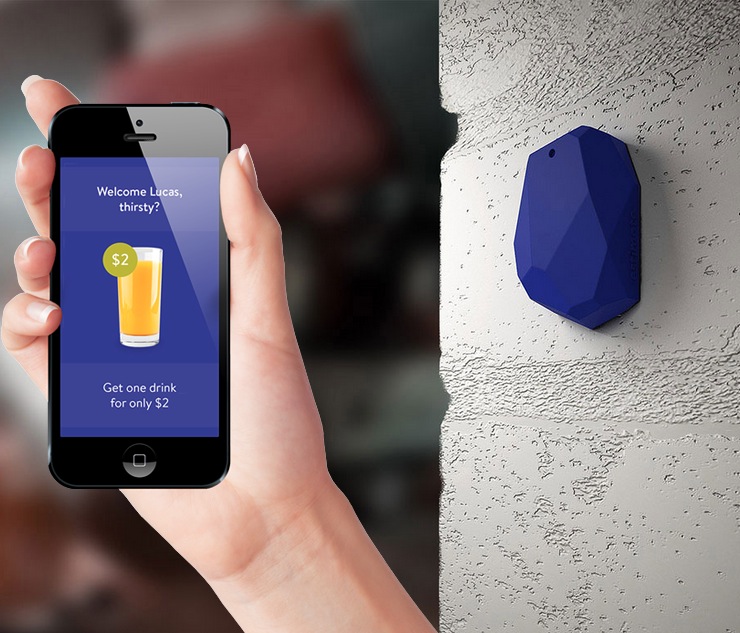
iBeacon. I believe that is yet a significant enabler by Apple which rapidly will become an important building block for Internet of Things applications and could make NFC redundant.Imagine entering into an indoor location like a University Campus. Your iPhone connects to iBeacon automatically over Bluetooth and depending on who you are it will provide you with directions where to go for the next class, it will take you to the canteen and take care of the payment leaving you with a receipt. One build wireless coverage in a location quite cheaply. Lets move to a department store, shopping mall or train station and the use cases are easy to see.A beacon, or mote, is like a lighthouse for radio transmission.
Estimote is s startup providing beacons supporting iBeacon. The beacons are a couple of centimeters big and include an ARM processor, accelerometer, flash memory and Bluetooth connectivity. A beacon could cover up to 50 m radius and have battery life time of around 24 months. Estimotes developer kits give you three beacons for 99$ which gives us an idea of price points.iBeacon leverage
Bluetooth 4.0 (also called Bluetooth Low Energy BLE or Bluetooth Smart) which was approved in July 2010 and is told to be a stable platform to develop solutions on. With over 19.000 companies as members in
Bluetooth SIG and over 2.5 Billion products shipped Bluetooth is a well supported technology across industries. I believe developers will love this technology and application enabler why pick-up will happen quickly and massively. When we look back at these announcements a couple of years from now I think we will conclude that Bluetooth 4 was the real breakthrough for Bluetooth, iBeacon enabled a new generation of apps and NFC didn’t make it.Exciting times!
Leave a Comment » | Consumer market, M2M, M2M Service Enablers, Networks, User Interaction | Tagged: Apple, apps, B3CC, B3IT, beacon, Bluetooth, Bluetooth Low Energy, Bluetooth SIG, bluetooth smart, Estimote, iBeacon, Internet of Things, IoT, lighthouse, M2M, NFC, Nokia | Permalink
Posted by magnusmelander
June 29, 2013
 What more does it take to make M2M aka Internet of Things – everything or some things – happen big way? Let’s revisit the key components again. Data is the gold of M2M and the winners will be those who best utilize the data captured. Integration of data in existing business systems and processes is key to maximizing the value. Distribution of information through relevant channels and to terminals of users choice, using open api’s and gorgeous human-machine interaction is required for the applications to be used. Generic Device Control platforms on top of service providers networks together with Specialist Service Enablers are required to make it affordable to develop and maintain applications for clients of all types. The winners in Service Enablement will be the ones who understand the data they are dealing with and due to the huge amounts of industries and functions to be served Service Enablement will be a very fragmented part of our industry.
I see most of this happening now and our industry is definitely developing fast. We are in the teenage stage already with clients moving from thinking and talking to doing. From Powerpoint to pilots. There is absolutely no better way to understand what happens if one connects things than actually connecting some things to play around with. And there is no better way to go for that than to contact a Specialist Service Enabler who has most things ready. Connecting things and collecting the data in the cloud was good enough 1-2 years ago when technology was the key challenge. But today the challenges are mainly business centric why understanding the context of the data is key to succeed. This is why Specialist Service Enablers is the right choice when it is time for a pilot or proof of concept project.
But there is one major thing missing: Internet is global, ICT is a global business and Internet of Things will have to be global as well to prosper. Vendors and operators are working quite hard to make this happen which is great but it will take long time and they can’t make it themselves. Most organizations in the world are small to medium-sized and the software they use are mostly local or localized. Law, policies, culture, language, taxonomy, habits, taxation, religion, alphabet and friendship are examples of things that make people use local software. And it will continue to be like this for many many years. Since the data captured in M2M solutions should end up in business applications, maybe blended with data from public or commercial sources, we need what I call a glocal value chain. The global component is needed to drive economies of scale and enable international business etc. The local part is there to cope with the local requirements, to ensure proper integration in business systems and to engage integrators, consultants and developers locally bringing their clients with them.
Glocal value chains are always difficult to make work. But in our case, whatever we call our industry, I find it quite straight forward. The global part consists of operators (like Telenor Connexion) and their alliances (like GMA), Telecommunication vendors (like Ericsson and Telit) and international ICT vendors (like Cisco, SAP and Oracle who all have started to move now). Ever since Ericsson’s 50 Billion Devices statement this inside-out effort has been coming along quite well. The local part, i.e. developers, integrators, resellers and consultants, has in most parts not got going yet and therefore the small to medium businesses in general are in waiting mode or not even aware. Specialist Service Enablers constitute the missing link. Due to missing operator device connectivity services they have had to learn to deal with the connectivity layer directly. And the services they provide to customers in the industry they target is to a large degree useful across boarders. To me it’s clear: operator networks with device connectivity services together with Specialist Service Enablers interfacing to local developers and integrators is the way forward. The challenges are primarily commercial and practical, not technical. I am working with members of Swedish M2M Service Enablers in several projects along those lines and it looks very promising.
Leave a Comment » | Business Models, Cloud computing, M2M, M2M Service Enablers, User Interaction | Tagged: B3IT, Business model, Cisco, consultants, culture, developers, Ericsson, Global M2M Alliance, GMA, integrators, Internet of Things, IoT, language, law, M2M, Machine-to-Machine, open api, Oracle, PoC, SAP, SMSE, taxonomy, Telenor Connexion, telit, User interaction | Permalink
Posted by magnusmelander
March 3, 2013
 Mobile World Congress 2013 is over and some 72.000 visitors and 1.700 exhibiting companies have gone home. The new location – Fira Gran Via – was more “professional” and space, logistics, food, etc was better. But on the other hand, it is far away from down town Barcelona which made people spend much more time in the traffic. And at a couple of occasions the traffic turned really bad.
I have obviously not seen everything and met everyone so my conclusions have no trace of science:
The over-all impression was quite boring rather then exciting. Devices, boxes, antennas and software architectures all over the place and the devices really look the same. Is this a sign of commoditization? The very serious fact that Europe is seriously behind in LTE usage (4% of subscribers world-wide acc. to GSA) should make a lot of Europeans nervous. Our entrepreneurs in the European mobile industry might start move to the US like IT entrepreneurs have done for many years.
The value of MWC continues to be the interaction between people from the same industry across the world why parties and sub-events continue to be important. The 5:th Swedish Mobile Association-party on Monday was spectacular again and my job as bouncer was as easy as all previous years.
There is a growing number of visitors and exhibitors from other industries mainly due to M2M. I guess there were 20 more or less connected cars to look at but I also found exhibitors like Assa Abloy with their connected locks in a small both. I believe this increased focus on what to use the mobile network for is a good development – maybe the event should be divided in two: building and operating networks – using networks.
M2M was everywhere but the heavily promoted GSMA Connected City part of the event I unfortunately found quite dull. In the far end of Hall 3, few visitors, a lot of screens with presentations and no real energy or “heat” (if we exclude the Gangnam Style dancers from KT). And I couldn’t find anything about OTA provisioning of SIMs which was demonstrated by GSMA last year. Connected cars was clearly the most discussed topic in M2M followed by mHealth. I believe it is a sound development that focus on M2M itself disappears (no customer has ever asked me for M2M) and that we start discuss real problems with real customers. The industry needs to be able to create value for the huge SMB market and not only the multi-nationals, consumers and governments. That is the key challenge for M2M today.
Ericsson’s Key Note event Tuesday night was a highlight: well structured and executed with M2M and Networked Society as a leading theme. And finally Vestberg invited Avicii on stage and then they launched a new song right there, XYOU based on a crowd-sourcing process. The thing I really liked was that they showed the Twitter feed from when Avicii entered the stage and when they played the new song we could see it spreading over the Internet on another huge screen. Well thought through and executed! I’m not sure everyone in the audience understood what was going on but my 17 years old daughter was really impressed already by the SMS I sent her.
My choice of coolest product at the show was also in the Ericsson hall. Under the banner “Windows of Opportunities” they demonstrated four connected windows solving real problems. My favorite was the one for skyscrapers which generates electricity from light coming in. I hope they have solid patents in place!
Personally my highlight of the week was outside of MWC. I was invited by Prof. Aninyda Ghosh, assistant professor of entrepreneurship at the great IESE Business School, to give a speech on Parallel Entrepreneurship. I enjoyed every minute!
Leave a Comment » | Consumer market, Healthcare, Inspiring example, M2M, Transportation, User Interaction | Tagged: Anindya Gosh, apps, Assa Abloy, Avicii, B3CC, B3IT, connected city, eCall, Ericsson, IESE, Internet of Things, IT, LTE, M2M, Machine-to-Machine, Mobile World Congress, mwc, OTA, SIM, SMA, Vestberg, Windows of opportunities, xyou | Permalink
Posted by magnusmelander
February 13, 2013
 The power of M2M is the ability to enable drastic changes in an industry. To do things differently. To change the game. Like in the early days of Internet we still focus on connecting things. That is good and makes us faster, cheaper, greener, etc. But it doesn’t change the game. It is when the technology is used to completely re-think and re-design something the power is released.
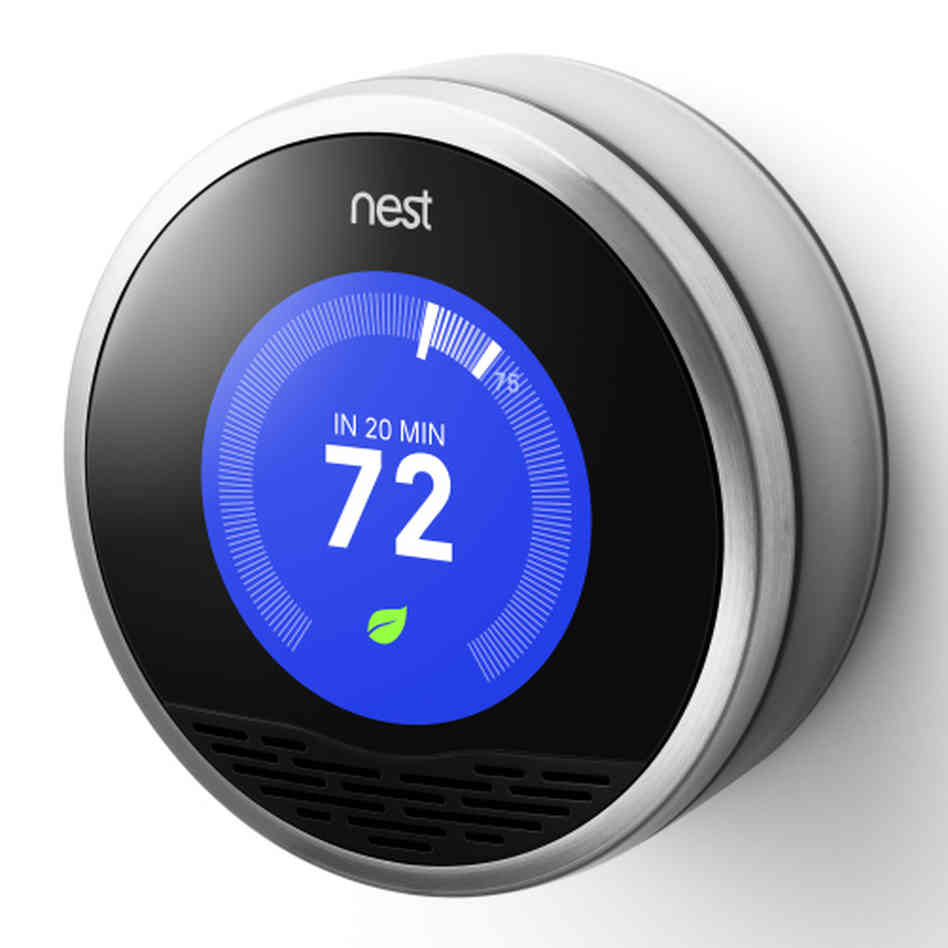
A wonderful example is thermostats. The “father of the iPod”, Tony Fadell, created the “learning thermostat” after having stumbled over expensive, dumb and ugly thermostats for the green house he was building. He created the gorgeously designed Nest which has been shipping for more than a year now. It is said to be compatible with 95% of the American and Canadian low voltage residential heating and cooling market by now. This little sexy device can remove some 20% of the heating and cooling energy bill and cost $250 US. Nest is now shipping 40-50K units per months and investors continue betting on Nest which now is said to be valued to $800 million US.
People normally don’t bother about thermostats but this easy to install and use, wonderfully designed and intelligent darling that saves people money has become a best-seller at Amazon, at Lowe’s and on Apple’s online store. It uses a number of sensors to understand the life-style of the household and adjusts heating and cooling in an optimal way. Beyond the information on the device itself it communicates with people’s smartphones and pads.
Innovative new approaches in established industries are always challenged by established players and Nest is already involved in legal battles. But I think we only have seen the beginning of Nest. Now they address consumers right away, seducing them with design and a good cause. But the device is Wi-Fi and ZigBee enabled thus ready for the Utilities and the Smart Grids. Is there a reason for a Utility to install another device in a home where a Nest already is in place?
1 Comment | Consumer market, Inspiring example, M2M, User Interaction, Utilities | Tagged: Amazon, Apple online store, B3CC, B3IT, cooling, design, energy bill, heating, Internet of Things, IoT, Lowe's, M2M, pads, smartphone, thermostat, usability, Wi-Fi, ZigBee | Permalink
Posted by magnusmelander
January 7, 2013
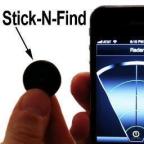
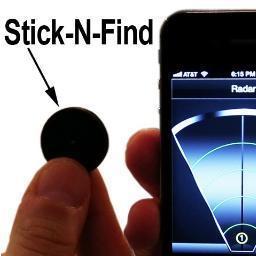
Solving real problems is a good foundation for entrepreneurs. And finally finding what we are looking for is something we all like. StickNFind is a promising solution built on Bluetooth technology together with IOS and Android. You simply put your very small Bluetooth stickers on your keys, pets, children backpacks or whatever you want to keep an eye on. The receivers are similar in size as a quarter-dollar coin and quite thin. The replaceable battery lasts for about a year. When you use the StickNFind mobile app to find things you can even light the label up and make it vibrate to help localize the item. But you can only locate things about 30 meters away. One can also use StickNFind to tell when tagged things are coming within range like the bag at the airport convey belt or getting out of range like your turtle trying to escape. Two labels are sold for $35 US but you can have many more managed from one phone.
StickNFind Technologies use
Indiegogo to crowd finance their product and with just a couple of days left they have raised almost ten times the $70.000 US they aimed at.
1 Comment | Consumer market, Inspiring example, M2M, User Interaction | Tagged: apps, B3IT, Bluetooth, crowd financing, Indiegogo, Internet of Things, M2M, Machine-to-Machine, smartphone, trace, track | Permalink
Posted by magnusmelander
December 2, 2012
 Parking is a critical component of Intelligent Transportation Systems (ITS). Parking space is a scarce and expensive resource in urban environments and every free parking slot is an opportunity to improve the traffic situation and increase efficiency in people’s lives. So far parking space have been a dumb static resource and people’s traveling plans have been based on hope. There are estimates that 30% of city traffic is people looking for parking. The result is wasted fuel and time, excess carbon emissions, frustrated drivers and negative impact on the local economy.
The parking related problems will continue to grow as urban population is growing. We need to act now to establish the parking infrastructure needed to enable development of user-friendly and powerful tools which people can use to plan their traveling properly, owners of parking space can use to optimize their business and service and cities can use to plan their traffic system based on solid data.
At B3IT we developed a concept for dynamic parking which we announced at the ITS World Congress in Vienna in October 2012. It is based on an holistic approach where users get access to information from all organizations involved in parking in a city but where each of these organizations still use a solution to connect and manage their parking space which they prefer. We call this dynamIQ parking™.
Last week we launched dynamIQ parking™ at the Mobile Future conference in Stockholm together with the mobile operator Tele2 and Streetline, the world leader in Smart Parking. The parking issue is incredibly complex with a lot of stake holders, business models, political interests and point of views. I am absolutely convinced it takes a complete solution including a set price in order to move forward. Together with our partners we now have what it takes to offer clients a complete customized solution as a service with a set price. We always start with a six months trial period to a fixed price giving us time to follow-up an adjust the solution for optimal value to the customer. It takes less than two months from signing to have the installation up and running. In other words, this is something very easy for customers to understand and buy and if they aren’t happy after six months they can just abandon the ship. And regardless if the customer is a city, a parking company, a real estate owner, a public transportation company or a private parking space owner they can use our solution to run their parking business better. And the relevant parking data is being made available to drivers together with data from all other parking players simply making urban life easier.
With dynamIQ parking™ in place you can check if there is a decently priced parking available where you are going tomorrow at noon and if you like, reserve and pay for it. And if you don’t find one decide to use public transportation instead. Drivers can use their smartphones, pads and computers but dynamic parking information can also be made available using digital signs and interactive kiosks.
Smart cities simply need dynamIQ parking™!
Leave a Comment » | ITS, M2M, Transportation, User Interaction | Tagged: B3CC, B3IT, dynamIQ parking™, Internet of Things, ITS World Congress, M2M, Mobile Future, parking, Smart City, smart parking, Streetline, Tele2, Traffic, Transportation, User interaction | Permalink
Posted by magnusmelander
November 9, 2012
 Intelligent Transport Systems (ITS) has been worked on for some twenty years. The idea to look at traffic and transportation using a holistic approach is great and rarely disputed. And the effects when ready would be fantastic! Efficiency, safety, sustainability and convenience, all the key promises of M2M, are there. But still the development is quite slow. Of course we need to remember that a lot of these issues are infrastructure related thus complex and time-consuming to develop. And a multimodal transportation approach require integrated organizations which is yet another complex thing to change. There are also many stakeholders and a lot of legislation involved.
But still I believe there are ways to drastically speed up the process: by leveraging the rapid development in technology in combination with innovation and pragmatism we could make things happen fast. Examples of key things to leverage are
- the open data movement to allow entrepreneurs to drive innovation
- the smartphones and pads to allow users of the transportation systems to access the information they need to make qualified decisions
- crowd sourcing and other innovative ways to collect data
- entrepreneurs to drive creativity, innovation and choice
A very good example of an ITS type application which is in place and leverage all of these is
Waze. It is
the world’s fastest growing community-based traffic and navigation app and it is free. They claim 30 million users already and they even get help to edit the maps from their users. It started as an open-source mapping project in 2006 and Waze was founded 2008. The company is backed by serious investors and the business model is based on location-based advertising. The level of innovation is high and you can for example connect your Facebook account to see where your friends are.
Think about this: First came GPS devices integrated into cars for maybe 3-5K$, then came mobile GPS devices, often with better maps and features, for about 1/10 of the price and now this, for free. The power of what today’s technology and modern ways of working can do is immense. The services are continuously improved and by using one device for many things we even help save the planet.
I am focusing a lot on ITS and together with our partners and entrepreneurs we have numerous concepts and ideas (including dynamIQ parking™ which we launched at ITS World Congress) leveraging modern technology and ways of working to make drastic ITS progress. Let’s get going!
Leave a Comment » | Business Models, Inspiring example, ITS, M2M, Transportation, User Interaction | Tagged: apps, B3IT, Business model, convenience, crowd sourcing, efficiency, entrepreneurs, GPS, Internet of Things, investor, M2M, Machine-to-Machine, open api, pads, security, smartphone, sustainability, Traffic, Transportation, usability, User interaction, VC, Waze | Permalink
Posted by magnusmelander
 What a wonderful idea: a cute teddy bear full of sensors to track vital signs of the kid who is playing with it. Vulnerable babies will be measured and monitored without being bothered. And even better, the data collected will be more accurate than when they are bothered by a nurse or doctor. As well as taking measurements, nurses and parents can also communicate with their children remotely by playing songs and recording bedtime stories through the toy.Two master students from Zagreb, Croatia, Josipa Majic and Ana Burica, came up with the idea and their joint baby, Little Teddy the Guardian, is now for sale at 169 EUR. He keeps an eye on health parameters like heart rate, oxygen saturation, body temperature, and stress levels. The idea behind disguising medical tech in a lovable toy is to provide pediatricians as well as parents with more accurate, consistent and reliable data points that will give a meaningful and complete insight in the child’s health condition. Every time a child takes Teddy The Guardian by the hand or puts Teddy’s paw on his forehead sensors detect the values, capture them and transmit in real-time to a mobile app where data is analyzed, visualized, managed and downloaded by the medical staff and parents.



 connectcompute