March 3, 2013
 Mobile World Congress 2013 is over and some 72.000 visitors and 1.700 exhibiting companies have gone home. The new location – Fira Gran Via – was more “professional” and space, logistics, food, etc was better. But on the other hand, it is far away from down town Barcelona which made people spend much more time in the traffic. And at a couple of occasions the traffic turned really bad.
I have obviously not seen everything and met everyone so my conclusions have no trace of science:
The over-all impression was quite boring rather then exciting. Devices, boxes, antennas and software architectures all over the place and the devices really look the same. Is this a sign of commoditization? The very serious fact that Europe is seriously behind in LTE usage (4% of subscribers world-wide acc. to GSA) should make a lot of Europeans nervous. Our entrepreneurs in the European mobile industry might start move to the US like IT entrepreneurs have done for many years.
The value of MWC continues to be the interaction between people from the same industry across the world why parties and sub-events continue to be important. The 5:th Swedish Mobile Association-party on Monday was spectacular again and my job as bouncer was as easy as all previous years.
There is a growing number of visitors and exhibitors from other industries mainly due to M2M. I guess there were 20 more or less connected cars to look at but I also found exhibitors like Assa Abloy with their connected locks in a small both. I believe this increased focus on what to use the mobile network for is a good development – maybe the event should be divided in two: building and operating networks – using networks.
M2M was everywhere but the heavily promoted GSMA Connected City part of the event I unfortunately found quite dull. In the far end of Hall 3, few visitors, a lot of screens with presentations and no real energy or “heat” (if we exclude the Gangnam Style dancers from KT). And I couldn’t find anything about OTA provisioning of SIMs which was demonstrated by GSMA last year. Connected cars was clearly the most discussed topic in M2M followed by mHealth. I believe it is a sound development that focus on M2M itself disappears (no customer has ever asked me for M2M) and that we start discuss real problems with real customers. The industry needs to be able to create value for the huge SMB market and not only the multi-nationals, consumers and governments. That is the key challenge for M2M today.
Ericsson’s Key Note event Tuesday night was a highlight: well structured and executed with M2M and Networked Society as a leading theme. And finally Vestberg invited Avicii on stage and then they launched a new song right there, XYOU based on a crowd-sourcing process. The thing I really liked was that they showed the Twitter feed from when Avicii entered the stage and when they played the new song we could see it spreading over the Internet on another huge screen. Well thought through and executed! I’m not sure everyone in the audience understood what was going on but my 17 years old daughter was really impressed already by the SMS I sent her.
My choice of coolest product at the show was also in the Ericsson hall. Under the banner “Windows of Opportunities” they demonstrated four connected windows solving real problems. My favorite was the one for skyscrapers which generates electricity from light coming in. I hope they have solid patents in place!
Personally my highlight of the week was outside of MWC. I was invited by Prof. Aninyda Ghosh, assistant professor of entrepreneurship at the great IESE Business School, to give a speech on Parallel Entrepreneurship. I enjoyed every minute!
 Leave a Comment » |
  Consumer market, Healthcare, Inspiring example, M2M, Transportation, User Interaction | Tagged: Anindya Gosh, apps, Assa Abloy, Avicii, B3CC, B3IT, connected city, eCall, Ericsson, IESE, Internet of Things, IT, LTE, M2M, Machine-to-Machine, Mobile World Congress, mwc, OTA, SIM, SMA, Vestberg, Windows of opportunities, xyou |
  Permalink
 Posted by magnusmelander
December 28, 2012
 The European Union took yet another step towards an interoperable EU-wide eCall solution when the Commission just adopted a Regulation which establishes the specifications for the upgrading of the Public Safety Answering Point (PSAP) infrastructure required for the proper receipt and handling of eCalls. eCall is a key initiative to meet the target of halving the overall number of road deaths in the European Union by 2020 starting from 2010.
According to EU: Road safety is an issue of major concern across the entire European Union and for all of its inhabitants: 500 million citizens in the 27 Member States use more than 230 million vehicles on over 5 million km of roads. The purpose of the interoperable EU-wide eCall initiative is to introduce in all vehicles in Europe the minimum functionalities needed to ensure adequate handling of the emergency calls by the emergency response services. Currently, road journeys exceed 100 million annually across the various Member States and they are increasing due to further consolidation of the European Union (through the free movement of goods, people and services). Road safety is one of the major policy issues of Transport Policy in the European Union. In 2009 around 35,000 people were killed and more than 1.5 million injured in about 1.15 million traffic accidents on EU roads. In addition to the tragedy of loss of life and injury, this also carries an economic burden representing approximately EUR 130 billion of cost for society.
I believe this is a typical area where agreements on a standard infrastructure makes a lot of sense. We will save lives, pain, money, time and the environment while establishing an infrastructure which will support the development of the EU region for many years. A common PSAP could obviously be used for more than eCall and will set a standard for certain international services which will help us in the critical effort to make M2M an international business.
Leave a Comment » | ITS, M2M, Safety and Security, Transportation | Tagged: B3IT, eCall, environment, EU, EU Commission, Internet of Things, IoT, M2M, Machine-to-Machine, PSAP, security, Traffic, Transportation | Permalink
Posted by magnusmelander
December 6, 2012
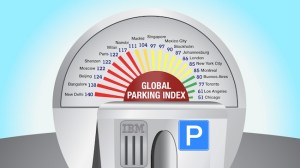 Most people have a view on parking. Typically not very positive. As more people continuously move to the cities – Stockholm received the equivalent of two loaded busses per day last year – taking care of traffic and parking is challenging. While doing the research for dynamIQ parking™ I came across a lot of facts and figures related to parking and I though it could be interesting to share some of them in my blog.
A great source of parking data is IBM’s Global Parking Survey 2011 with 8042 commuters in 20 cities on six continents surveyed. That is where I first came across the staggering data that more than 30% of traffic in a city is caused by drivers looking for parking. IBM claims over 1B cars on the roads worldwide which explains the scope of the parking problems. 27% of drivers in the survey respondents self-reported being involved in an argument with a fellow driver over a parking space within the last year. The average time to find parking is around 20 minutes and over half of all drivers in 16 of the 20 cities surveyed reported that they have been frustrated enough that they gave up looking for a parking space and simply drove somewhere else.
Commuting pain is also reflected globally as 69 percent of those surveyed indicated that traffic has negatively affected their health in some way. Some 42 percent of respondents globally reported increased stress and 35 percent reported increased anger.
In order to compare the situation across the globe IBM developed their Parking Index. The IBM Parking Index is comprised of the following key issues: 1) longest amount of time looking for a parking place; 2) inability to find a parking place; 3) disagreement over parking spots; 4) received a parking ticket for illegal parking and 5) number of parking tickets received. The cities scored as follows: New Delhi: 140; Bangalore 138; Beijing 124; Moscow 122; Shenzhen 122; Paris 122; Milan 117; Nairobi 111; Madrid: 104; Singapore 97; Mexico City: 97; Stockholm: 90; Johannesburg: 87; London: 86; New York City: 85; Montreal: 85; Buenos Aires: 80; Toronto: 77; Los Angeles: 61; and Chicago: 51.
According to EU (2008) 60% of the European population is concentrated in urban areas, with these areas producing almost 85% of GDP. Urban issues like traffic congestion and pollution is estimated to cost EU 1% of its GDP.
Another interesting fact is that Michael Schwarz, European Commission, claimed 2010 that goods of value of 7B€ is stolen from trucks in Europe which explains why safe and well organized truck parking is a priority.
Finally it could be interesting to know that Nissan cars got most parking tickets in Sweden 2010 compared to number of registered cars – 40.000 tickets translates to about 35% of all registered Nissan cars. BMW and Mercedes followed just behind (ref Vi Bilägare).
1 Comment | ITS, M2M, Transportation | Tagged: anger, B3IT, BMW, congestion, dynamIQ parking™, IBM, Internet of Things, M2M, Mercedes, Michael Schwarz, Nissan, parking, Parking index, parking space, stress, Traffic, Transportation, trucks, Vi Bilägare | Permalink
Posted by magnusmelander
December 2, 2012
 Parking is a critical component of Intelligent Transportation Systems (ITS). Parking space is a scarce and expensive resource in urban environments and every free parking slot is an opportunity to improve the traffic situation and increase efficiency in people’s lives. So far parking space have been a dumb static resource and people’s traveling plans have been based on hope. There are estimates that 30% of city traffic is people looking for parking. The result is wasted fuel and time, excess carbon emissions, frustrated drivers and negative impact on the local economy.
The parking related problems will continue to grow as urban population is growing. We need to act now to establish the parking infrastructure needed to enable development of user-friendly and powerful tools which people can use to plan their traveling properly, owners of parking space can use to optimize their business and service and cities can use to plan their traffic system based on solid data.
At B3IT we developed a concept for dynamic parking which we announced at the ITS World Congress in Vienna in October 2012. It is based on an holistic approach where users get access to information from all organizations involved in parking in a city but where each of these organizations still use a solution to connect and manage their parking space which they prefer. We call this dynamIQ parking™.
Last week we launched dynamIQ parking™ at the Mobile Future conference in Stockholm together with the mobile operator Tele2 and Streetline, the world leader in Smart Parking. The parking issue is incredibly complex with a lot of stake holders, business models, political interests and point of views. I am absolutely convinced it takes a complete solution including a set price in order to move forward. Together with our partners we now have what it takes to offer clients a complete customized solution as a service with a set price. We always start with a six months trial period to a fixed price giving us time to follow-up an adjust the solution for optimal value to the customer. It takes less than two months from signing to have the installation up and running. In other words, this is something very easy for customers to understand and buy and if they aren’t happy after six months they can just abandon the ship. And regardless if the customer is a city, a parking company, a real estate owner, a public transportation company or a private parking space owner they can use our solution to run their parking business better. And the relevant parking data is being made available to drivers together with data from all other parking players simply making urban life easier.
With dynamIQ parking™ in place you can check if there is a decently priced parking available where you are going tomorrow at noon and if you like, reserve and pay for it. And if you don’t find one decide to use public transportation instead. Drivers can use their smartphones, pads and computers but dynamic parking information can also be made available using digital signs and interactive kiosks.
Smart cities simply need dynamIQ parking™!
Leave a Comment » | ITS, M2M, Transportation, User Interaction | Tagged: B3CC, B3IT, dynamIQ parking™, Internet of Things, ITS World Congress, M2M, Mobile Future, parking, Smart City, smart parking, Streetline, Tele2, Traffic, Transportation, User interaction | Permalink
Posted by magnusmelander
November 9, 2012
 Intelligent Transport Systems (ITS) has been worked on for some twenty years. The idea to look at traffic and transportation using a holistic approach is great and rarely disputed. And the effects when ready would be fantastic! Efficiency, safety, sustainability and convenience, all the key promises of M2M, are there. But still the development is quite slow. Of course we need to remember that a lot of these issues are infrastructure related thus complex and time-consuming to develop. And a multimodal transportation approach require integrated organizations which is yet another complex thing to change. There are also many stakeholders and a lot of legislation involved.
But still I believe there are ways to drastically speed up the process: by leveraging the rapid development in technology in combination with innovation and pragmatism we could make things happen fast. Examples of key things to leverage are
- the open data movement to allow entrepreneurs to drive innovation
- the smartphones and pads to allow users of the transportation systems to access the information they need to make qualified decisions
- crowd sourcing and other innovative ways to collect data
- entrepreneurs to drive creativity, innovation and choice
A very good example of an ITS type application which is in place and leverage all of these is
Waze. It is
the world’s fastest growing community-based traffic and navigation app and it is free. They claim 30 million users already and they even get help to edit the maps from their users. It started as an open-source mapping project in 2006 and Waze was founded 2008. The company is backed by serious investors and the business model is based on location-based advertising. The level of innovation is high and you can for example connect your Facebook account to see where your friends are.
Think about this: First came GPS devices integrated into cars for maybe 3-5K$, then came mobile GPS devices, often with better maps and features, for about 1/10 of the price and now this, for free. The power of what today’s technology and modern ways of working can do is immense. The services are continuously improved and by using one device for many things we even help save the planet.
I am focusing a lot on ITS and together with our partners and entrepreneurs we have numerous concepts and ideas (including dynamIQ parking™ which we launched at ITS World Congress) leveraging modern technology and ways of working to make drastic ITS progress. Let’s get going!
Leave a Comment » | Business Models, Inspiring example, ITS, M2M, Transportation, User Interaction | Tagged: apps, B3IT, Business model, convenience, crowd sourcing, efficiency, entrepreneurs, GPS, Internet of Things, investor, M2M, Machine-to-Machine, open api, pads, security, smartphone, sustainability, Traffic, Transportation, usability, User interaction, VC, Waze | Permalink
Posted by magnusmelander
October 30, 2012
 ITS World Congress in Vienna is over. A well organized high-profile event with ministers, a grand opening event and a grand ball. The large exhibition halls were full of technology and complex drawings, the seminar program extensive and ministers from all over the world attended. We have seen the movie before: there was full agreement among delegates, speakers and exhibitors also at the 19:th ITS World Congress that ITS is important to save the world, increase safety and security and improve efficiency for people, organizations and societies. A lot of things are happening in the field but still too many “one road here and one road there pilots”.
But there are three fairly new enablers in the ITS market that can make things happen big way:
- – the smartphones and pads allowing us to visualize complex things and deliver relevant real-time information for powerful decision-making
- – the Open Data initiatives carried out in Europe and elsewhere enabling developers to access enormous amounts of relevant data for innovative ITS solutions
- – the rapidly growing M2M market is feeding Service Enablers with data and together with the Open Data sources this enables faster and more cost efficient development and maintenance of applications.
We have what we need to start taking real advantage of ITS now. Decision makers need to be brave enough to make the right decisions: ensure a strategy for management of data, use of M2M, etc. then go from pilots to action, open up the data and let the entrepreneurs figure out what users want. This will help us realize the benefits of ITS in terms of efficiency, sustainability, security and convenience.
Leave a Comment » | ITS, M2M, M2M Service Enablers, Safety and Security, Transportation | Tagged: B3IT, convenience, ITS World Congress, M2M, Open Data, pads, PSI, security, smartphones, sustainability, Traffic, Transportation, Vienna | Permalink
Posted by magnusmelander
September 8, 2012
 The key deliverables of M2M are efficiency, security and sustainability. M2M can also deliver convenience which mainly is relevant for the people involved. Well designed M2M implementations often deliver across all of these areas.
Public bus transportation is an important part of the transportation system. To pick the bus should be safe, energy-smart and help improve efficiency in the city. And except for peak hours when buses might be full, the ride should be convenient. But even though buses are quite similar the drivers have different driving style. A recent study at the University of Lund concludes that it is more dangerous to go by bus than by car in cities. Injuries from traffic accidents with buses are rare but a lot of people hurt themselves when they fall during the ride, when jumping on or off the bus or at the bus stop. This is one area where the driver makes a difference. Energy consumption, impact on traffic flow and convenience for the passengers are other areas where the bus drivers knowledge and style makes difference.
The public bus company in the city of Borås in Sweden are now installing a M2M system in the buses which measures how well the drivers drive. The metric used is passenger comfort and a lamp indicates performance: red means poor, yellow is ok and green is great.
I like this a lot since it’s an easy way to improve something in many different ways. Just by showing the performance the drivers will improve their driving – it is an old truth that what is measured gets better. The project makes the company and it’s employees aligned to what is considered important. And last but not least, the “red drivers” get training and the “green drivers” a bonus. What a wonderful way to make things better.
Leave a Comment » | Inspiring example, ITS, M2M, Safety and Security, Transportation, User Interaction | Tagged: B3CC, B3IT, Borås, bus driver, bus stop, convenience, eco driving, efficiency, Internet of Things, M2M, Machine-to-Machine, passenger comfort, public bus, safety, security, sustainability, Traffic, Transportation, transportation system, University of Lund, User interaction | Permalink
Posted by magnusmelander
August 17, 2012
 A lot of people and animals are killed and injured in road traffic, road vehicles impact our environment significantly and road traffic is an important part of efficient transportation of people and goods. With the key promises of M2M being safety, sustainability and efficiency there is a perfect match between road traffic and M2M. A lot of research projects are on-going and part of the overall efforts towards the ITS (Intelligent Transportation Systems) vision.
The air traffic system has for many years been developed aiming towards zero accidents. This process has made air traffic very safe and I am told that most of the remaining accidents are caused by human beings. The use of UAV (Unmanned Aerial Vehicle) and UCAV (Unmanned Combat Aerial Vehicle) is increasing mainly to avoid dull, dirty or dangerous flying missions. We have for example all heard about drone attacks (military planes without pilots) in countries like Pakistan and Afghanistan.
If we can fly helicopters and aircrafts without pilots we must be able to modernize the road traffic to make it safer, more friendly to nature and more efficient. And even if humans cause many or maybe most of the problems on the road we still don’t feel comfortable putting ourselves in the hands of technology on the roads or in the air. But this will change. The technical solutions are ahead of what we are willing to accept but carefully managed real life trials together with clear and big benefits will slowly make us humans agree to start using new solutions.
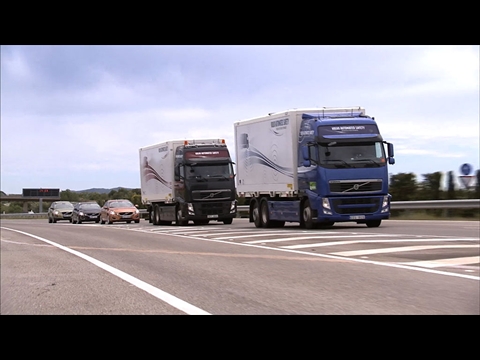
There are many advanced research projects in road traffic continuously pushing the frontier forward. Earlier this summer Volvo successfully led a road train consisting of a Volvo XC60, a Volvo V60 and a Volvo S60 behind a truck on a 200 km journey through Spain as part of SARTRE (Safe Road Trains for Environment). The cars outfitted with cameras, radars and laser sensors were six meters apart and drove safely 85 km/h without any driver interference. The vehicles in the test have covered some 10.000 km on test circuits before the trial. Beyond improved safety and sustainability road trains would allow us drivers to put a professional driver in command for a while, take a bite, check our mail and take a nap before taking control of the car again. Sounds great!Another interesting project is Google Driverless Cars. In May 2012 the first license for a self-driven car was issued in Nevada: a Toyota Prius modified with Google’s experimental driver-less technology. The team just announced that they have completed over 300,000 autonomous-driving miles accident-free, typically have about a dozen cars on the road at any given time, and are starting to test them with single drivers instead of in pairs.
ITS World Congress 2012 in Vienna October 22-26 is an interesting event for anyone interested in where road traffic is going. I’ll be there!
Leave a Comment » | ITS, M2M, Safety and Security, Transportation | Tagged: B3CC, B3IT, driverless, droner, Google, Internet of Things, IoT, ITS World Congress, M2M, Machine-to-Machine, road train, SARTRE, Toyota, Traffic, Transportation, UAV, UCAV, Volvo | Permalink
Posted by magnusmelander
July 3, 2012
The European Parliament just adopted a resolution where they call on the European Commission and Member States to make sure eCall is installed in every new vehicle by 2015. The Parliament consider this resolution a major step towards the roll-out of eCall in Europe that will have a significant impact on citizens’ safety.
This is certainly a good intention and with 35-40.000 Europeans killed and over a million injured in road accidents per year something needs to be done. But it is not obvious that eCall will make a big difference in that regard. Some countries don’t have national response centers which will make implementation more difficult and similar services from car manufacturers haven’t really become commercially popular. I guess the road towards less road traffic accidents starts with better drivers, better cars and better roads but I obviously hope eCall will save a lot of lives.
But connecting all new cars in a similar fashion could potentially make a difference in other ways. If some data would be made more openly available we could see a lot of new innovative services made available to drivers, owners, insurance companies and government agencies. Imagine apps like the Volvo App managing the parking heater etc becoming available for all cars, maintenance data becoming available to third party service companies, real time position data available to ITS systems, etc. And if some of these services really would take off the vehicle M2M retrofit market would be huge. We all know it by now: data is the gold of M2M.
Leave a Comment » | ITS, M2M, Safety and Security, Transportation, User Interaction | Tagged: apps, B3CC, data is the gold of M2M, eCall, European Commission, European Parliament, insurance, Internet of Things, M2M, m2m retrofit, On Call, open api, Traffic, Transportation, Volvo | Permalink
Posted by magnusmelander
June 4, 2012
 ABB acquires the Wi-Fi mesh pioneer Tropos Networks to strengthen its Utility Communications product group. California based Tropos Networks has delivered a large number of wireless metropolitan and campus networks over the last ten years or so and I would even say that they made Wi-Fi mesh a viable metro network solution to the market.
This acquisition by ABB is very interesting and underline the grande potential for especially smart grids but also other private network applications. Tropos has deployed private networks for applications like meter reading, ITS, mobile workforce, public safety, telemedicine, parking meters, etc.
M2M is required to solve the efficiency problems, the security issues and the sustainability challenges in the world. And many of these applications will use private networks for financial and/or security reasons. Each of these areas will develop to become ICT systems in the size of the Internet which is why really large global players invest early on. I suggest you keep an eye at GE, ABB, Siemens, IBM and similar players.
Interesting move ABB!
1 Comment | Healthcare, ITS, M2M, Networks, Safety and Security, Transportation, Utilities | Tagged: ABB, GE, IBM, ICT, M2M, mesh, meter reading, metro networks, parking meters, Private networks, public safety, Siemens, telemedicine, Tropos, WiFi | Permalink
Posted by magnusmelander
 Mobile World Congress 2013 is over and some 72.000 visitors and 1.700 exhibiting companies have gone home. The new location – Fira Gran Via – was more “professional” and space, logistics, food, etc was better. But on the other hand, it is far away from down town Barcelona which made people spend much more time in the traffic. And at a couple of occasions the traffic turned really bad.


 connectcompute