December 2, 2012
 Parking is a critical component of Intelligent Transportation Systems (ITS). Parking space is a scarce and expensive resource in urban environments and every free parking slot is an opportunity to improve the traffic situation and increase efficiency in people’s lives. So far parking space have been a dumb static resource and people’s traveling plans have been based on hope. There are estimates that 30% of city traffic is people looking for parking. The result is wasted fuel and time, excess carbon emissions, frustrated drivers and negative impact on the local economy.
The parking related problems will continue to grow as urban population is growing. We need to act now to establish the parking infrastructure needed to enable development of user-friendly and powerful tools which people can use to plan their traveling properly, owners of parking space can use to optimize their business and service and cities can use to plan their traffic system based on solid data.
At B3IT we developed a concept for dynamic parking which we announced at the ITS World Congress in Vienna in October 2012. It is based on an holistic approach where users get access to information from all organizations involved in parking in a city but where each of these organizations still use a solution to connect and manage their parking space which they prefer. We call this dynamIQ parking™.
Last week we launched dynamIQ parking™ at the Mobile Future conference in Stockholm together with the mobile operator Tele2 and Streetline, the world leader in Smart Parking. The parking issue is incredibly complex with a lot of stake holders, business models, political interests and point of views. I am absolutely convinced it takes a complete solution including a set price in order to move forward. Together with our partners we now have what it takes to offer clients a complete customized solution as a service with a set price. We always start with a six months trial period to a fixed price giving us time to follow-up an adjust the solution for optimal value to the customer. It takes less than two months from signing to have the installation up and running. In other words, this is something very easy for customers to understand and buy and if they aren’t happy after six months they can just abandon the ship. And regardless if the customer is a city, a parking company, a real estate owner, a public transportation company or a private parking space owner they can use our solution to run their parking business better. And the relevant parking data is being made available to drivers together with data from all other parking players simply making urban life easier.
With dynamIQ parking™ in place you can check if there is a decently priced parking available where you are going tomorrow at noon and if you like, reserve and pay for it. And if you don’t find one decide to use public transportation instead. Drivers can use their smartphones, pads and computers but dynamic parking information can also be made available using digital signs and interactive kiosks.
Smart cities simply need dynamIQ parking™!
 Leave a Comment » |
  ITS, M2M, Transportation, User Interaction | Tagged: B3CC, B3IT, dynamIQ parking™, Internet of Things, ITS World Congress, M2M, Mobile Future, parking, Smart City, smart parking, Streetline, Tele2, Traffic, Transportation, User interaction |
  Permalink
 Posted by magnusmelander
November 9, 2012
 Intelligent Transport Systems (ITS) has been worked on for some twenty years. The idea to look at traffic and transportation using a holistic approach is great and rarely disputed. And the effects when ready would be fantastic! Efficiency, safety, sustainability and convenience, all the key promises of M2M, are there. But still the development is quite slow. Of course we need to remember that a lot of these issues are infrastructure related thus complex and time-consuming to develop. And a multimodal transportation approach require integrated organizations which is yet another complex thing to change. There are also many stakeholders and a lot of legislation involved.
But still I believe there are ways to drastically speed up the process: by leveraging the rapid development in technology in combination with innovation and pragmatism we could make things happen fast. Examples of key things to leverage are
- the open data movement to allow entrepreneurs to drive innovation
- the smartphones and pads to allow users of the transportation systems to access the information they need to make qualified decisions
- crowd sourcing and other innovative ways to collect data
- entrepreneurs to drive creativity, innovation and choice
A very good example of an ITS type application which is in place and leverage all of these is
Waze. It is
the world’s fastest growing community-based traffic and navigation app and it is free. They claim 30 million users already and they even get help to edit the maps from their users. It started as an open-source mapping project in 2006 and Waze was founded 2008. The company is backed by serious investors and the business model is based on location-based advertising. The level of innovation is high and you can for example connect your Facebook account to see where your friends are.
Think about this: First came GPS devices integrated into cars for maybe 3-5K$, then came mobile GPS devices, often with better maps and features, for about 1/10 of the price and now this, for free. The power of what today’s technology and modern ways of working can do is immense. The services are continuously improved and by using one device for many things we even help save the planet.
I am focusing a lot on ITS and together with our partners and entrepreneurs we have numerous concepts and ideas (including dynamIQ parking™ which we launched at ITS World Congress) leveraging modern technology and ways of working to make drastic ITS progress. Let’s get going!
Leave a Comment » | Business Models, Inspiring example, ITS, M2M, Transportation, User Interaction | Tagged: apps, B3IT, Business model, convenience, crowd sourcing, efficiency, entrepreneurs, GPS, Internet of Things, investor, M2M, Machine-to-Machine, open api, pads, security, smartphone, sustainability, Traffic, Transportation, usability, User interaction, VC, Waze | Permalink
Posted by magnusmelander
September 8, 2012
 The key deliverables of M2M are efficiency, security and sustainability. M2M can also deliver convenience which mainly is relevant for the people involved. Well designed M2M implementations often deliver across all of these areas.
Public bus transportation is an important part of the transportation system. To pick the bus should be safe, energy-smart and help improve efficiency in the city. And except for peak hours when buses might be full, the ride should be convenient. But even though buses are quite similar the drivers have different driving style. A recent study at the University of Lund concludes that it is more dangerous to go by bus than by car in cities. Injuries from traffic accidents with buses are rare but a lot of people hurt themselves when they fall during the ride, when jumping on or off the bus or at the bus stop. This is one area where the driver makes a difference. Energy consumption, impact on traffic flow and convenience for the passengers are other areas where the bus drivers knowledge and style makes difference.
The public bus company in the city of Borås in Sweden are now installing a M2M system in the buses which measures how well the drivers drive. The metric used is passenger comfort and a lamp indicates performance: red means poor, yellow is ok and green is great.
I like this a lot since it’s an easy way to improve something in many different ways. Just by showing the performance the drivers will improve their driving – it is an old truth that what is measured gets better. The project makes the company and it’s employees aligned to what is considered important. And last but not least, the “red drivers” get training and the “green drivers” a bonus. What a wonderful way to make things better.
Leave a Comment » | Inspiring example, ITS, M2M, Safety and Security, Transportation, User Interaction | Tagged: B3CC, B3IT, Borås, bus driver, bus stop, convenience, eco driving, efficiency, Internet of Things, M2M, Machine-to-Machine, passenger comfort, public bus, safety, security, sustainability, Traffic, Transportation, transportation system, University of Lund, User interaction | Permalink
Posted by magnusmelander
August 27, 2012
 M2M For Real™ is my method to help people identify potential value from M2M in their organization. I have used it with different types of organizations and also with 150 people from different companies in a seminar. Short real-life examples are used to inspire and push creativity into the process. The examples are short since we don’t want to educate people about another industry, just create inspiration and ideas. Since they all come from the real world it helps give the feeling that M2M is here now. I have decided to start share examples like that in my blog thus hopefully help people find relevant examples for their own efforts. I will most often not mention the companies involved but sometimes I will. In order for the examples to be easy to search for I will title and tag them “Inspiring example”.
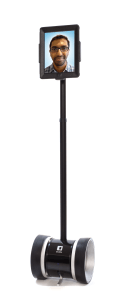
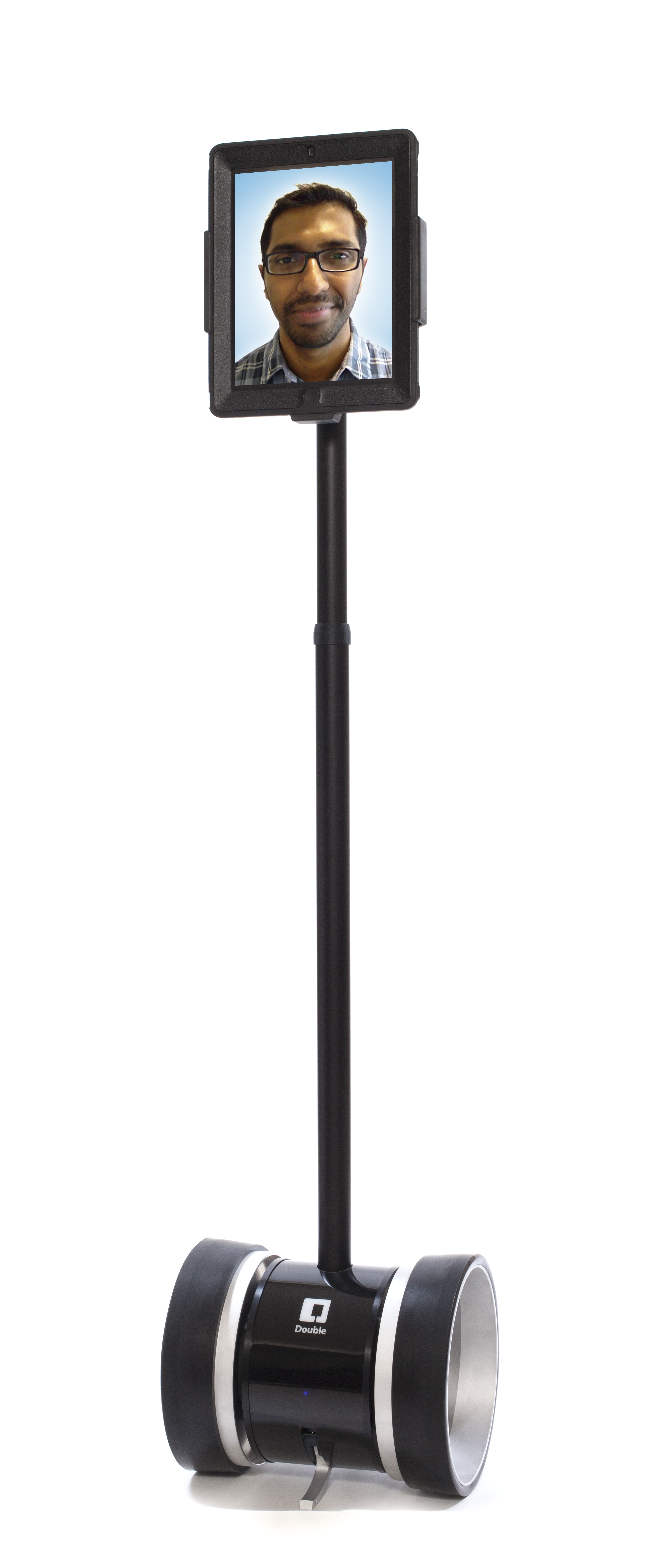
As the first inspiring example I wanted to share something really exciting: Double. It is an elegant minimalistic remotely controlled iPad holder on wheels. It combines elegance and great functionality with the power and ease-of-use of the iPad. You control the small silent robot remotely and can navigate it into any meeting or private discussion you want. Or take a close look at a painting in a gallery. Since the hight is adjustable Double can meet people face to face regardless if they sit or stand. The rechargeable batteries last all day and if you order today and pay US 2000$ you will have your Double early 2013. It is easy to fall in love with Double. Take a look and enjoy the movie.
So why do I mention Double here? It is a wonderfully designed M2M solution and there are serious efforts made to explain what we could use Double for: Video conferencing 2.0, tours without being present, promotion in public places like retail stores, etc. I am not convinced. But I believe a lot of people will buy Double simply because they can turn any home or office into a much cooler place. But the real reason why Double is important is that it creates inspiration and ideas. Just knowing that it is possible to get a nice, easy-to-use, remotely controlled communicating robot for 2.000 dollars (not 100.000 dollars) will make a lot of people come up with ideas where they can use Double to create value for them or their organization.
Leave a Comment » | Inspiring example, M2M, User Interaction | Tagged: B3IT, Inspiring examples, Internet of Things, iPad, M2M For Real™, Machine-to-Machine, Robot, usability, User interaction | Permalink
Posted by magnusmelander
January 3, 2012
 One way of describing M2M solutions is in the three steps: collect data, process data, use data. These three steps need to have standardized interfaces in order to avoid re-inventing the wheel every time we need something from the M2M solution in place. This is true when data is collected, processed and used internally but even more so when some or all data should be made available to someone else. M2M solutions are most often deployed internally with a business case developed to support the investment. They are typically there to respond to very specific internal challenges or opportunities why it’s not fully natural to think about sharing data externally when the systems are designed. However I believe we will see increasing business opportunities for owners of data collected in M2M (and other) solutions. I see at least three types of opportunities:
– making internal data available to selected or even all developers might boost perceived service levels for the company. A good example is tåg.info in Sweden where information about trains and stations are made easily available for developers who have developed popular apps like Train Info Sweden and Tågtavlan. I am convinced these apps have increased the overall perceived services by the train operators. Another great example is the “City of Stockholm Open API” where a lot of information is made available to developers and where I expect to see more and more information from M2M solutions in the city.
– making internal data available on commercial terms will probably be increasingly interesting. The more services made available, especially for smart phones and pads, the more important will quality of the service and differentiation become. And adding interesting data from a second and maybe innovative source might single out a specific service from the crowd. Let’s use weather forecasts as an example where the service with the best forecast quality can charge more or get most of the advertising money.
– making internal data available might impact the brand positively. An example could be creating indexes from the internal data which could be used by the public as comparisons and means of learning how to save energy at home, green driving, what to pay for things, etc.
Needless to say a very well thought through strategy has to be in place in order to avoid major mistakes like giving away the crown jewels or challenging peoples integrity.
In order for the big M2M boom to happen we need to make bits and pieces fit better together, end to end, in order to drive down cost for development and maintenance, to avoid duplication of efforts, to avoid fork lift upgrades of systems, simplify integration with partners and to improve time to market of services. Standardized and open API:s are important parts of that development and I think we will see an increasing amount of independent middle-men collecting data from different sources then cleaning and organizing the data in order to sell it. Such companies would help establishing standard API:s which is good for the M2M industry.
Leave a Comment » | M2M, User Interaction | Tagged: B3CC, City of Stockholm Open API, Internet of Things, IoT, M2M, Machine-to-Machine, open api, smartphone, tåg.info, tågtavlan, Train Info Sweden, User interaction | Permalink
Posted by magnusmelander
December 7, 2011
 Users
Users are typically more interested in what things and services do or deliver than how they work. They want to get the work done. Still most products and services are too cumbersome to install and use and even if they help solve important problems people are reluctant to buy and use them. Coming from IBM to Apple at the time for the Mac made me see the difference between function centric and user centric development approaches.When there is a reasonable choice,
users always chose the products they like. Some 3,5 billion people had a mobile phone when the iPhone was launched June 29 2007. It brought a completely new user experience to the market and despite many technical limitations and a high price it rapidly and fundamentally changed the mobile industry. Operators were chocked and Nokia lost. There has always been application developments for mobile phones but by enabling any and all developers to develop easy to install and use apps for millions of iPhone users and efficiently distribute and maintain them, enormous forces were released. All of a sudden a completely new way of solving small to big problems was at hand and a massive amount of apps were made available. Like when Internet took off many said “there is mainly useless garbage around”. Development started from the users. The users downloaded some 30B apps 2011 and the revenues are expected to be some 15B$ (Gartner). The users are kings.
The relevance of this for M2M is that whenever users will be involved, they must be able to use the device or devices of their choice to interact with the service. And the usability of the service needs to be in pair with what they are used to already. There will continue to be several terminal platforms and we have to support them all even if it is hard. Up until now most employers had standardized terminals but also that is changing rapidly. BYOD – Bring Your Own Device – is spreading like wildfire promoted by Cisco and others. In essence we can chose between developing apps for the different platforms, using HTML5 or using cross platform tools like MoSync, PhoneGap and Appcelerator. These choices are critical since the success of an M2M service depends on how they interact with their users.
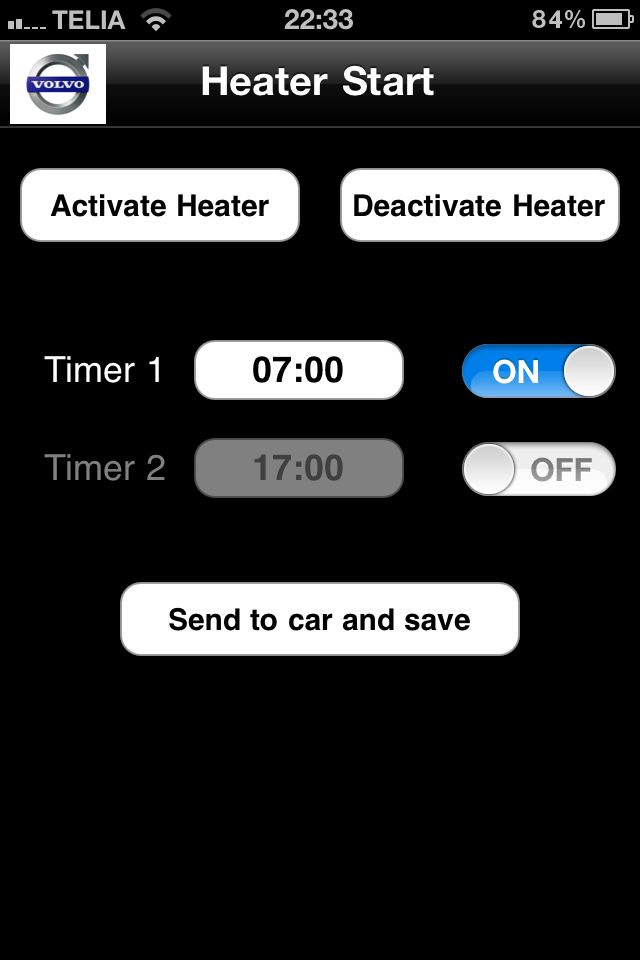
Volvo cars released an iPhone and Android app in June 2011 which use their On Call cellular service to allow users to lock the car, find their car, look at the dashboard, start the parking heater and other useful things. I’m told the app is a roaring success and if so I believe the reason is that Volvo car owners immediately understand which problems it solves for them, how it works, they can use their device of choice and it works like anything else on that device. The entire On Call technology, system and networks are invisible to them. It just works. That is a good example of how I believe M2M solutions should interact with their users.
Leave a Comment » | M2M, User Interaction | Tagged: apps, B3CC, B3IT, BYOD, Internet of Things, IoT, M2M, Machine-to-Machine, On Call, usability, user, User interaction, Volvo | Permalink
Posted by magnusmelander



 connectcompute