February 28, 2014
 Yet another humongous Mobile World Congress is over. Almost 90.000 people from around the globe have spent a couple of days together in Barcelona with decent weather, amazingly good organization and an interesting mix of cava, business cards, pickpockets, technology and rock’n roll. This year was very much about improvement and evolution and little news and revolution. That is both serious and good but unfortunately less exciting and makes a show like this a little sleepy. Beyond a couple of quite expected things like Mozilla’s 25$ smart phone and that Nokia goes Android you mainly heard words like security, virtualization, big data, robustness and improved BSS/OSS at the show. From a helicopter perspective I believe it is a slow process of marrying IT and Telecommunications that we are looking at.
And then, of course, M2M and Internet of Things. It’s on everybody’s lips now, and it’s mainly questions. Ranging from companies considering to enter the market and wonder where to start to people already there trying to figure out where to go next. And my previous conclusion that we have left the connectivity phase behind and focus on the data and use of it was more clear than ever. I heard reference to the 50B devices three times during the entire event to be compared with hundreds of times a year ago.
I was there with a common stand in the Swedish Pavilion with nine of the 21 members of the Swedish M2M Service Enablers alliance: Kombridge, Springworks, Maingate, Possio, WSI, Fym, Evothings, Info24 and WBIRD. And I was amazed to see the interest in talking to experienced specialized m2m service enabler companies with solid solutions in use by real customers. From across the world we had operators, potential customers, vendors, analysts, regulators, consultants, investors and governments visiting us. We counted collectively to over 300 meetings with reasonable business potential after day three of the event. We also got the opportunity to explain to our Swedish Minister of ICT and Energy, Anna-Karin Hatt, that we are working hard together in SMSE to make Sweden the obvious country to go to for leading edge skills and knowledge in M2M aka Internet of Things.
So what’s the state of the nation? Most players have understood that data is the gold of M2M, that the value of M2M is realized when the information is properly distributed to decision-making systems, business process applications, etc. and that a proper M2M solution consist of three different components: connected devices and sensors, collection and blending of data most often in the cloud and distribution of the information to apps, ERP systems, etc. The challenge is that each of these three components is a competitive industry by itself and each M2M solution must include all three to deliver the value. This is obviously not possible to solve without well working partnerships. The transition from quite ok complete generic proprietary M2M solutions to excellent M2M solutions for an industry or more often a specific organization is similar to what the IT industry went though over some 20 years starting from IBM providing everything from Nobel prize research and silicon to post service and financing. Our transition will be brutally fast and enable the fully international and layered Internet of Things industry needed for the real take-off. Companies perceived as providers of generic products or services with no edge will fade away in this process and simply just not be seen. This is why operators and vendors talk partnership now. It is needed but very difficult. To set up a well designed and attractive partner program is not rocket science but a lot of work. But making people work well together goes far beyond that. It is little about technology and a lot about trust, way of working, culture, business models and not the least “similar children play best” as we say in Sweden. And entrepreneurs are stressed people who have little to no patience with things that don’t contribute to their business. Partnerships are also initiated by government bodies and research organizations and a new LinkedIn group on IoT or M2M is established at least weekly.
It will be really interesting to follow how this will develop. In my mind this is mostly a commercial issue why any working partnership will have to be driven by people closest to the customers, who understand the context of the data and application the customers are looking for. Progress and success will only come when people start doing thing also in this field. Nobody, not even McKinzey or Accenture, designed the value chains, the standards or the API:s when we connected people and organizations to the Internet. It was created by people trying things and finding ways that customers liked. This is how the Internet of Things will be established as well. And this is the thinking behind our Swedish M2M Service Enablers Alliance. Avanti!
 Leave a Comment » |
  Business Models, M2M, M2M Service Enablers | Tagged: Accenture, Android, Anna-Karin Hatt, Big Data, Business model, Evothings, Fym, IBM, Info24, Internet of Things, IoT, Kombridge, M2M, Machine-to-Machine, Maingate, McKinsey, Minister of ICT, Mobile World Congress, mozilla, mwc, Nobel prize, Nokia, OSS/BSS, Possio, security, SMSE, Springworks, virtualization, WSI |
  Permalink
 Posted by magnusmelander
February 20, 2014
 An old friend wrote: “Hi Magnus, Great to hear from you. Sounds like you are in the sweet spot of the next digital revolution.” Internet of Things is on everyone’s lips now! If we wouldn’t have had the M2M hype phase over ten years ago I would definitely be nervous, but this is for real. Kudos to Gartner who provided us with the hype curve!
IoT is still in the teenage phase but growing very fast. The industry obviously remains excited on ever new levels. But what makes me believe that we will be grown up by 2015 is the rapidly growing requests from businesses across industries and nations. They want better decision-making, faster processes, competitive advantages, security, sustainability, profitability and bottom line, success. And more and more we end up talking about strategic issues like addressing adjacent markets, “re-defining our industry”, brands and new business models. Somehow a lot of decision makers got the point: it’s time to act! Leaving discussions and PowerPoint behind and jump into trials and action.
The value of M2M becomes visible when the information appears in decision-making systems and processes. The data collected and blended will have to end up in the IT systems why solutions require context, i.e. industry experience, and will be developed by specialized companies. As vehicle specialist Springworks put it: “it took as a while to learn the difference between a hard break and a crash”. Specialized M2M Service Enablement remains the most critical part of building the Internet of Things. Context is king!
The Swedish M2M Service Enablers alliance (SMSE) was established 2012 on this insight and we are already 21 members – Imagimob and Expektra joined earlier this week. And we are now sponsored by six organizations including four operators. We believe the M2M service enablement business will have to be international for M2M to grow up. And with all national players competing on an international market, only the specialized ones will win. It is simply not good enough to connect a couple of things to the Internet, collect some data and distribute it to an App or web page. One needs the context to develop and sell really useful Service Enablement solutions.
We are working hard to demonstrate our combined skills and experience in M2M, or Internet of Things if you like, and that Sweden is a great place to look for advanced M2M applications. Over the last 12 months we have been on several trade missions including Italy, France, Spain, Holland and Germany. And starting on Monday nine of our members – Springworks, Maingate, Kombridge, Possio, EvoThings, Fym, WSI, Info24 and Wbird – represent SMSE in the Swedish Pavilion (7F41) at Mobile World Congress in Barcelona. Please come by and visit us during the week! And as proud sponsors of the traditional Sweden@MWC Cocktail we invite you for a drink with us on Monday afternoon as well!
Adelante!
Leave a Comment » | M2M, M2M Service Enablers | Tagged: context, Evothings, expektra, Fym, Gartner, Hype curve, imagimob, Info24, Internet of Things, IoT, Kombridge, M2M, Machine-to-Machine, Maingate, Mobile World Congress, mwc, Possio, SMSE, Springworks, User interaction, Wbird, WSI | Permalink
Posted by magnusmelander
February 18, 2014
 Intelligent Transportation Systems (ITS) is one of the areas where M2M will make a huge difference in our lives. Transportation of people and goods will be more sustainable, safer, more efficient and more predictable. The communication required is complex and includes communication between vehicles, between vehicles and road infrastructure. The EU has invested over €180 million in more than 40 research projects since 2002 and last week the European standards organisations, ETSI and CEN, confirmed that the basic set of standards requested by the European Commission to make connected cars a reality has been fully completed. The European car industry is eager to translate these enabling standards to competitive advantages and we could see the first connected cars able to communicate with road infrastructure already 2015.
With some 200 million vehicles in Europe it’s easy to understand that proper implementation of these standards will make big impact on road efficiency, safety and sustainability. And if the initiated collaboration for global standards with the US and Japan becomes successful, the reward can be many times bigger.
This is good news and enables yet another area where M2M will make big impact on society here and now. And as always, there will be winners and losers based on how well organizations leverage this opportunity. And it definitely made the 10:th ITS European Congress in Helsinki, 16 – 19 June 2014, more interesting to visit.
Leave a Comment » | ITS, M2M, Transportation | Tagged: 802.11p, CEN, ETSI, EU, Internet of Things, IoT, ITS European Congress, M2M, Machine-to-Machine, Traffic, Transportation | Permalink
Posted by magnusmelander
January 31, 2014

What a wonderful idea: a cute teddy bear full of sensors to track vital signs of the kid who is playing with it. Vulnerable babies will be measured and monitored without being bothered. And even better, the data collected will be more accurate than when they are bothered by a nurse or doctor. As well as taking measurements, nurses and parents can also communicate with their children remotely by playing songs and recording bedtime stories through the toy.
Two master students from Zagreb, Croatia, Josipa Majic and Ana Burica, came up with the idea and their joint baby, Little Teddy the Guardian, is now for sale at 169 EUR. He keeps an eye on health parameters like heart rate, oxygen saturation, body temperature, and stress levels. The idea behind disguising medical tech in a lovable toy is to provide pediatricians as well as parents with more accurate, consistent and reliable data points that will give a meaningful and complete insight in the child’s health condition. Every time a child takes Teddy The Guardian by the hand or puts Teddy’s paw on his forehead sensors detect the values, capture them and transmit in real-time to a mobile app where data is analyzed, visualized, managed and downloaded by the medical staff and parents.
I can see a lot of applications where sensors embedded in something else could open new possibilities and opportunities.
1 Comment | Consumer market, Healthcare, Inspiring example, M2M, User Interaction | Tagged: babies, children, croatia, eHealth, healthcare, Internet of Things, IoT, M2M, Machine-to-Machine, mHealth, monitoring, sensors, teddy the guardian, User interaction | Permalink
Posted by magnusmelander
January 15, 2014
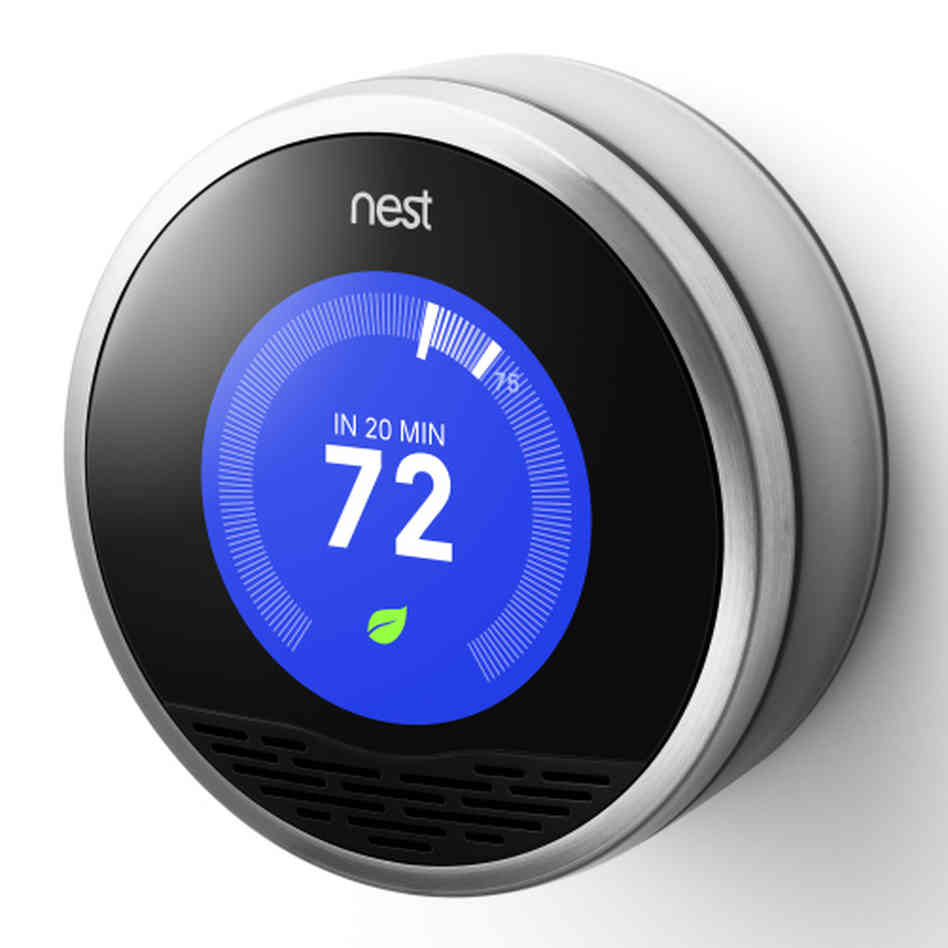
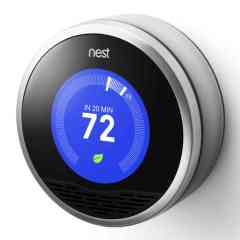 In my Christmas Internet of Everything Chronicle I wrote that 2014 will be the year when IT players jump on the band wagon and when M&A activities will accelerate. With Google acquisition of Nest for $2,3B and PCT’s acquisition of Internet of things startup ThingWorx for $112M I have already delivered on my prediction. And it’s only January 15 today!
Since data is the gold of M2M Google is an obvious player in this field. And by buying Nest they made a clever inroad to people’s homes. The logic is that people buy “the thermostat that Jobs would have loved” regardless if they need it or not, Google start collect valuable data and use it together with all the other data they have. Then Google can leverage the Nest thermostat and other devices to also collect other type of data from the homes. Brilliant! But it is worthwhile to notice that some Nest loving consumers have already stated in public that Google is not welcome in their home and some have even smashed their Nest device. But I think this is a clever move which will put Google in an interesting position. And their acquisition will be an eye-opener to many other companies. You already know that I believe the only difference between when we connected people and business to the Internet and now when we connect things to the Internet is that ignorance will be no excuse this time.
What an exciting start of the Internet of Everything year 2014!
1 Comment | Consumer market, M2M | Tagged: Google, Internet of Things, IoT, M&A, M2M, Machine-to-Machine, Nest, PCT, thermostat, ThingWorx | Permalink
Posted by magnusmelander
December 23, 2013
 Mobile operators are working hard to formalize alliances for the M2M market. Global M2M Association recently added Bell Mobility and Softbank to the team of collaborating operators. The other GMA members are TeliaSonera, Deutche Telekom, Orange and Telecom Italia. The M2M Multi-Operator Alliance just re-branded themselves to M2M World Alliance and includes SingTel, Telefonica, Etisalat, NTT Docomo, Rogers, KPN, Telstra and Vimpelcom. The aim is to provide something like a similar customer experience across the covered countries, making the alliance brothers and sisters look attractive to customers and partners.
This sounds easy, obvious and becomes a way to compete with the really big players like AT&T and Vodafone. But reality bites. Even if they all use a very standardized network it is very challenging to bridge national, cultural, strategic, technical, operational, practical and political differences between the large organizations and countries involved. And on top, most M2M business is and will remain local. The devices are in many cases fixed why roaming is less of an issue. One can argue that by collaborating with colleagues operators will learn from best practice and further down the road they might make collective decisions on systems to use etc. That would be good but not really so much benefit for the M2M customers as for the operators themselves.
Another way of looking at it would be that as long as these efforts circles around connectivity and related services like billing, support, certification and device monitoring chances are realistic that they could be fruitful. However, the value delivered would be difficult to charge for since customers expect this to work already. And having operators to collaborate on industry specific solutions with increased revenue potential seems less realistic. And as long as all territory isn’t covered the common facade will need odd additions to give some customers what they are looking for. Yet another challenge to the alliance concept is all M2M solutions using other connectivity than the cellular networks. And even worse, it’s obvious that most solutions will use a mix of connectivity and the mix will change over time. Mobile operators have almost 200M M2M subscriptions in use by now and the growth rate remains 25-30% per year. But there are a lot of devices connected using other fixed and wireless technologies. A quite common estimate is that some 10% of the connected things will have a SIM card.
Don’t get me wrong: I really like the airline alliances and appreciate the efforts undertaken by the operators to collaborate. But I don’t think these efforts will change the destiny of M2M in any substantial way.
Leave a Comment » | Business Models, M2M | Tagged: Global M2M Association, Internet of Things, IoT, M2M, M2M Multi-Operator Alliance, M2M World Alliance, Machine-to-Machine | Permalink
Posted by magnusmelander
December 11, 2013
 Companies are investing a lot of money year after year to communicate with their customers and influence their perception of their company and brands. The budgets are there basically to sow for future sales and they remain on the same level year after year measured as a percentage of sales. The ever-increasing challenge is the growing number of channels to be used, and the constantly changing relative importance of them. But the best channel by all means has always been the product itself. Customers who buy it has it and use it often for a long time. People around them might see them using it. Satisfied users as well as dissatisfied users are happy to tell others about their experience.
All of this is well-known facts. But what is less known is that it has become realistically possible to establish a continuous dialogue with the products and also the users of them depending of what product it is, by using modern M2M or Internet of Things technology. Examples of products that often are connected already are: trucks, electrical meters, cars, alarms, vending machines and coffee machines. They are typically connected for operational benefits like being able to tell the truck driver to go to a service facility and depending on where he is propose which one, for electricity companies to measure and report consumption almost in real-time, for vending machines to understand when it’s time to go there to fill it up and better schedule the service route, for coffee machine rental companies to change recipes over the air and for alarm companies to get the alarms automatically. This is all fine and the normal first phase of an M2M investment. Operational value is easy to realize and make ROI investments on thus easier to get project approval and budgets for.
As we all know by now: data is the gold of M2M. And with these things connected we can gather and interpret the data from the connected things and start use it to create strategic value. Examples could be that the owner of the truck could measure how drivers actually drive, provide training to them and become a more sustainable company, the electricity company could offer customers better price off-peak hours, vending machines would get decision support from real data to know what products to have on weekends and warm days in different parts of the country and to use dynamic pricing, coffee machine companies could tune the choice of coffee for different seasons and learn customer’s coffee drinking habits and the alarm companies could add new adjacent services to their alarm infrastructure to become more competitive. All these things are examples of how the collected data could be used to add brand value, competitiveness, customer loyalty, innovation and attractiveness for employees, etc.
We are in the teen-age of M2M aka Internet of Things and many companies have started to connect their things, mainly for operational reasons. But it is still very rare to see companies using the data to create strategic value. Most consumer goods is not connected and if it is, there is no organized use of the data collected. Most professional equipment isn’t connected either and if it is, the data is rarely used in an organized fashion to create strategic value.
But this is about to change and I think we will see a lot of new examples in 2014. A number of new relevant ways of connecting things are available including the power-efficient and very small Bluetooth 4.0 chips with innovative solutions like iBeacon, networks optimized for connecting millions of autonomous things like Sigfox and a host of different ways to associate real life things with an avatar on the Internet like QR-codes, smart cameras, RFID and innovative solutions from companies like Evrythng.
This isn’t about technology. It is only when clever strategists, progressive marketing directors, creative advertising agencies, determined product managers and innovative business developers really understand what is practically and financially possible today that true innovation beyond operational value creation starts to happen. Interesting examples of creative customer communication through products could be the Evian Smart Drop, Volvo’s On Call app enabling their B2B+B2C model and Apple’s recent launch of an iBeacon based service in all 254 Apple Stores in the US.
1 Comment | Business Models, Consumer market, Inspiring example, M2M, Markeing, User Interaction | Tagged: apps, Bluetooth, Brand, Evian, Evrythng, iBeacon, Internet of Things, IoT, M2M, Machine-to-Machine, On Call, QR condes, Rfid, Sigfox, smart camera, Smart Drop, Volvo, Wbird | Permalink
Posted by magnusmelander
December 5, 2013
 Data is the gold of M2M! This remains the most important thing to keep in mind when trying to understand where the industry is going. When collecting the data from sensors and sub-systems of all sorts, we need to understand the context in order to turn the data into useful information. Data analysis without understanding the context opens up for poor conclusions and decision-making down the road. No news here! The value of the information created appears when the information is properly integrated into business systems, decision-making systems, etc. No news here either!
The good news is that the need to understand the context for the data collected and the fact that value materialize when the information is integrated into ERP systems, processes and decision-making systems clearly points towards a fragmented market with successful players focused on industries or functions. Good news is that this is how the software industry has been structured for years. And efficiency is achieved by generic platforms, tools and API:s which specialized applications can utilize.
Since M2M will have to become an international business to benefit from scale this brings us a “glocal” value chain like this: customized or specific software provided to customers by local integrators, resellers or consultants working with specialized international M2M Service Enablers. Software used is based on generic platforms, tools and API:s – this is where Oracle, IBM, Microsoft, SAP and others come in. And the M2M Service Enablers are agnostic to devices and connectivity. And sensors are provided by a variety of specialized companies.
Voila!
So which conclusions could we draw? The three most important conclusions to me are that:
- M2M Service Enablers need to be agnostic to connectivity and device
- there are many M2M Service Enablers in each country today and only the ones who are really specialized, context aware, will survive when it becomes an international market
- generic software companies as well as connectivity providers need to figure out how to work with the best M2M Service Enablers
Leave a Comment » | Business Models, M2M, M2M Service Enablers, Networks | Tagged: business system, Decision-making, ERP systems, glocal, IBM, integrators, Internet of Things, IoT, M2M, Machine-to-Machine, Microsoft, open api, Oracle, SAP, sensors, SMSE, value chain | Permalink
Posted by magnusmelander
November 10, 2013
 Data is the gold of M2M! Today even “monkeys” can connect a couple of things, collect the data in the cloud and present it in an app. And now, in its teenage, the M2M aka Internet of Everything industry is splitting up in three distinct parts: collecting data (sensors and devices), managing data (analyzing, manipulating, combining data) and distributing data (apps, web, integration in business systems, decision-making systems). Each of these three parts have to be perfectly resolved to make a great M2M solution: efficient and sensitive sensors connected using relevant networks, secure and efficient data management where understanding the context is absolutely required, and great, sticky UX in apps and web interfaces are examples from recipes of culinary M2M dishes.
It is when the collected data cautiously has been transformed into information and delivered into business applications that the value of M2M appears. The cold chain for the lobsters from Canada just delivered to the store is uninterrupted. The car that just alarmed the response center of an accident has three passengers. The route suggested by the navigator has risk for ice on a bridge 2 km from here.
With data transformed to information and delivered in relevant applications being the key for M2M solutions it is obvious that the access networks are secondary. Each solution in the hands of customers should ensure proper information delivery using the best available network option given the situation. Requirements on bandwidth, QoS, cost, latency, SLA, power, size, investment horizon, etc should determine which access network to use for each device and sensor. I see only two ways to deliver on this: either the service providers provide a portfolio of access options to serve the clients or the M2M Service Enablers will have to get access from a mix of service providers. At M2M Summit Scandinavia last week I was glad to hear that both Vodafone and Deutche Telekom share this view and aim to provide a solid portfolio of connectivity options for M2M customers.
Talking about access networks for M2M: Connode was just awarded M2M Company of the Year in Sweden by Mobil Business. Once again a great winner, once again a member in Swedish M2M Association.
1 Comment | M2M, M2M Service Enablers, Networks, User Interaction | Tagged: apps, B3CC, B3IT, Connode, Deutche Telekom, Internet of Things, IoT, M2M, M2M Summit, Machine-to-Machine, Mobil Business, network agnostic, SMSE, User interaction, UX, vodafone | Permalink
Posted by magnusmelander
October 27, 2013

Walker Information
The M2M aka Internet of Everything market is developing quickly. It is interesting to see how analysts, vendors and journalists over the last few months collectively shifted from one big number to another – from number of connected devices to Big Data business potential for Internet of Everything. It is a sign of growing up that we leave the connection focus and huge abstract estimates on number of connected devices for a focus on data and information. Data is the gold of M2M and I’m pleased that the industry focus is shifting towards the information. The industry loves buzzwords and in the M2M case we ended up in the Big Data bucket. ABI just estimated that Big Data and Analytics in M2M will generate revenues of $14 Billion in 2018. We are in the beginning of M2M aka Internet of Everything and organizations are starting to gather useful information from sensors and things. We see more open API:s and people have started blending the collected M2M data with other data to enrich the value of the information. But few if any are even close to a situation which Big Data is addressing. Most data collected in M2M applications are a couple of bytes from time to time. When mobile networks are used its predominantly tiny data in 2G networks, a lot of narrow band wireless sensors are used and when POTS is used it is typically a couple of seconds transmission. And it is not likely to change! Most of the data we are collecting from things are meter reading data, positions, status information, health data, times and so on. Nothing of that comes close to Big Data. But with big volumes of sensors and transactions we will rather need sophisticated decision support systems.
So why are Big Data brought into the M2M aka Internet of Everything discussions? First and foremost people understand that focusing on number of connected devices isn’t interesting any longer and since the solutions and applications most often are industry, function or company specific it is really difficult to translate them into mind-blowing numbers. But by looking at it from a Big Data point of view new huge market numbers are the results. Secondly, as we become more data oriented the IT companies are getting involved in Internet of Everything. And since many of them are preaching the need for Big Data solutions it is easy to bring the “M2M stuff” into the Big Data story.
I see a risk that the Big Data twist on M2M will make organization miss the ball in their own M2M efforts. Volumes, velocity and variety is not among the key issues in M2M projects today. It is too much too soon. In my experience the best approach is to get going, connecting a couple of things together with a relevant specialist M2M Service Enabler who has most of what is needed already. That way we will learn rapidly from real-time data in our own business and the trials are rapid and affordable. Then its quite easy to see what data to collect from which sources and step by step develop the collecting, management and distribution of data for maximum value to the organization. It is only when the information appears in business systems, business processes, decision-making systems or user applications that the value is realized. We simply don’t need any Big Data methods or solutions for this. It is obvious though, that sooner or later, especially if streaming data is involved, organizations will have a lot of data to process. And M2M applications will of course increasingly add to these systems down the road.
1 Comment | M2M, M2M Service Enablers | Tagged: 2G, ABI, B3CC, B3IT, Big Data, Internet of Everything, Internet of Things, M2M, Machine-to-Machine, open api, POTS, PSTN | Permalink
Posted by magnusmelander
 Yet another humongous Mobile World Congress is over. Almost 90.000 people from around the globe have spent a couple of days together in Barcelona with decent weather, amazingly good organization and an interesting mix of cava, business cards, pickpockets, technology and rock’n roll. This year was very much about improvement and evolution and little news and revolution. That is both serious and good but unfortunately less exciting and makes a show like this a little sleepy. Beyond a couple of quite expected things like Mozilla’s 25$ smart phone and that Nokia goes Android you mainly heard words like security, virtualization, big data, robustness and improved BSS/OSS at the show. From a helicopter perspective I believe it is a slow process of marrying IT and Telecommunications that we are looking at.





 connectcompute