September 8, 2012
 The key deliverables of M2M are efficiency, security and sustainability. M2M can also deliver convenience which mainly is relevant for the people involved. Well designed M2M implementations often deliver across all of these areas.
Public bus transportation is an important part of the transportation system. To pick the bus should be safe, energy-smart and help improve efficiency in the city. And except for peak hours when buses might be full, the ride should be convenient. But even though buses are quite similar the drivers have different driving style. A recent study at the University of Lund concludes that it is more dangerous to go by bus than by car in cities. Injuries from traffic accidents with buses are rare but a lot of people hurt themselves when they fall during the ride, when jumping on or off the bus or at the bus stop. This is one area where the driver makes a difference. Energy consumption, impact on traffic flow and convenience for the passengers are other areas where the bus drivers knowledge and style makes difference.
The public bus company in the city of Borås in Sweden are now installing a M2M system in the buses which measures how well the drivers drive. The metric used is passenger comfort and a lamp indicates performance: red means poor, yellow is ok and green is great.
I like this a lot since it’s an easy way to improve something in many different ways. Just by showing the performance the drivers will improve their driving – it is an old truth that what is measured gets better. The project makes the company and it’s employees aligned to what is considered important. And last but not least, the “red drivers” get training and the “green drivers” a bonus. What a wonderful way to make things better.
 Leave a Comment » |
  Inspiring example, ITS, M2M, Safety and Security, Transportation, User Interaction | Tagged: B3CC, B3IT, Borås, bus driver, bus stop, convenience, eco driving, efficiency, Internet of Things, M2M, Machine-to-Machine, passenger comfort, public bus, safety, security, sustainability, Traffic, Transportation, transportation system, University of Lund, User interaction |
  Permalink
 Posted by magnusmelander
August 27, 2012
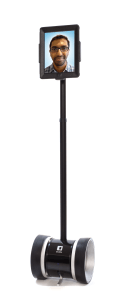 M2M For Real™ is my method to help people identify potential value from M2M in their organization. I have used it with different types of organizations and also with 150 people from different companies in a seminar. Short real-life examples are used to inspire and push creativity into the process. The examples are short since we don’t want to educate people about another industry, just create inspiration and ideas. Since they all come from the real world it helps give the feeling that M2M is here now. I have decided to start share examples like that in my blog thus hopefully help people find relevant examples for their own efforts. I will most often not mention the companies involved but sometimes I will. In order for the examples to be easy to search for I will title and tag them “Inspiring example”.
As the first inspiring example I wanted to share something really exciting: Double. It is an elegant minimalistic remotely controlled iPad holder on wheels. It combines elegance and great functionality with the power and ease-of-use of the iPad. You control the small silent robot remotely and can navigate it into any meeting or private discussion you want. Or take a close look at a painting in a gallery. Since the hight is adjustable Double can meet people face to face regardless if they sit or stand. The rechargeable batteries last all day and if you order today and pay US 2000$ you will have your Double early 2013. It is easy to fall in love with Double. Take a look and enjoy the movie.
So why do I mention Double here? It is a wonderfully designed M2M solution and there are serious efforts made to explain what we could use Double for: Video conferencing 2.0, tours without being present, promotion in public places like retail stores, etc. I am not convinced. But I believe a lot of people will buy Double simply because they can turn any home or office into a much cooler place. But the real reason why Double is important is that it creates inspiration and ideas. Just knowing that it is possible to get a nice, easy-to-use, remotely controlled communicating robot for 2.000 dollars (not 100.000 dollars) will make a lot of people come up with ideas where they can use Double to create value for them or their organization.
Leave a Comment » | Inspiring example, M2M, User Interaction | Tagged: B3IT, Inspiring examples, Internet of Things, iPad, M2M For Real™, Machine-to-Machine, Robot, usability, User interaction | Permalink
Posted by magnusmelander
August 17, 2012
 A lot of people and animals are killed and injured in road traffic, road vehicles impact our environment significantly and road traffic is an important part of efficient transportation of people and goods. With the key promises of M2M being safety, sustainability and efficiency there is a perfect match between road traffic and M2M. A lot of research projects are on-going and part of the overall efforts towards the ITS (Intelligent Transportation Systems) vision.
The air traffic system has for many years been developed aiming towards zero accidents. This process has made air traffic very safe and I am told that most of the remaining accidents are caused by human beings. The use of UAV (Unmanned Aerial Vehicle) and UCAV (Unmanned Combat Aerial Vehicle) is increasing mainly to avoid dull, dirty or dangerous flying missions. We have for example all heard about drone attacks (military planes without pilots) in countries like Pakistan and Afghanistan.
If we can fly helicopters and aircrafts without pilots we must be able to modernize the road traffic to make it safer, more friendly to nature and more efficient. And even if humans cause many or maybe most of the problems on the road we still don’t feel comfortable putting ourselves in the hands of technology on the roads or in the air. But this will change. The technical solutions are ahead of what we are willing to accept but carefully managed real life trials together with clear and big benefits will slowly make us humans agree to start using new solutions.
There are many advanced research projects in road traffic continuously pushing the frontier forward. Earlier this summer Volvo successfully led a road train consisting of a Volvo XC60, a Volvo V60 and a Volvo S60 behind a truck on a 200 km journey through Spain as part of SARTRE (Safe Road Trains for Environment). The cars outfitted with cameras, radars and laser sensors were six meters apart and drove safely 85 km/h without any driver interference. The vehicles in the test have covered some 10.000 km on test circuits before the trial. Beyond improved safety and sustainability road trains would allow us drivers to put a professional driver in command for a while, take a bite, check our mail and take a nap before taking control of the car again. Sounds great!Another interesting project is Google Driverless Cars. In May 2012 the first license for a self-driven car was issued in Nevada: a Toyota Prius modified with Google’s experimental driver-less technology. The team just announced that they have completed over 300,000 autonomous-driving miles accident-free, typically have about a dozen cars on the road at any given time, and are starting to test them with single drivers instead of in pairs.
ITS World Congress 2012 in Vienna October 22-26 is an interesting event for anyone interested in where road traffic is going. I’ll be there!
Leave a Comment » | ITS, M2M, Safety and Security, Transportation | Tagged: B3CC, B3IT, driverless, droner, Google, Internet of Things, IoT, ITS World Congress, M2M, Machine-to-Machine, road train, SARTRE, Toyota, Traffic, Transportation, UAV, UCAV, Volvo | Permalink
Posted by magnusmelander
August 4, 2012
 Single purpose M2M solutions have started to appear in the market. They are typically addressing one specific problem with a combination of hardware, software and communication. If the problem addressed is clear and considered big enough by many people and the solution works well then the willingness to pay should be possible to build a business around. Provided the solution uses the cloud to deliver the service from, then expanding the solution to include generic devices like smartphones, pads and PCs is an interesting next step at least to access the data but maybe to run the entire application on as well.
A good example is Coyote from France who claims over 1.7 million users of their speed camera alert system in Europe. The service is also available as an app for iPhone/iPad, Android, Blackberry and for Parrot. A Coyote device cost about 250€ including one year of service. A solution like this is also interesting for mobile operators since one agreement can sell hundreds of thousands subscriptions of the same type and each deal like this provides opportunities to add service enablement services on top of the connectivity.
The two key success factors of products like these are a high quality solution to a reasonable big problem and ease-of-use out of the box. Then people are willing to pay reasonably well for the service and word of mouth will work for marketing. Easy to buy and use solutions are also interesting in sales channels. It is quite likely that we will see many more single purpose M2M solutions onwards.
Leave a Comment » | Business Models, Cloud computing, Consumer market, M2M, M2M Service Enablers, User Interaction | Tagged: apps, B3CC, B3IT, Business model, Coyote, Internet of Things, IoT, M2M, Machine-to-Machine, speed camera, Traffic, Transportation, usability | Permalink
Posted by magnusmelander
June 18, 2012
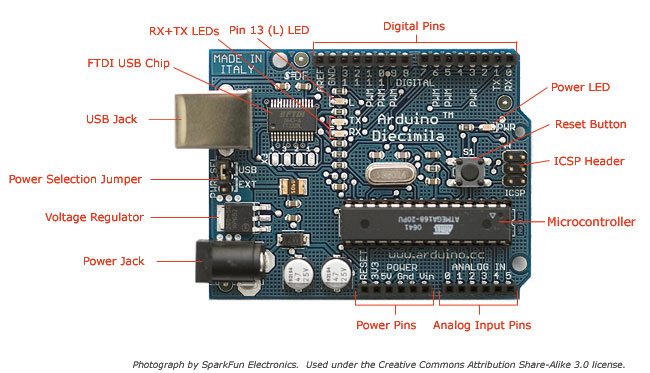
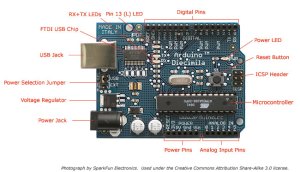 There are many reasons why M2M solutions will hit society, businesses and people with enormous power. Most of them relate to what happens when we connect things and put computing on top but one specific force is democratization of development tools – a similar brutal force that Basic and Hypercard gave to the PC industry, and that Apple provided the mobile industry with the App-concept. When thousands or millions of developers get going, innovation, specialization and competition happens big way.
Arduino is an open well documented physical platform developed 2005 in the Olivetti town Ivrea, Italy. It is a platform which collect, compute and communicate data which makes it the perfect prototyping tool for students, hobbyists and professional developers to realize their device ideas. Today the affordable and easy to use development kits can be bought at the Radioshacks of the world. Nobody knows how many Arduino developers there are but over 300.000 boards have been sold, the ratio of cloning is currently estimated to one per original board and Arduino skills are more and more often requested in CVs.
Arduino supports Windows, Mac OS X and Linux and there are a number of boards available. They are really affordable and pre-assembled Arduino modules cost less than $50. The community is rapidly growing and it’s easy to join by for example following the Arduino blog.
Among the companies using Arduino for their tools and services are Google and Telefonica. And the more I dig into the world of M2M the more spectacular examples of Arduino projects I find. Imagine this: a 14 year old boy in Chile developed an Arduino machine which post a Tweet when detecting an earthquake and now this alert is sent to some 30.000 followers on Twitter.
This is only the beginning. The opportunities are massive but some risks are also involved. Many companies will experience difficult competition from unexpected directions and some will leverage these forces to strengthen their position in the market. Governments will see completely new solutions to old and difficult problems. And consumers will be offered new innovative services, many of them replacing products we buy today.
I’m fortunate to work and live in the middle of this period of great change!
Leave a Comment » | M2M | Tagged: Arduino, B3CC, B3IT, democratization of development tools, Google, Internet of Things, IoT, Ivrea, Linux, M2M, Mac OS X, Machine-to-Machine, Olivetti, Telefonica, Windows | Permalink
Posted by magnusmelander
May 18, 2012
 M2M solutions using Mobile operator’s networks are growing quite aggressively. According to Berg Insight we have some 110 Million M2M SIM cards active today. But even if this impressive growth continues we will never reach the connected society within my life time unless generic, cost efficient, easy to install and use alternatives comes to market. It is not primarily a matter of communication technology – it is a matter of connectivity together with services enablement making it cost efficient to develop applications. Such solutions will use fixed or mobile wan connections to connect to the Internet.
At May 16 I stumbled over the first potential solution to the “M2M for the rest of us” solution – Electric Imp. They just left stealth mode introducing a line of Imp cards that can be installed on any electronic device to put it online and control it. The cards connect to the Internet and a cloud based service using Wi-Fi. In their own words: “take the best implementation of hardware, firmware and cloud service, build them into a single mass-produced product, and apply them to any device in the world”. The word Imp is borrowed from Arpanet’s Interface Message Processor. Developer preview Imp cards and developer kits will be available this summer and Imp cards will retail for $25 when available in the market. Electric Imp claim they have invented a solution for configuring Imp devices for Wi-Fi networks in seconds using iOS or Android smartphones.
I find this exciting since it sounds like Electric Imp has what it takes: a generic, cost efficient, easy to install and use solution for connecting things to the Internet. As an evangelist and investor in the early Wi-Fi days I am also exited to see bets on Wi-Fi in the M2M field.
Electric Imp has a great idea, strong founders, capable investors and address a massive market opportunity. Their success will be determined by how fast they will get hardware vendors to adopt their platform and put Imp-slots in their devices.
Leave a Comment » | Cloud computing, Consumer market, M2M, M2M Service Enablers, Networks | Tagged: B3CC, B3IT, Electric Imp, Imp, Internet of Things, IoT, M2M, Machine-to-Machine, SIM, smartphone, WiFi | Permalink
Posted by magnusmelander
May 15, 2012

Security, efficiency and sustainability are the three key promises of M2M to businesses. And most applications of M2M address one or several of these straight forward issues in an organization: minimize use of service cars, avoid production stops, save valuable time with accidents, make processes more efficient, automate to avoid expensive labour work, etc. These are straight forward in the sense that we address concrete problems quite easy to put numbers on and investments can be verified using business cases and ROI. But the ultimate value of M2M comes from innovative business models, increased brand value and other less tangible things. And these are much more complicated to identify and dress in numbers. Innovation and creativity is clearly an important part of such efforts and I would suggest companies to look at the M2M consumer market to get ideas and cases to bring home.
There is actually a fourth promise of M2M which I normally don’t talk about to businesses – convenience. But in the consumer market this is a key driver and differentiator. Other reasons to look carefully at the consumer market are the typically limited budgets forcing innovative and cost efficient solutions and the absolute requirement for easy to install and use solutions. In addition consumers are generally more open to cloud services and many of them are early adopters with smartphones, pads and other gadgets. Examples of things and tricks to bring from the consumer space to business could be the use of smartphones to connect devices cheaply to the Internet and the host of innovative cloud services using sensors and gadgets in the growing personal health and fitness market. Imagine how much the home care providers can steal with pride from here! Take also a closer look at how well many consumer services enable their users to use any and all of their devices for the service. A lot to learn there.
And by the way, isn’t the Internet-of-Things a misleading name? There is only one Internet of People and Things.
Leave a Comment » | Business Models, Cloud computing, Consumer market, M2M, User Interaction | Tagged: B3CC, B3IT, business case, Business model, Internet of People and Things, Internet of Things, IoT, M2M, Machine-to-Machine, roi, usability | Permalink
Posted by magnusmelander
April 24, 2012
 Services like Skype and Spotify utilizing the Internet just as a connection are often referred to as over the top services or OTT. Consumers normally love them but operators typically have a more complex view of them: great since they create demand for their IP services but not that great if they replace services the operators charge for. Most M2M applications are really tiny in terms of traffic generation which explains why over 95% of the mobile ones still use 2G. For mobile operators M2M is more of a subscription business than a data business today. It is hard to estimate how M2M solutions will impact data volumes since it’s a combination of actual applications and volumes of connected devices.
I always claim that the M2M consumer market is a great place to look for innovation and interesting examples to bring to the business market. One example is what could be referred to as M2M OTT, where vendors of connectable devices use people’s ordinary mobile devices to connect to the Internet and an application in the cloud or elsewhere. This can make the device cheaper and smaller to manufacture and use. By using for example Bluetooth to connect to the phone and leverage the existing subscription and data plan. Data from the device can be made available to an application somewhere typically adding no cost to the user. And no new revenues but more traffic to the operator. There are many examples of this in the consumer market today and the personal health and fitness segment is one worth looking at. A mix of books, trends, research, services and products has created a rapidly growing movement and industry. Dr David B. Agus’ bestseller “the end of Illness” and the sleep monitor Zeo are good examples. The Zeo is a complete system taking sleep analysis out from the labs. By connecting a Zeo headband to an iPhone or Android phone via Bluetooth, the sleep data collected is made available to an app for reporting. But the sleep history data is also made available to the user’s account at mysleep.myzeo.com where analysis, backup and other services are available.
Using the mobile devices for local collection and presentation of data and access, over the top, to an application and services in the cloud is a model we can use in other situations. There are obviously downsides having to deal with Bluetooth, phones running out of power or stolen etc. But for some applications this is a great model maybe also in the business environment. There is simply not one or two models for M2M but many, and it is important to carefully look at all possible approaches available when implementing an M2M project.
Leave a Comment » | Cloud computing, Consumer market, M2M, Networks | Tagged: 2G, Agus, Android, apps, B3CC, B3IT, Bluetooth, Internet of Things, IoT, iPhone, M2M, Machine-to-Machine, OTT, over the top, SIM, smartphone, zeo | Permalink
Posted by magnusmelander
April 12, 2012

The mighty mobile industry is a major force behind M2M today. They have what it takes to connect things, they need to find growth beyond the six billion active SIM cards today and they are promoting the concept of M2M aggressively. But at the same time it is quite obvious that a lot of things will be connected without SIM card. We already have a lot of connected devices in the PSTN network, many electricity meters are connected using PLC or other wireless network technologies than the mobile networks and wireless technologies like W-Fi, Bluetooth, ZigBee and RFID are already used in many applications. Different technologies have their strengths and weaknesses, new ones are coming to market while old ones are fading away. But the concepts of wide area and local area networks remain. Generally speaking it takes technologies optimized for LAN or WAN to build cost and capacity efficient networks. Sometimes even a shorter range network structure is needed like a Personal Area Network.I believe the mobile networks will be used for some connected devices, especially moving things or if one want to avoid dealing with Firewalls. But more so as the preferred WAN solution for things connected to a local area network solution. I have come across estimates that one out of ten connected devices will have a SIM card and I think that could be a reasonable estimate. If Ericsson’s “50 Billion connected devices by 2020” would be reality, 5 Billion of them would have a SIM card. That is a lot more SIM cards than the 108 Million mobile M2M SIM cards that Berg Insight estimate are active today world-wide. But what about the other 45 Billion connected devices? How will they be connected and managed and how will relevant data generated by these devices become easily available for application developers and integrators?
The most immediate challenge for the M2M industry is to establish a rich assortment of M2M services enablers in order to make development and maintenance of M2M application more resource and time efficient. M2M Service Enablers will have different features and specialities and they can be deployed in three different ways: on top of operator connectivity services, as in-house solutions or in independent service providers.
But another very interesting area to be addressed is how to connect devices in a local infrastructure in order to enable resource efficient development, maintenance and monitoring as well as a structured way to deal with relevant data. I use to refer to “Local M2M Gateways” and I have started to look for clever ideas and solutions in the market. I am convinced there is room for a whole range of different products optimized for different situations, still providing a quite standardized interface to M2M Services Enablers. In some cases we need to connect locally using only one technology and in other situations we need to support a mix of several technologies. Connecting sensors or things with sophisticated embedded systems put different requirements on the Local M2M Gateways. The choice of WAN-connection, with or without backup, is yet another area where we will need different solutions. And whichever solution we end up using, it has to be cost efficient, easy to deploy and maintain and robust. These will be important tools when helping organizations to design relevant M2M solutions to meet their challenges and opportunities.
3 Comments | M2M, M2M Service Enablers, Networks | Tagged: B3CC, Berg Insight, Bluetooth, Ericsson, Internet of Things, IoT, LAN, M2M, Machine-to-Machine, PAN, PSTN, Rfid, SIM, WAN, WiFi, ZigBee | Permalink
Posted by magnusmelander
March 30, 2012
 This post was published on M2M Daily March 15, 2012: http://www.m2mdaily.com/m2m-editorials/m2m-enables-new-business-models/
Many industries end up in the huge global market with ever increasing competition putting immense pressure on cost, performance, functionality, service, etc. One approach to change game plan is to change business model from selling products to selling functionality. Something-as-a-service and pay-per-use are concepts along those lines. It is likely that clients in general prefer such offerings since it feels fair to pay for use, it feels good not to have to take care of product problems and in relevant cases it’s great not even having to host or see the products. For vendors it is easier to manage manufacturing, production and service if they own the products, they improve R&D since they get to know everything about the product life cycle but they will get their revenues distributed over maybe 34 to 60 months instead of up front. That is horrifying and require a lot of change to any company going down this path.
M2M is a key enabler to business transformation. Today we can connect products to the vendor’s relevant systems for planning, maintenance, financial reporting, invoicing, support, etc. From a technical point of view this enables change of business model to for example a pay per use model. Since we can monitor, control and manage the products remotely we can constantly improve everything that relates to the product during its life cycle including preventive maintenance, tune for more efficient energy consumption, decrease downtime due to alarms, make software upgrades over the air, etc. These are obviously relevant benefits also with a traditional business model but the point is that with full control of a product through out its life a service oriented business model looks more attractive.All of this is pure technical and no one should underestimate the complexity from a business, organization, systems and management point of view to make changes like this. But still, M2M makes it technically possible today.
We see an increasing number of cases where companies connect their products but it is most often to improve a specific thing like maintenance. And the risk is that the technical implementation works for the purpose but can’t support the next request coming up somewhere else in the company. It is still quite rare that vendors also change the business model but there are interesting examples of companies who do. Innovative business models seem more for newcomers than for established businesses. If it ain’t broken, don’t fix it! Well, if it is a good idea someone will do it and it might be disruptive.
I would argue that now is the time for companies to start look into these things. Keep an eye of what competitors and players in adjacent industries does, start play with ideas of what we could do if we connected our products and what the results would be. And most importantly, if you decide to get going, ensure you build a solution supporting needs you might have over the life time of the products.
Leave a Comment » | Business Models, M2M | Tagged: as-a-Servcie, B3CC, B3IT, Business model, Internet of Things, IoT, M2M, Machine-to-Machine, Pay-per-use, R&D | Permalink
Posted by magnusmelander
 The key deliverables of M2M are efficiency, security and sustainability. M2M can also deliver convenience which mainly is relevant for the people involved. Well designed M2M implementations often deliver across all of these areas.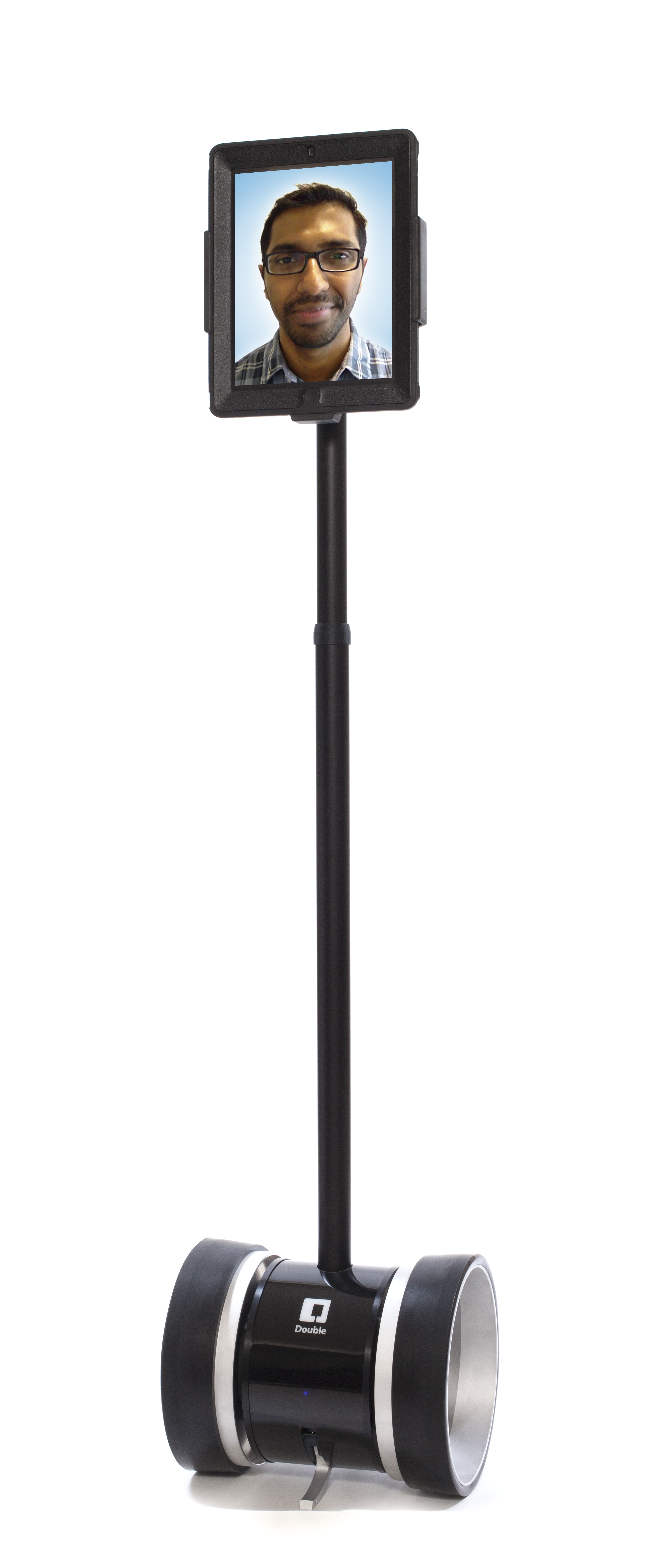







 connectcompute