January 7, 2015
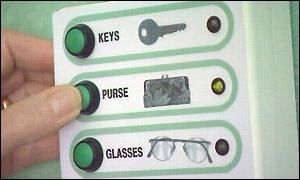 Smart Homes is a much talked about opportunity for IoT. It has what it takes to attract a lot of companies and people including those owning, managing, visiting and living or working in them. And beyond that also companies selling products and services for them. And the concept of smart homes is fluffy enough to include the three big deliverables of IoT: sustainability, safety and efficiency, as well as things like economy, comfort, fashion and entertainment.
We all know that a specific solution for every single task or device isn’t good enough. So the approach to make a remote controller for the toaster, one for the fridge and one for the kitchen fan (I actually saw a dedicated remote controller for the fan in Italy and I’m still thinking about the use-case) will not make the job. And we also know that “this is THE network for the SmartHome” approach isn’t taking us there since we already have a lot of different infrastructure and networks in houses and we have a number of different more or less technical requirements on them.
The combination of these two insights makes it hard to come up with Smart Home solutions that will capture large parts of the market, especially if we leave aside new buildings where one can start from scratch. I suggest something like a cluster approach to the challenge where we try to combine infrastructure, applications and tools to provide attractive solutions for larger parts of the Smart Home challenges. Let me give you a couple of examples what that could look like:
- The ultimate Media solution which uses IP networks to stream content easily and flexibly to and from devices and services (bring the best from Sonos, AirPlay, Spotify, Netflix, etc). Once installed you could add, change and remove hardware and software components easily.
- A really secure managed infrastructure with a tough SLA for applications and services that require an infrastructure to really trust. Applications could be alarms, door locking systems, smoke detectors and other things you are ready to pay extra for if the service is guaranteed.
- A kitchen app that interact with all your favourite Internet services for cooking and shopping, your kitchen appliances regardless of brand (or not?) and maybe energy monitoring and advice relating to the kitchen.
I have concluded that we will have at least three networks in our homes: an unmanaged Wi-Fi network which is already there, a managed very secure network with top-notch quality of service and a more generic but still managed network for things like home appliances. WAN solutions will generally speaking be too expensive and will just complement the LANs the way they always had. But some devices connected directly to a mobile network and/or narrow band WAN infrastructure like Sigfox will most certainly be part of the solutions.
One of the most interesting projects I’m currently involved in is a joint effort between a number of Swedish real estate owners and members of our alliance for Swedish IoT entrepreneurs (SMSE) with real estate focus. The request from the real estate owners was “a secure, robust and open service platform for multi-dwelling buildings” which they can install now, keep for years and have app developers to start bringing innovation to tenants, owners and maintenance staff.
We’re working with several technologies and one of the most interesting one is the well established Internet chat protocol XMPP since it provides a promising open architecture to deal with data integrity and privacy issues. We have already pulled together the bits and pieces required to run our first hackathon creating mobile apps on building automation systems talking XMPP. I’m looking forward to the next few months of this project which hopefully include a major hackathon demonstrating the power of this approach.
59.368609
18.125660
 Leave a Comment » |
  Consumer market, IoE, IoT, Networks, Safety and Security, User Interaction | Tagged: AirPlay, Hackathon, HackSprint, IoE, IoT, M2M, Netflix, real estate, Smart home, SMSE, Sonos, Spotify, XMPP |
  Permalink
 Posted by magnusmelander
July 21, 2014
 One of the most talked about areas for Internet of Things is Smart Cities. Cities themselves invest to become one. Most of the large players in IoT focus on Smart Cities. There are events, predictions, articles and show cases everywhere and each and everyone use their own definition of Smart Cities. A city is a very complex and dynamic location which from an ICT point of view could be described as a system of systems. It is obvious that sub-systems could be more efficient using IoT solutions and that the overall system of systems could be improved if the data collected was shared cleverly between the systems. No wonder Smart Cities is a perfect topic to focus on both for suppliers and municipalities.
But how much smarter has cities become over the last years? Well, there are of course impressive reference cases here and there and a lot of sub-systems in a lot of cities have become better using IoT solutions. But the size and complexity of pulling it all together in a city is difficult to deal with both from practical and technical perspectives.
This is why I am really impressed by Infracontrol, their pragmatic approach to Smart Cities and what they have been able to do. They started about 20 years ago to help cities connecting mainly traffic related things like tunnel alarms, ventilation systems and traffic lights. As they grew bigger in several cities and with new applications they developed Infracontrol Online™ 2003 to connect cities and citizens for better services. Today they have 56 Swedish municipalities using Infracontrol Online™ and their first ones in Portugal in place as well. Their customers report 60% better service quality, 30% savings in maintenance expenses, a lot of energy savings and higher citizen satisfaction. Sounds smart to me! Needless to say Infracontrol is a member of the Swedish SMSE-alliance!
Get inspired by Jenny Gustavsson’s 5 minute pitch on Infracontrol at Internet of Everything For Real™ 2014!
Leave a Comment » | Cloud computing, Inspiring example, IoE, IoT, ITS, M2M, M2M Service Enablers, Safety and Security, Transportation, Utilities | Tagged: Infracontrol, Internet of Everything, Internet of Everything For Real™, Internet of Things, IOE2014, IoT, M2M, Municipality, Smart City, SMSE, sustainability | Permalink
Posted by magnusmelander
September 23, 2013
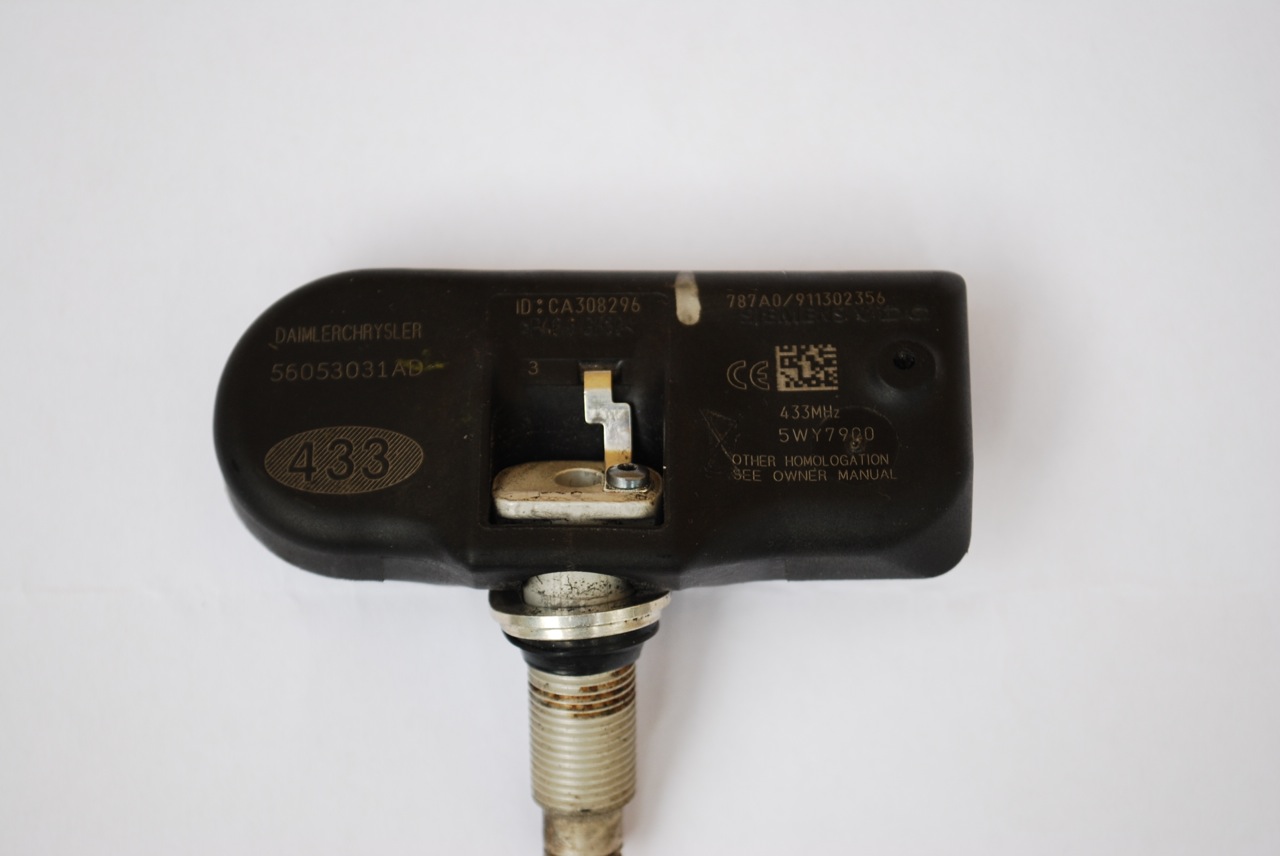
 Vehicles with wrong tire pressure cause accidents and consume excess energy. Tire Pressure Monitoring Systems (TPMS) were developed to prevent these issues. The first passenger vehicle to adopt tire-pressure monitoring was the Porsche 959 in 1986 and today it is becoming a legal requirement in more and more countries. Car manufacturers have been introducing different TPNS systems more or less voluntarily but in the United States, as of 2008 and the European Union, as of 2012, all new passenger car models released must be equipped with a TPMS. Similar laws are on their way in Asia-Pacific.
TPMS are definitely complex from an engineering, communication and product point of view and the combined investment, including equipment in garages and motor vehicle inspection sites, the sensors in the tires and the receiving part of the in-car system is very big. The National Highway Traffic Safety Administration (NHTSA) in the US estimates that 660 fatalities and 33,000 injuries each year are attributable to crashes caused by underinflated tires (Bob Ulrich, Editor, at Modern Tire Dealer) so it seems like well working TPMS can help save lives, money and the planet. But every system like this is always a potential hacker target and Rutgers University and the University of South Carolina released a joint study some years ago indicating that they had succeeded to hack a car through the TPMS.
In any case, this is a typical M2M application – it’s been around for years, many of us have them, they are not SIM-based and they deliver on the three M2M promises: safety, sustainability and efficiency.
1 Comment | Inspiring example, ITS, M2M, Safety and Security, Transportation | Tagged: B3CC, B3IT, Internet of Things, IoT, M2M, Machine-to-Machine, NHTSA, Porsche 959, Rutgers University, security, SIM, sustainability, TPMS, Traffic, Transportation, University of South Carolina | Permalink
Posted by magnusmelander
April 13, 2013
 Initially technical innovators focus all they have on making it do whatever they want their innovation to do. Shortly after the breaking news about their brand new product, solution or service we use to receive the follow-on news about problems with things like security, health impact, integrity or fair trade. The scope of the problems obviously relates to what the new thing actually is.
Lets face it, it has always been like this. Telephone systems, microwave ovens, TV set-top boxes, ATM:s, door locks, PCs and Wi-Fi networks are all examples of things that quite easily were possible to manipulate, at least initially. But when we connected people and businesses to the Internet the magnitude of the problem increased many times. Having almost everything using the same communication protocols and even the same network gained us a lot of efficiency but also raised the security bets drastically. Most attacks are not reported publicly but the ones we hear about are serious enough. Fire Eye claims one security attack to enterprises every third second, based on analysis of information on more than 89 million security related attacks reported. Some specific examples since last summer, picked up from Network World: 450.000 stolen passwords from Yahoo, 5,8 million passwords from LinkedIn, 1,5 million from eHarmony, 8 million online credentials from Gamigo and about 3.6 million Social Security numbers and 387,000 credit and debit card numbers from South Carolina. And we all remember the series of password thefts at Sony some two years ago. We’re already at the point where this belongs to the daily news feed and is business as usual.
Now we are connecting also things to the Internet and we will inevitably enter a new era of security and integrity issues, yet on another scale. Imagine hackers manipulating traffic lights, road signs, railroad control systems, power grids, nuclear plants, TV broadcasts, elections, pacemakers, airplanes, stock exchanges or hospitals. Media is quite frequently presenting examples along those lines and even if it is hard to differ between urban legends and real life cases it is safe to say that security will be a very important part of the M2M industry.
Recent examples from media include the Techspot.com story about a security consultant and pilot who claims he can hijack a commercial airplane remotely with his Android app, a story about a hacked pacemaker in the US where almost five million pacemakers and implantable defibrillators have been sold the last five years and several stories about hacked cars including the most recent research from Rutger University and University of South Carolina where they manipulated cars in motion via the TPMS system. At the Hack in the Box conference in Amsterdam the other day electrical vehicle charging stations were identified as potential targets for hackers to cripple parts of the electricity grid.
If the issues of security, safety and integrity aren’t taken seriously by the industry they will slow down or even prevent deployment of M2M solutions. Since perception is reality we need to go beyond just fixing the issue – we also have to make people believe it is taken care of seriously.
Leave a Comment » | M2M, Safety and Security | Tagged: ATM, B3CC, B3IT, eHarmony, fair trade, Fire Eye, Gamigo, Health, Internet of Things, LinkedIn, M2M, Network World, pacemaker, PC, security, Sony, South Carolina, techspot, Wi-Fi, Yahoo | Permalink
Posted by magnusmelander
December 28, 2012
 The European Union took yet another step towards an interoperable EU-wide eCall solution when the Commission just adopted a Regulation which establishes the specifications for the upgrading of the Public Safety Answering Point (PSAP) infrastructure required for the proper receipt and handling of eCalls. eCall is a key initiative to meet the target of halving the overall number of road deaths in the European Union by 2020 starting from 2010.
According to EU: Road safety is an issue of major concern across the entire European Union and for all of its inhabitants: 500 million citizens in the 27 Member States use more than 230 million vehicles on over 5 million km of roads. The purpose of the interoperable EU-wide eCall initiative is to introduce in all vehicles in Europe the minimum functionalities needed to ensure adequate handling of the emergency calls by the emergency response services. Currently, road journeys exceed 100 million annually across the various Member States and they are increasing due to further consolidation of the European Union (through the free movement of goods, people and services). Road safety is one of the major policy issues of Transport Policy in the European Union. In 2009 around 35,000 people were killed and more than 1.5 million injured in about 1.15 million traffic accidents on EU roads. In addition to the tragedy of loss of life and injury, this also carries an economic burden representing approximately EUR 130 billion of cost for society.
I believe this is a typical area where agreements on a standard infrastructure makes a lot of sense. We will save lives, pain, money, time and the environment while establishing an infrastructure which will support the development of the EU region for many years. A common PSAP could obviously be used for more than eCall and will set a standard for certain international services which will help us in the critical effort to make M2M an international business.
Leave a Comment » | ITS, M2M, Safety and Security, Transportation | Tagged: B3IT, eCall, environment, EU, EU Commission, Internet of Things, IoT, M2M, Machine-to-Machine, PSAP, security, Traffic, Transportation | Permalink
Posted by magnusmelander
October 30, 2012
 ITS World Congress in Vienna is over. A well organized high-profile event with ministers, a grand opening event and a grand ball. The large exhibition halls were full of technology and complex drawings, the seminar program extensive and ministers from all over the world attended. We have seen the movie before: there was full agreement among delegates, speakers and exhibitors also at the 19:th ITS World Congress that ITS is important to save the world, increase safety and security and improve efficiency for people, organizations and societies. A lot of things are happening in the field but still too many “one road here and one road there pilots”.
But there are three fairly new enablers in the ITS market that can make things happen big way:
- – the smartphones and pads allowing us to visualize complex things and deliver relevant real-time information for powerful decision-making
- – the Open Data initiatives carried out in Europe and elsewhere enabling developers to access enormous amounts of relevant data for innovative ITS solutions
- – the rapidly growing M2M market is feeding Service Enablers with data and together with the Open Data sources this enables faster and more cost efficient development and maintenance of applications.
We have what we need to start taking real advantage of ITS now. Decision makers need to be brave enough to make the right decisions: ensure a strategy for management of data, use of M2M, etc. then go from pilots to action, open up the data and let the entrepreneurs figure out what users want. This will help us realize the benefits of ITS in terms of efficiency, sustainability, security and convenience.
Leave a Comment » | ITS, M2M, M2M Service Enablers, Safety and Security, Transportation | Tagged: B3IT, convenience, ITS World Congress, M2M, Open Data, pads, PSI, security, smartphones, sustainability, Traffic, Transportation, Vienna | Permalink
Posted by magnusmelander
September 8, 2012
 The key deliverables of M2M are efficiency, security and sustainability. M2M can also deliver convenience which mainly is relevant for the people involved. Well designed M2M implementations often deliver across all of these areas.
Public bus transportation is an important part of the transportation system. To pick the bus should be safe, energy-smart and help improve efficiency in the city. And except for peak hours when buses might be full, the ride should be convenient. But even though buses are quite similar the drivers have different driving style. A recent study at the University of Lund concludes that it is more dangerous to go by bus than by car in cities. Injuries from traffic accidents with buses are rare but a lot of people hurt themselves when they fall during the ride, when jumping on or off the bus or at the bus stop. This is one area where the driver makes a difference. Energy consumption, impact on traffic flow and convenience for the passengers are other areas where the bus drivers knowledge and style makes difference.
The public bus company in the city of Borås in Sweden are now installing a M2M system in the buses which measures how well the drivers drive. The metric used is passenger comfort and a lamp indicates performance: red means poor, yellow is ok and green is great.
I like this a lot since it’s an easy way to improve something in many different ways. Just by showing the performance the drivers will improve their driving – it is an old truth that what is measured gets better. The project makes the company and it’s employees aligned to what is considered important. And last but not least, the “red drivers” get training and the “green drivers” a bonus. What a wonderful way to make things better.
Leave a Comment » | Inspiring example, ITS, M2M, Safety and Security, Transportation, User Interaction | Tagged: B3CC, B3IT, Borås, bus driver, bus stop, convenience, eco driving, efficiency, Internet of Things, M2M, Machine-to-Machine, passenger comfort, public bus, safety, security, sustainability, Traffic, Transportation, transportation system, University of Lund, User interaction | Permalink
Posted by magnusmelander
August 17, 2012
 A lot of people and animals are killed and injured in road traffic, road vehicles impact our environment significantly and road traffic is an important part of efficient transportation of people and goods. With the key promises of M2M being safety, sustainability and efficiency there is a perfect match between road traffic and M2M. A lot of research projects are on-going and part of the overall efforts towards the ITS (Intelligent Transportation Systems) vision.
The air traffic system has for many years been developed aiming towards zero accidents. This process has made air traffic very safe and I am told that most of the remaining accidents are caused by human beings. The use of UAV (Unmanned Aerial Vehicle) and UCAV (Unmanned Combat Aerial Vehicle) is increasing mainly to avoid dull, dirty or dangerous flying missions. We have for example all heard about drone attacks (military planes without pilots) in countries like Pakistan and Afghanistan.
If we can fly helicopters and aircrafts without pilots we must be able to modernize the road traffic to make it safer, more friendly to nature and more efficient. And even if humans cause many or maybe most of the problems on the road we still don’t feel comfortable putting ourselves in the hands of technology on the roads or in the air. But this will change. The technical solutions are ahead of what we are willing to accept but carefully managed real life trials together with clear and big benefits will slowly make us humans agree to start using new solutions.
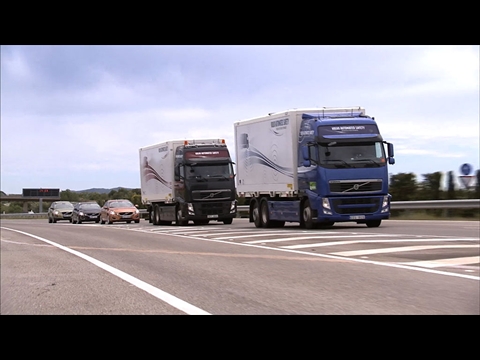
There are many advanced research projects in road traffic continuously pushing the frontier forward. Earlier this summer Volvo successfully led a road train consisting of a Volvo XC60, a Volvo V60 and a Volvo S60 behind a truck on a 200 km journey through Spain as part of SARTRE (Safe Road Trains for Environment). The cars outfitted with cameras, radars and laser sensors were six meters apart and drove safely 85 km/h without any driver interference. The vehicles in the test have covered some 10.000 km on test circuits before the trial. Beyond improved safety and sustainability road trains would allow us drivers to put a professional driver in command for a while, take a bite, check our mail and take a nap before taking control of the car again. Sounds great!Another interesting project is Google Driverless Cars. In May 2012 the first license for a self-driven car was issued in Nevada: a Toyota Prius modified with Google’s experimental driver-less technology. The team just announced that they have completed over 300,000 autonomous-driving miles accident-free, typically have about a dozen cars on the road at any given time, and are starting to test them with single drivers instead of in pairs.
ITS World Congress 2012 in Vienna October 22-26 is an interesting event for anyone interested in where road traffic is going. I’ll be there!
Leave a Comment » | ITS, M2M, Safety and Security, Transportation | Tagged: B3CC, B3IT, driverless, droner, Google, Internet of Things, IoT, ITS World Congress, M2M, Machine-to-Machine, road train, SARTRE, Toyota, Traffic, Transportation, UAV, UCAV, Volvo | Permalink
Posted by magnusmelander
July 3, 2012
The European Parliament just adopted a resolution where they call on the European Commission and Member States to make sure eCall is installed in every new vehicle by 2015. The Parliament consider this resolution a major step towards the roll-out of eCall in Europe that will have a significant impact on citizens’ safety.
This is certainly a good intention and with 35-40.000 Europeans killed and over a million injured in road accidents per year something needs to be done. But it is not obvious that eCall will make a big difference in that regard. Some countries don’t have national response centers which will make implementation more difficult and similar services from car manufacturers haven’t really become commercially popular. I guess the road towards less road traffic accidents starts with better drivers, better cars and better roads but I obviously hope eCall will save a lot of lives.
But connecting all new cars in a similar fashion could potentially make a difference in other ways. If some data would be made more openly available we could see a lot of new innovative services made available to drivers, owners, insurance companies and government agencies. Imagine apps like the Volvo App managing the parking heater etc becoming available for all cars, maintenance data becoming available to third party service companies, real time position data available to ITS systems, etc. And if some of these services really would take off the vehicle M2M retrofit market would be huge. We all know it by now: data is the gold of M2M.
Leave a Comment » | ITS, M2M, Safety and Security, Transportation, User Interaction | Tagged: apps, B3CC, data is the gold of M2M, eCall, European Commission, European Parliament, insurance, Internet of Things, M2M, m2m retrofit, On Call, open api, Traffic, Transportation, Volvo | Permalink
Posted by magnusmelander
June 4, 2012
 ABB acquires the Wi-Fi mesh pioneer Tropos Networks to strengthen its Utility Communications product group. California based Tropos Networks has delivered a large number of wireless metropolitan and campus networks over the last ten years or so and I would even say that they made Wi-Fi mesh a viable metro network solution to the market.
This acquisition by ABB is very interesting and underline the grande potential for especially smart grids but also other private network applications. Tropos has deployed private networks for applications like meter reading, ITS, mobile workforce, public safety, telemedicine, parking meters, etc.
M2M is required to solve the efficiency problems, the security issues and the sustainability challenges in the world. And many of these applications will use private networks for financial and/or security reasons. Each of these areas will develop to become ICT systems in the size of the Internet which is why really large global players invest early on. I suggest you keep an eye at GE, ABB, Siemens, IBM and similar players.
Interesting move ABB!
1 Comment | Healthcare, ITS, M2M, Networks, Safety and Security, Transportation, Utilities | Tagged: ABB, GE, IBM, ICT, M2M, mesh, meter reading, metro networks, parking meters, Private networks, public safety, Siemens, telemedicine, Tropos, WiFi | Permalink
Posted by magnusmelander
 Smart Homes is a much talked about opportunity for IoT. It has what it takes to attract a lot of companies and people including those owning, managing, visiting and living or working in them. And beyond that also companies selling products and services for them. And the concept of smart homes is fluffy enough to include the three big deliverables of IoT: sustainability, safety and efficiency, as well as things like economy, comfort, fashion and entertainment.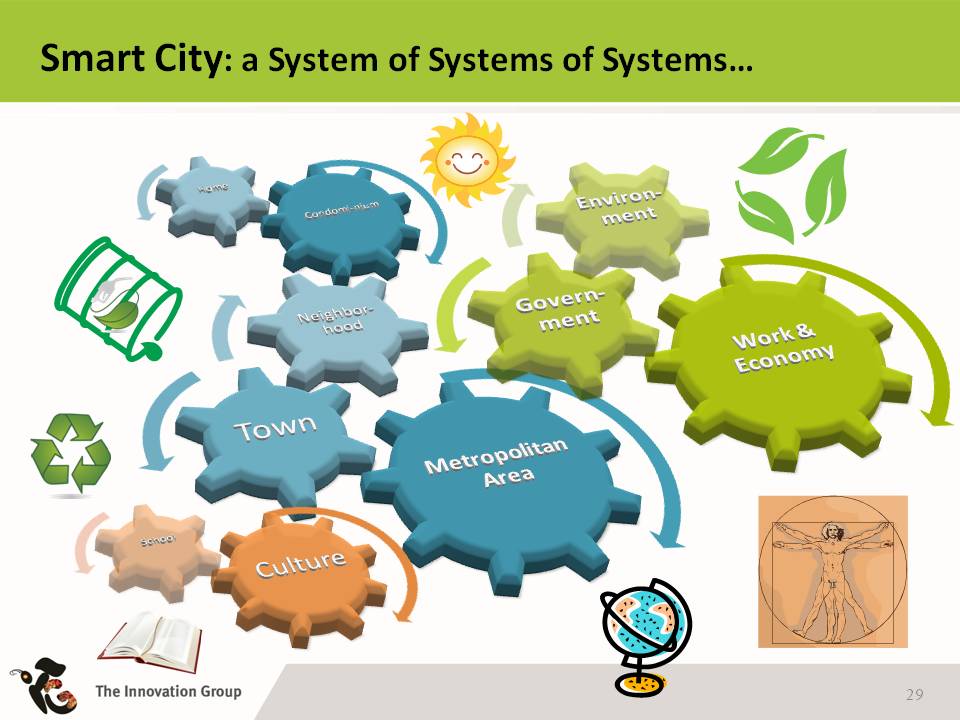



 connectcompute