February 19, 2013
 M2M Service Enablement is the “magic” turning generic communication services into specific applications in an affordable and scalable way. Users need applications addressing their needs and the role of M2M Service Enablers is to make it easier, faster and cheaper to develop, implement and maintain such applications. But M2M Service Enablement is complex and requires communication and IT skills together with serious understanding of the industry or function to serve. Service Enablers need to be specialized since only the companies understanding the context of the data can deliver to the customers according to their expectations. “Connecting things and gather data in the cloud” is already too generic.
The Service Enablement market will be specialized and industry focused. But still it has to become international for M2M to really take off. Today the M2M Device Connectivity part of it is quite international but most Specialist Service Enablers are domestic. And while Device Connectivity solutions enable operators to deliver better and more granular services, Specialist Service Enablers are needed to bring new customers.
In order to try push Service Enablement to become international I started a small alliance called Swedish M2M Service Enablers a year ago. Today two new members joined and we are now ten companies. But we also announced four new sponsors of our initiative, are mobile operators. This gives us more weight and power which is needed to move the internationalization forward.
The purpose of the alliance is to educate the market, promote Sweden as a great place to go to for Service Enablement solutions and to promote the individual members abroad. We welcome invites to collaborate, discuss, speak and most importantly make business together. A number of such relationships are already in place but we can manage many more. Just keep them coming! Next opportunity is to ask for me in the Swedish Pavilion at Mobile World Congress, hall 7 (stand 7E80).
 Leave a Comment » |
  Business Models, Cloud computing, M2M, M2M Service Enablers | Tagged: B3CC, B3IT, Business model, Internet of Things, IoT, M2M, SMSE |
  Permalink
 Posted by magnusmelander
February 13, 2013
 The power of M2M is the ability to enable drastic changes in an industry. To do things differently. To change the game. Like in the early days of Internet we still focus on connecting things. That is good and makes us faster, cheaper, greener, etc. But it doesn’t change the game. It is when the technology is used to completely re-think and re-design something the power is released.
A wonderful example is thermostats. The “father of the iPod”, Tony Fadell, created the “learning thermostat” after having stumbled over expensive, dumb and ugly thermostats for the green house he was building. He created the gorgeously designed Nest which has been shipping for more than a year now. It is said to be compatible with 95% of the American and Canadian low voltage residential heating and cooling market by now. This little sexy device can remove some 20% of the heating and cooling energy bill and cost $250 US. Nest is now shipping 40-50K units per months and investors continue betting on Nest which now is said to be valued to $800 million US.
People normally don’t bother about thermostats but this easy to install and use, wonderfully designed and intelligent darling that saves people money has become a best-seller at Amazon, at Lowe’s and on Apple’s online store. It uses a number of sensors to understand the life-style of the household and adjusts heating and cooling in an optimal way. Beyond the information on the device itself it communicates with people’s smartphones and pads.
Innovative new approaches in established industries are always challenged by established players and Nest is already involved in legal battles. But I think we only have seen the beginning of Nest. Now they address consumers right away, seducing them with design and a good cause. But the device is Wi-Fi and ZigBee enabled thus ready for the Utilities and the Smart Grids. Is there a reason for a Utility to install another device in a home where a Nest already is in place?
1 Comment | Consumer market, Inspiring example, M2M, User Interaction, Utilities | Tagged: Amazon, Apple online store, B3CC, B3IT, cooling, design, energy bill, heating, Internet of Things, IoT, Lowe's, M2M, pads, smartphone, thermostat, usability, Wi-Fi, ZigBee | Permalink
Posted by magnusmelander
January 15, 2013
 People are working hard to find clever ways to embed connectivity into things in a cheap, scalable and non-complicated fashion. Tethercell is an excellent example of that! By re-designing the content of the most used standard battery – AA – they make you able to master and control a whole lot of things from your iPhone. Parents with kids using noisy toys can secretly turn them off when they had too much for example. The product which looks like an AA battery includes advanced technology and an AAA-battery for power. It is remotely managed via Bluetooth 4.0 and a free IOS-app. Bluetooth 4.0 is the latest revision of the wireless protocol and it brings primarily much better power efficiency through Bluetooth Low Energy (BLE), also referred to as Bluetooth Smart.
The product allows you to turn AA-powered devices on and off remotely, give alerts when power is low and it allows you to set simple timers and device schedules to save battery power.
Tethercell is yet another crowdfunded product using indiegogo.com and with about a month ago they have raised about 25% of the $59 000 US they aim for. $35 US gives you one battery and the app to control it and estimated landing is June 2013.
Leave a Comment » | Consumer market, Inspiring example, M2M | Tagged: AA-battery, app, B3IT, battery, BLE, Bluetooth, Bluetooth 4.0, Bluetooth Low Energy, bluetooth smart, crowd funding, Internet of Things, IOS, M2M, smartphone, Tethercell | Permalink
Posted by magnusmelander
January 7, 2013

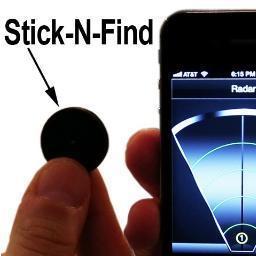
Solving real problems is a good foundation for entrepreneurs. And finally finding what we are looking for is something we all like. StickNFind is a promising solution built on Bluetooth technology together with IOS and Android. You simply put your very small Bluetooth stickers on your keys, pets, children backpacks or whatever you want to keep an eye on. The receivers are similar in size as a quarter-dollar coin and quite thin. The replaceable battery lasts for about a year. When you use the StickNFind mobile app to find things you can even light the label up and make it vibrate to help localize the item. But you can only locate things about 30 meters away. One can also use StickNFind to tell when tagged things are coming within range like the bag at the airport convey belt or getting out of range like your turtle trying to escape. Two labels are sold for $35 US but you can have many more managed from one phone.
StickNFind Technologies use
Indiegogo to crowd finance their product and with just a couple of days left they have raised almost ten times the $70.000 US they aimed at.
1 Comment | Consumer market, Inspiring example, M2M, User Interaction | Tagged: apps, B3IT, Bluetooth, crowd financing, Indiegogo, Internet of Things, M2M, Machine-to-Machine, smartphone, trace, track | Permalink
Posted by magnusmelander
December 28, 2012
 The European Union took yet another step towards an interoperable EU-wide eCall solution when the Commission just adopted a Regulation which establishes the specifications for the upgrading of the Public Safety Answering Point (PSAP) infrastructure required for the proper receipt and handling of eCalls. eCall is a key initiative to meet the target of halving the overall number of road deaths in the European Union by 2020 starting from 2010.
According to EU: Road safety is an issue of major concern across the entire European Union and for all of its inhabitants: 500 million citizens in the 27 Member States use more than 230 million vehicles on over 5 million km of roads. The purpose of the interoperable EU-wide eCall initiative is to introduce in all vehicles in Europe the minimum functionalities needed to ensure adequate handling of the emergency calls by the emergency response services. Currently, road journeys exceed 100 million annually across the various Member States and they are increasing due to further consolidation of the European Union (through the free movement of goods, people and services). Road safety is one of the major policy issues of Transport Policy in the European Union. In 2009 around 35,000 people were killed and more than 1.5 million injured in about 1.15 million traffic accidents on EU roads. In addition to the tragedy of loss of life and injury, this also carries an economic burden representing approximately EUR 130 billion of cost for society.
I believe this is a typical area where agreements on a standard infrastructure makes a lot of sense. We will save lives, pain, money, time and the environment while establishing an infrastructure which will support the development of the EU region for many years. A common PSAP could obviously be used for more than eCall and will set a standard for certain international services which will help us in the critical effort to make M2M an international business.
Leave a Comment » | ITS, M2M, Safety and Security, Transportation | Tagged: B3IT, eCall, environment, EU, EU Commission, Internet of Things, IoT, M2M, Machine-to-Machine, PSAP, security, Traffic, Transportation | Permalink
Posted by magnusmelander
December 27, 2012
 The key to rapid progress and growth in the M2M market is Service Enablement. It is the middle-ware, the magic, between generic connectivity and the specific applications the customers are asking for. The Service Enablement has to be robust, secure and efficient in order to make the solutions affordable to develop and maintain. It is also important for the communication provider’s M2M business to scale nicely. Beyond technical matters Service Enablement also has to cover practical issues like deployment and support.
There are three ways to deploy service enablement: in-house, by mobile operator or by independent service enablers. The in-house option is most often used when the data from the connected devices are business-critical which is typically the case when companies provide their product as services. The independent Service Enablers typically place their services on top of the connectivity and provide the entire customized solution for the customer and the devices connected. And mobile operators are increasingly adding a quite generic piece of Service Enablement on top of their connectivity services, dealing with things like alarms, device management, self-service portals and more granular invoicing. This is often referred to as Device Connectivity services which is a natural way for mobile operators to make their M2M offering richer and more competitive.
The Service Enablement part of the market has developed rapidly over the last year with several operators announcing agreements with primarily Jasper Wireless and Ericsson. But we also have a lot of independent Service Enablers active in the M2M market. These independents are most often small national players with scarce resources and difficulties to reach out. We started Swedish M2M Service Enablers (swedishm2m.se) last spring to join forces educating the market and promoting the members. Today we are eight members in the alliance with more in line. But still the operator offerings are too generic for most customers and the indies don’t have muscles enough why customer uptake remain quite slow.
I believe we have to be more granular when talking about Service Enablement in order to get to a solution which is good enough to develop and maintain specific customer applications on. In Beecham’s most recent SES study they identified 22 different service groups and 112 individual service elements within those so M2M Service Enablement is clearly a complex issue. It is already clear that independent Service Enablers must be at least industry focused. It is simply too easy today to just connect terminals and gather the data in the cloud. A competitive service need to understand the data and what to do with it. In other words, Service Enablers have to become Specialist Service Enablers to survive and that is rapidly happening now. With generic Device Connectivity solutions providing standardized APIs for the Specialist Service Enablers to use, the indies can focus all their resources on their speciality. And the operators with such solution in place would be far more attractive to customers and their software developers and integrators to work with. Provided I am right and the market will develop in this direction it might be a dead-end for operators to develop Device Connectivity in-house.
Leave a Comment » | Business Models, M2M, M2M Service Enablers | Tagged: API, B3CC, B3IT, Business model, Device Connectivity, EDCP, Ericsson, independents, indies, Integrator, Internet of Things, Jasper Wireless, M2M, Machine-to-Machine, magic, SMSE, Software developer, Specialist service enabler | Permalink
Posted by magnusmelander
December 7, 2012
 At the local area network (LAN) level we have a lot of different wired and wireless alternatives for M2M connectivity. But at the wide area network (WAN) level we have few options. There are a lot of legacy solutions using the fixed switched phone network (PSTN and fixed broadband Internet access is the dominating way to connect LANs to the Internet. The mobile industry is positioning themselves as the obvious solution for wireless WAN connectivity. The mobile operator alternative includes the cheaper and low capacity 2G option, 3G and the emerging high-capacity and low latency LTE option. 2G is still by far the most utilized option with more than 90% of all M2M subscriptions. Satellite communication provides an almost complete outdoor coverage and is a frequently used alternative especially for tracking.
But there are potentially other alternatives for M2M WAN connectivity. Entrepreneurs are working on the idea to build a dedicated M2M network designed to connect billions of devices in a cost efficient and high quality fashion. One of the most interesting today is Sigfox in France who has designed and built a wireless network optimized for M2M using ultra narrow-band modulation techniques. They started roll out earlier this year and plan to have France covered by the end of this year which is amazing. Sigfox uses unlicensed spectrum (868 MHz in Europe and 915 MHz in the US) normally used by cordless phones. With open sight distances up to 40 km covered and when compared with GSM, for the same level of coverage, Sigfox’s solution requires around 1,000 times less antennas and base stations. The impact on cost is massive – it is 100 times less expensive to build, install and operate. They claim they will have France covered with some 1000 transmission sites. The radio modules embedded in the connected things are tiny and consume 1/50 of the power typically consumed by a cellular M2M module. With such low power consumption batteries could last up to 20 years before recharging or replacement is needed.
The Sigfox network is designed to connect millions of devices that only send messages occasionally – maybe once a week or once a year. The position of the object is included and data is encrypted. The bandwidth is only 100 bps which allows transfer of only small messages. And this will likely be the most common type of connected object why volumes could be very large and economies of scale could help Sigfox bring down cost to a couple of dollars per module. They predict that their efficiencies in running the network will enable them to connect devices for a couple of dollars a year.
Now you might wonder what type of mushrooms they have down in Toulouse. But already now they have announced that Clear Channel Outdoor Holdings is a customer using Sigfox to connect their billboards and MAAF Assurances just announced an agreement for their innovative connected objects’ household protection service, they have suggested to ETSI to make their proprietary UNB technology a standard and in September Intel Capital led their €10 million B round.
Friends, this is for real and companies like Sigfox have the potential to change many games onwards. Connected objects without hassle for a couple of dollars a year sounds attractive, doesn’t it? Bonne chance!
1 Comment | Inspiring example, M2M, Networks | Tagged: 2G, B3IT, ETSI, France, Internet of Things, IoT, LAN, M2M, Machine-to-Machine, modules, power, PSTN, Satellite, Sigfox, Toulouse, tracking, ultra narrow-band, UNB, WAN | Permalink
Posted by magnusmelander
December 6, 2012
 Most people have a view on parking. Typically not very positive. As more people continuously move to the cities – Stockholm received the equivalent of two loaded busses per day last year – taking care of traffic and parking is challenging. While doing the research for dynamIQ parking™ I came across a lot of facts and figures related to parking and I though it could be interesting to share some of them in my blog.
A great source of parking data is IBM’s Global Parking Survey 2011 with 8042 commuters in 20 cities on six continents surveyed. That is where I first came across the staggering data that more than 30% of traffic in a city is caused by drivers looking for parking. IBM claims over 1B cars on the roads worldwide which explains the scope of the parking problems. 27% of drivers in the survey respondents self-reported being involved in an argument with a fellow driver over a parking space within the last year. The average time to find parking is around 20 minutes and over half of all drivers in 16 of the 20 cities surveyed reported that they have been frustrated enough that they gave up looking for a parking space and simply drove somewhere else.
Commuting pain is also reflected globally as 69 percent of those surveyed indicated that traffic has negatively affected their health in some way. Some 42 percent of respondents globally reported increased stress and 35 percent reported increased anger.
In order to compare the situation across the globe IBM developed their Parking Index. The IBM Parking Index is comprised of the following key issues: 1) longest amount of time looking for a parking place; 2) inability to find a parking place; 3) disagreement over parking spots; 4) received a parking ticket for illegal parking and 5) number of parking tickets received. The cities scored as follows: New Delhi: 140; Bangalore 138; Beijing 124; Moscow 122; Shenzhen 122; Paris 122; Milan 117; Nairobi 111; Madrid: 104; Singapore 97; Mexico City: 97; Stockholm: 90; Johannesburg: 87; London: 86; New York City: 85; Montreal: 85; Buenos Aires: 80; Toronto: 77; Los Angeles: 61; and Chicago: 51.
According to EU (2008) 60% of the European population is concentrated in urban areas, with these areas producing almost 85% of GDP. Urban issues like traffic congestion and pollution is estimated to cost EU 1% of its GDP.
Another interesting fact is that Michael Schwarz, European Commission, claimed 2010 that goods of value of 7B€ is stolen from trucks in Europe which explains why safe and well organized truck parking is a priority.
Finally it could be interesting to know that Nissan cars got most parking tickets in Sweden 2010 compared to number of registered cars – 40.000 tickets translates to about 35% of all registered Nissan cars. BMW and Mercedes followed just behind (ref Vi Bilägare).
1 Comment | ITS, M2M, Transportation | Tagged: anger, B3IT, BMW, congestion, dynamIQ parking™, IBM, Internet of Things, M2M, Mercedes, Michael Schwarz, Nissan, parking, Parking index, parking space, stress, Traffic, Transportation, trucks, Vi Bilägare | Permalink
Posted by magnusmelander
December 2, 2012
 Parking is a critical component of Intelligent Transportation Systems (ITS). Parking space is a scarce and expensive resource in urban environments and every free parking slot is an opportunity to improve the traffic situation and increase efficiency in people’s lives. So far parking space have been a dumb static resource and people’s traveling plans have been based on hope. There are estimates that 30% of city traffic is people looking for parking. The result is wasted fuel and time, excess carbon emissions, frustrated drivers and negative impact on the local economy.
The parking related problems will continue to grow as urban population is growing. We need to act now to establish the parking infrastructure needed to enable development of user-friendly and powerful tools which people can use to plan their traveling properly, owners of parking space can use to optimize their business and service and cities can use to plan their traffic system based on solid data.
At B3IT we developed a concept for dynamic parking which we announced at the ITS World Congress in Vienna in October 2012. It is based on an holistic approach where users get access to information from all organizations involved in parking in a city but where each of these organizations still use a solution to connect and manage their parking space which they prefer. We call this dynamIQ parking™.
Last week we launched dynamIQ parking™ at the Mobile Future conference in Stockholm together with the mobile operator Tele2 and Streetline, the world leader in Smart Parking. The parking issue is incredibly complex with a lot of stake holders, business models, political interests and point of views. I am absolutely convinced it takes a complete solution including a set price in order to move forward. Together with our partners we now have what it takes to offer clients a complete customized solution as a service with a set price. We always start with a six months trial period to a fixed price giving us time to follow-up an adjust the solution for optimal value to the customer. It takes less than two months from signing to have the installation up and running. In other words, this is something very easy for customers to understand and buy and if they aren’t happy after six months they can just abandon the ship. And regardless if the customer is a city, a parking company, a real estate owner, a public transportation company or a private parking space owner they can use our solution to run their parking business better. And the relevant parking data is being made available to drivers together with data from all other parking players simply making urban life easier.
With dynamIQ parking™ in place you can check if there is a decently priced parking available where you are going tomorrow at noon and if you like, reserve and pay for it. And if you don’t find one decide to use public transportation instead. Drivers can use their smartphones, pads and computers but dynamic parking information can also be made available using digital signs and interactive kiosks.
Smart cities simply need dynamIQ parking™!
Leave a Comment » | ITS, M2M, Transportation, User Interaction | Tagged: B3CC, B3IT, dynamIQ parking™, Internet of Things, ITS World Congress, M2M, Mobile Future, parking, Smart City, smart parking, Streetline, Tele2, Traffic, Transportation, User interaction | Permalink
Posted by magnusmelander
November 9, 2012
 Intelligent Transport Systems (ITS) has been worked on for some twenty years. The idea to look at traffic and transportation using a holistic approach is great and rarely disputed. And the effects when ready would be fantastic! Efficiency, safety, sustainability and convenience, all the key promises of M2M, are there. But still the development is quite slow. Of course we need to remember that a lot of these issues are infrastructure related thus complex and time-consuming to develop. And a multimodal transportation approach require integrated organizations which is yet another complex thing to change. There are also many stakeholders and a lot of legislation involved.
But still I believe there are ways to drastically speed up the process: by leveraging the rapid development in technology in combination with innovation and pragmatism we could make things happen fast. Examples of key things to leverage are
- the open data movement to allow entrepreneurs to drive innovation
- the smartphones and pads to allow users of the transportation systems to access the information they need to make qualified decisions
- crowd sourcing and other innovative ways to collect data
- entrepreneurs to drive creativity, innovation and choice
A very good example of an ITS type application which is in place and leverage all of these is
Waze. It is
the world’s fastest growing community-based traffic and navigation app and it is free. They claim 30 million users already and they even get help to edit the maps from their users. It started as an open-source mapping project in 2006 and Waze was founded 2008. The company is backed by serious investors and the business model is based on location-based advertising. The level of innovation is high and you can for example connect your Facebook account to see where your friends are.
Think about this: First came GPS devices integrated into cars for maybe 3-5K$, then came mobile GPS devices, often with better maps and features, for about 1/10 of the price and now this, for free. The power of what today’s technology and modern ways of working can do is immense. The services are continuously improved and by using one device for many things we even help save the planet.
I am focusing a lot on ITS and together with our partners and entrepreneurs we have numerous concepts and ideas (including dynamIQ parking™ which we launched at ITS World Congress) leveraging modern technology and ways of working to make drastic ITS progress. Let’s get going!
Leave a Comment » | Business Models, Inspiring example, ITS, M2M, Transportation, User Interaction | Tagged: apps, B3IT, Business model, convenience, crowd sourcing, efficiency, entrepreneurs, GPS, Internet of Things, investor, M2M, Machine-to-Machine, open api, pads, security, smartphone, sustainability, Traffic, Transportation, usability, User interaction, VC, Waze | Permalink
Posted by magnusmelander
 M2M Service Enablement is the “magic” turning generic communication services into specific applications in an affordable and scalable way. Users need applications addressing their needs and the role of M2M Service Enablers is to make it easier, faster and cheaper to develop, implement and maintain such applications. But M2M Service Enablement is complex and requires communication and IT skills together with serious understanding of the industry or function to serve. Service Enablers need to be specialized since only the companies understanding the context of the data can deliver to the customers according to their expectations. “Connecting things and gather data in the cloud” is already too generic.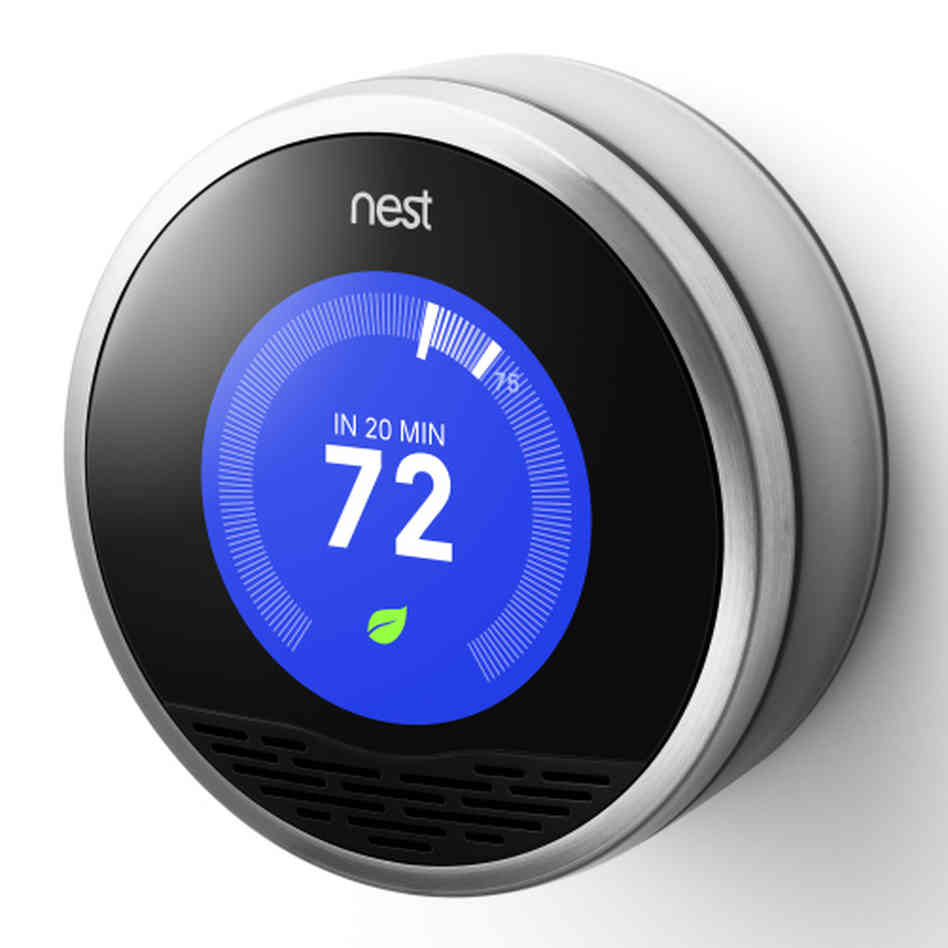


 connectcompute