January 31, 2014

What a wonderful idea: a cute teddy bear full of sensors to track vital signs of the kid who is playing with it. Vulnerable babies will be measured and monitored without being bothered. And even better, the data collected will be more accurate than when they are bothered by a nurse or doctor. As well as taking measurements, nurses and parents can also communicate with their children remotely by playing songs and recording bedtime stories through the toy.
Two master students from Zagreb, Croatia, Josipa Majic and Ana Burica, came up with the idea and their joint baby, Little Teddy the Guardian, is now for sale at 169 EUR. He keeps an eye on health parameters like heart rate, oxygen saturation, body temperature, and stress levels. The idea behind disguising medical tech in a lovable toy is to provide pediatricians as well as parents with more accurate, consistent and reliable data points that will give a meaningful and complete insight in the child’s health condition. Every time a child takes Teddy The Guardian by the hand or puts Teddy’s paw on his forehead sensors detect the values, capture them and transmit in real-time to a mobile app where data is analyzed, visualized, managed and downloaded by the medical staff and parents.
I can see a lot of applications where sensors embedded in something else could open new possibilities and opportunities.
 1 Comment |
  Consumer market, Healthcare, Inspiring example, M2M, User Interaction | Tagged: babies, children, croatia, eHealth, healthcare, Internet of Things, IoT, M2M, Machine-to-Machine, mHealth, monitoring, sensors, teddy the guardian, User interaction |
  Permalink
 Posted by magnusmelander
January 15, 2014
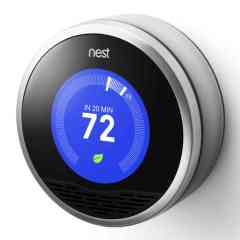 In my Christmas Internet of Everything Chronicle I wrote that 2014 will be the year when IT players jump on the band wagon and when M&A activities will accelerate. With Google acquisition of Nest for $2,3B and PCT’s acquisition of Internet of things startup ThingWorx for $112M I have already delivered on my prediction. And it’s only January 15 today!
Since data is the gold of M2M Google is an obvious player in this field. And by buying Nest they made a clever inroad to people’s homes. The logic is that people buy “the thermostat that Jobs would have loved” regardless if they need it or not, Google start collect valuable data and use it together with all the other data they have. Then Google can leverage the Nest thermostat and other devices to also collect other type of data from the homes. Brilliant! But it is worthwhile to notice that some Nest loving consumers have already stated in public that Google is not welcome in their home and some have even smashed their Nest device. But I think this is a clever move which will put Google in an interesting position. And their acquisition will be an eye-opener to many other companies. You already know that I believe the only difference between when we connected people and business to the Internet and now when we connect things to the Internet is that ignorance will be no excuse this time.
What an exciting start of the Internet of Everything year 2014!
1 Comment | Consumer market, M2M | Tagged: Google, Internet of Things, IoT, M&A, M2M, Machine-to-Machine, Nest, PCT, thermostat, ThingWorx | Permalink
Posted by magnusmelander
December 11, 2013
 Companies are investing a lot of money year after year to communicate with their customers and influence their perception of their company and brands. The budgets are there basically to sow for future sales and they remain on the same level year after year measured as a percentage of sales. The ever-increasing challenge is the growing number of channels to be used, and the constantly changing relative importance of them. But the best channel by all means has always been the product itself. Customers who buy it has it and use it often for a long time. People around them might see them using it. Satisfied users as well as dissatisfied users are happy to tell others about their experience.
All of this is well-known facts. But what is less known is that it has become realistically possible to establish a continuous dialogue with the products and also the users of them depending of what product it is, by using modern M2M or Internet of Things technology. Examples of products that often are connected already are: trucks, electrical meters, cars, alarms, vending machines and coffee machines. They are typically connected for operational benefits like being able to tell the truck driver to go to a service facility and depending on where he is propose which one, for electricity companies to measure and report consumption almost in real-time, for vending machines to understand when it’s time to go there to fill it up and better schedule the service route, for coffee machine rental companies to change recipes over the air and for alarm companies to get the alarms automatically. This is all fine and the normal first phase of an M2M investment. Operational value is easy to realize and make ROI investments on thus easier to get project approval and budgets for.
As we all know by now: data is the gold of M2M. And with these things connected we can gather and interpret the data from the connected things and start use it to create strategic value. Examples could be that the owner of the truck could measure how drivers actually drive, provide training to them and become a more sustainable company, the electricity company could offer customers better price off-peak hours, vending machines would get decision support from real data to know what products to have on weekends and warm days in different parts of the country and to use dynamic pricing, coffee machine companies could tune the choice of coffee for different seasons and learn customer’s coffee drinking habits and the alarm companies could add new adjacent services to their alarm infrastructure to become more competitive. All these things are examples of how the collected data could be used to add brand value, competitiveness, customer loyalty, innovation and attractiveness for employees, etc.
We are in the teen-age of M2M aka Internet of Things and many companies have started to connect their things, mainly for operational reasons. But it is still very rare to see companies using the data to create strategic value. Most consumer goods is not connected and if it is, there is no organized use of the data collected. Most professional equipment isn’t connected either and if it is, the data is rarely used in an organized fashion to create strategic value.
But this is about to change and I think we will see a lot of new examples in 2014. A number of new relevant ways of connecting things are available including the power-efficient and very small Bluetooth 4.0 chips with innovative solutions like iBeacon, networks optimized for connecting millions of autonomous things like Sigfox and a host of different ways to associate real life things with an avatar on the Internet like QR-codes, smart cameras, RFID and innovative solutions from companies like Evrythng.
This isn’t about technology. It is only when clever strategists, progressive marketing directors, creative advertising agencies, determined product managers and innovative business developers really understand what is practically and financially possible today that true innovation beyond operational value creation starts to happen. Interesting examples of creative customer communication through products could be the Evian Smart Drop, Volvo’s On Call app enabling their B2B+B2C model and Apple’s recent launch of an iBeacon based service in all 254 Apple Stores in the US.
1 Comment | Business Models, Consumer market, Inspiring example, M2M, Markeing, User Interaction | Tagged: apps, Bluetooth, Brand, Evian, Evrythng, iBeacon, Internet of Things, IoT, M2M, Machine-to-Machine, On Call, QR condes, Rfid, Sigfox, smart camera, Smart Drop, Volvo, Wbird | Permalink
Posted by magnusmelander
September 13, 2013
I was chairing Short Range Wireless Forum in Amsterdam 2006 and
NFC was the hot topic of the day since Nokia announced the first NFC phone the day before. But the combination of its limitations and the fact that only some vendors decided to implement NCF seriously made it yet another promising technology that never took off. These days Apple is introducing iPhone 5C / 5S and iOS7. This launch is as always followed and debated by a lot of people but still very few seem to have captured
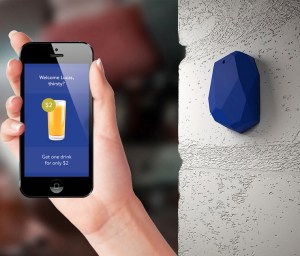
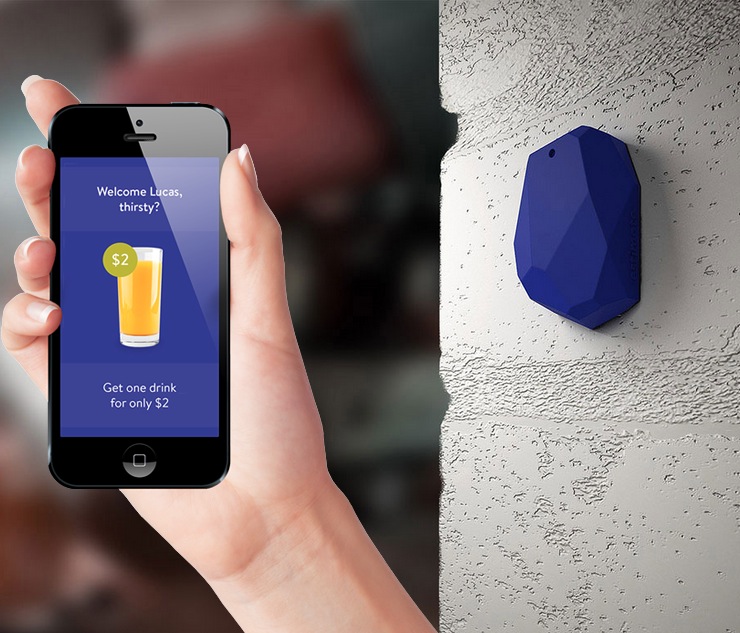
iBeacon. I believe that is yet a significant enabler by Apple which rapidly will become an important building block for Internet of Things applications and could make NFC redundant.Imagine entering into an indoor location like a University Campus. Your iPhone connects to iBeacon automatically over Bluetooth and depending on who you are it will provide you with directions where to go for the next class, it will take you to the canteen and take care of the payment leaving you with a receipt. One build wireless coverage in a location quite cheaply. Lets move to a department store, shopping mall or train station and the use cases are easy to see.A beacon, or mote, is like a lighthouse for radio transmission.
Estimote is s startup providing beacons supporting iBeacon. The beacons are a couple of centimeters big and include an ARM processor, accelerometer, flash memory and Bluetooth connectivity. A beacon could cover up to 50 m radius and have battery life time of around 24 months. Estimotes developer kits give you three beacons for 99$ which gives us an idea of price points.iBeacon leverage
Bluetooth 4.0 (also called Bluetooth Low Energy BLE or Bluetooth Smart) which was approved in July 2010 and is told to be a stable platform to develop solutions on. With over 19.000 companies as members in
Bluetooth SIG and over 2.5 Billion products shipped Bluetooth is a well supported technology across industries. I believe developers will love this technology and application enabler why pick-up will happen quickly and massively. When we look back at these announcements a couple of years from now I think we will conclude that Bluetooth 4 was the real breakthrough for Bluetooth, iBeacon enabled a new generation of apps and NFC didn’t make it.Exciting times!
Leave a Comment » | Consumer market, M2M, M2M Service Enablers, Networks, User Interaction | Tagged: Apple, apps, B3CC, B3IT, beacon, Bluetooth, Bluetooth Low Energy, Bluetooth SIG, bluetooth smart, Estimote, iBeacon, Internet of Things, IoT, lighthouse, M2M, NFC, Nokia | Permalink
Posted by magnusmelander
March 3, 2013
 Mobile World Congress 2013 is over and some 72.000 visitors and 1.700 exhibiting companies have gone home. The new location – Fira Gran Via – was more “professional” and space, logistics, food, etc was better. But on the other hand, it is far away from down town Barcelona which made people spend much more time in the traffic. And at a couple of occasions the traffic turned really bad.
I have obviously not seen everything and met everyone so my conclusions have no trace of science:
The over-all impression was quite boring rather then exciting. Devices, boxes, antennas and software architectures all over the place and the devices really look the same. Is this a sign of commoditization? The very serious fact that Europe is seriously behind in LTE usage (4% of subscribers world-wide acc. to GSA) should make a lot of Europeans nervous. Our entrepreneurs in the European mobile industry might start move to the US like IT entrepreneurs have done for many years.
The value of MWC continues to be the interaction between people from the same industry across the world why parties and sub-events continue to be important. The 5:th Swedish Mobile Association-party on Monday was spectacular again and my job as bouncer was as easy as all previous years.
There is a growing number of visitors and exhibitors from other industries mainly due to M2M. I guess there were 20 more or less connected cars to look at but I also found exhibitors like Assa Abloy with their connected locks in a small both. I believe this increased focus on what to use the mobile network for is a good development – maybe the event should be divided in two: building and operating networks – using networks.
M2M was everywhere but the heavily promoted GSMA Connected City part of the event I unfortunately found quite dull. In the far end of Hall 3, few visitors, a lot of screens with presentations and no real energy or “heat” (if we exclude the Gangnam Style dancers from KT). And I couldn’t find anything about OTA provisioning of SIMs which was demonstrated by GSMA last year. Connected cars was clearly the most discussed topic in M2M followed by mHealth. I believe it is a sound development that focus on M2M itself disappears (no customer has ever asked me for M2M) and that we start discuss real problems with real customers. The industry needs to be able to create value for the huge SMB market and not only the multi-nationals, consumers and governments. That is the key challenge for M2M today.
Ericsson’s Key Note event Tuesday night was a highlight: well structured and executed with M2M and Networked Society as a leading theme. And finally Vestberg invited Avicii on stage and then they launched a new song right there, XYOU based on a crowd-sourcing process. The thing I really liked was that they showed the Twitter feed from when Avicii entered the stage and when they played the new song we could see it spreading over the Internet on another huge screen. Well thought through and executed! I’m not sure everyone in the audience understood what was going on but my 17 years old daughter was really impressed already by the SMS I sent her.
My choice of coolest product at the show was also in the Ericsson hall. Under the banner “Windows of Opportunities” they demonstrated four connected windows solving real problems. My favorite was the one for skyscrapers which generates electricity from light coming in. I hope they have solid patents in place!
Personally my highlight of the week was outside of MWC. I was invited by Prof. Aninyda Ghosh, assistant professor of entrepreneurship at the great IESE Business School, to give a speech on Parallel Entrepreneurship. I enjoyed every minute!
Leave a Comment » | Consumer market, Healthcare, Inspiring example, M2M, Transportation, User Interaction | Tagged: Anindya Gosh, apps, Assa Abloy, Avicii, B3CC, B3IT, connected city, eCall, Ericsson, IESE, Internet of Things, IT, LTE, M2M, Machine-to-Machine, Mobile World Congress, mwc, OTA, SIM, SMA, Vestberg, Windows of opportunities, xyou | Permalink
Posted by magnusmelander
February 13, 2013
 The power of M2M is the ability to enable drastic changes in an industry. To do things differently. To change the game. Like in the early days of Internet we still focus on connecting things. That is good and makes us faster, cheaper, greener, etc. But it doesn’t change the game. It is when the technology is used to completely re-think and re-design something the power is released.
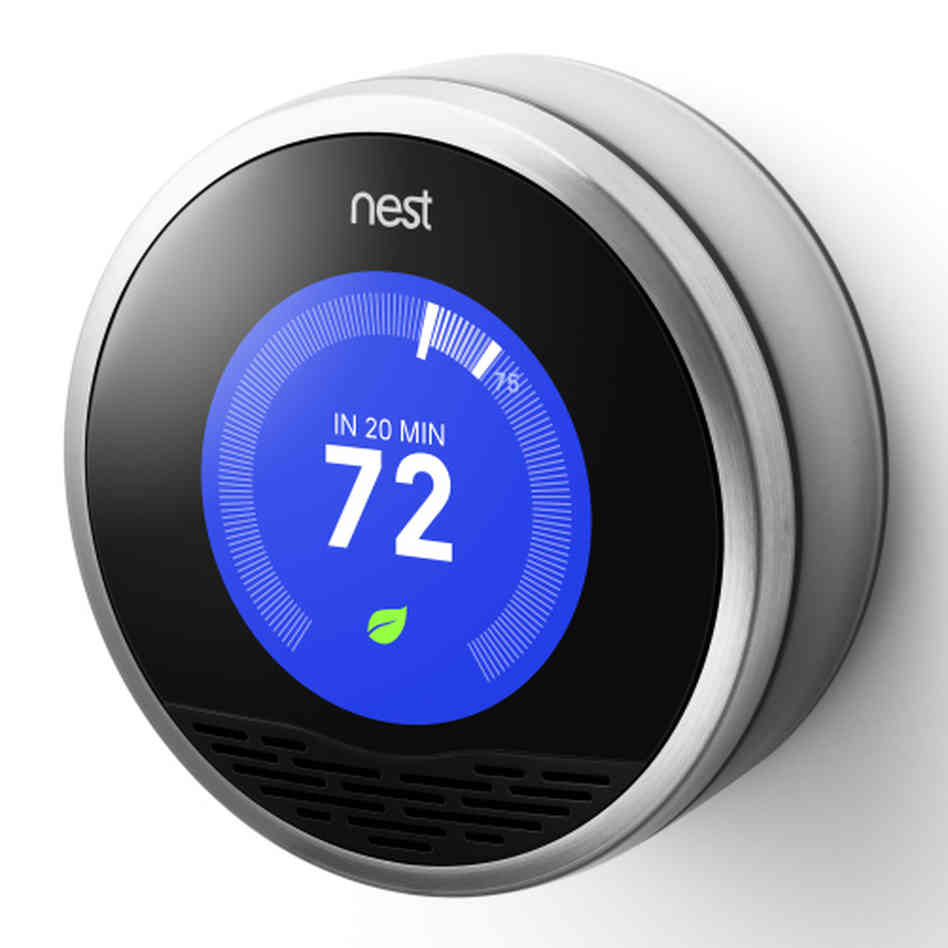
A wonderful example is thermostats. The “father of the iPod”, Tony Fadell, created the “learning thermostat” after having stumbled over expensive, dumb and ugly thermostats for the green house he was building. He created the gorgeously designed Nest which has been shipping for more than a year now. It is said to be compatible with 95% of the American and Canadian low voltage residential heating and cooling market by now. This little sexy device can remove some 20% of the heating and cooling energy bill and cost $250 US. Nest is now shipping 40-50K units per months and investors continue betting on Nest which now is said to be valued to $800 million US.
People normally don’t bother about thermostats but this easy to install and use, wonderfully designed and intelligent darling that saves people money has become a best-seller at Amazon, at Lowe’s and on Apple’s online store. It uses a number of sensors to understand the life-style of the household and adjusts heating and cooling in an optimal way. Beyond the information on the device itself it communicates with people’s smartphones and pads.
Innovative new approaches in established industries are always challenged by established players and Nest is already involved in legal battles. But I think we only have seen the beginning of Nest. Now they address consumers right away, seducing them with design and a good cause. But the device is Wi-Fi and ZigBee enabled thus ready for the Utilities and the Smart Grids. Is there a reason for a Utility to install another device in a home where a Nest already is in place?
1 Comment | Consumer market, Inspiring example, M2M, User Interaction, Utilities | Tagged: Amazon, Apple online store, B3CC, B3IT, cooling, design, energy bill, heating, Internet of Things, IoT, Lowe's, M2M, pads, smartphone, thermostat, usability, Wi-Fi, ZigBee | Permalink
Posted by magnusmelander
January 15, 2013
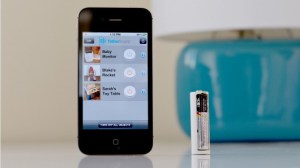 People are working hard to find clever ways to embed connectivity into things in a cheap, scalable and non-complicated fashion. Tethercell is an excellent example of that! By re-designing the content of the most used standard battery – AA – they make you able to master and control a whole lot of things from your iPhone. Parents with kids using noisy toys can secretly turn them off when they had too much for example. The product which looks like an AA battery includes advanced technology and an AAA-battery for power. It is remotely managed via Bluetooth 4.0 and a free IOS-app. Bluetooth 4.0 is the latest revision of the wireless protocol and it brings primarily much better power efficiency through Bluetooth Low Energy (BLE), also referred to as Bluetooth Smart.
The product allows you to turn AA-powered devices on and off remotely, give alerts when power is low and it allows you to set simple timers and device schedules to save battery power.
Tethercell is yet another crowdfunded product using indiegogo.com and with about a month ago they have raised about 25% of the $59 000 US they aim for. $35 US gives you one battery and the app to control it and estimated landing is June 2013.
Leave a Comment » | Consumer market, Inspiring example, M2M | Tagged: AA-battery, app, B3IT, battery, BLE, Bluetooth, Bluetooth 4.0, Bluetooth Low Energy, bluetooth smart, crowd funding, Internet of Things, IOS, M2M, smartphone, Tethercell | Permalink
Posted by magnusmelander
January 7, 2013
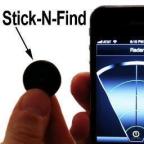
Solving real problems is a good foundation for entrepreneurs. And finally finding what we are looking for is something we all like. StickNFind is a promising solution built on Bluetooth technology together with IOS and Android. You simply put your very small Bluetooth stickers on your keys, pets, children backpacks or whatever you want to keep an eye on. The receivers are similar in size as a quarter-dollar coin and quite thin. The replaceable battery lasts for about a year. When you use the StickNFind mobile app to find things you can even light the label up and make it vibrate to help localize the item. But you can only locate things about 30 meters away. One can also use StickNFind to tell when tagged things are coming within range like the bag at the airport convey belt or getting out of range like your turtle trying to escape. Two labels are sold for $35 US but you can have many more managed from one phone.
StickNFind Technologies use
Indiegogo to crowd finance their product and with just a couple of days left they have raised almost ten times the $70.000 US they aimed at.
1 Comment | Consumer market, Inspiring example, M2M, User Interaction | Tagged: apps, B3IT, Bluetooth, crowd financing, Indiegogo, Internet of Things, M2M, Machine-to-Machine, smartphone, trace, track | Permalink
Posted by magnusmelander
August 4, 2012
 Single purpose M2M solutions have started to appear in the market. They are typically addressing one specific problem with a combination of hardware, software and communication. If the problem addressed is clear and considered big enough by many people and the solution works well then the willingness to pay should be possible to build a business around. Provided the solution uses the cloud to deliver the service from, then expanding the solution to include generic devices like smartphones, pads and PCs is an interesting next step at least to access the data but maybe to run the entire application on as well.
A good example is Coyote from France who claims over 1.7 million users of their speed camera alert system in Europe. The service is also available as an app for iPhone/iPad, Android, Blackberry and for Parrot. A Coyote device cost about 250€ including one year of service. A solution like this is also interesting for mobile operators since one agreement can sell hundreds of thousands subscriptions of the same type and each deal like this provides opportunities to add service enablement services on top of the connectivity.
The two key success factors of products like these are a high quality solution to a reasonable big problem and ease-of-use out of the box. Then people are willing to pay reasonably well for the service and word of mouth will work for marketing. Easy to buy and use solutions are also interesting in sales channels. It is quite likely that we will see many more single purpose M2M solutions onwards.
Leave a Comment » | Business Models, Cloud computing, Consumer market, M2M, M2M Service Enablers, User Interaction | Tagged: apps, B3CC, B3IT, Business model, Coyote, Internet of Things, IoT, M2M, Machine-to-Machine, speed camera, Traffic, Transportation, usability | Permalink
Posted by magnusmelander
May 18, 2012
 M2M solutions using Mobile operator’s networks are growing quite aggressively. According to Berg Insight we have some 110 Million M2M SIM cards active today. But even if this impressive growth continues we will never reach the connected society within my life time unless generic, cost efficient, easy to install and use alternatives comes to market. It is not primarily a matter of communication technology – it is a matter of connectivity together with services enablement making it cost efficient to develop applications. Such solutions will use fixed or mobile wan connections to connect to the Internet.
At May 16 I stumbled over the first potential solution to the “M2M for the rest of us” solution – Electric Imp. They just left stealth mode introducing a line of Imp cards that can be installed on any electronic device to put it online and control it. The cards connect to the Internet and a cloud based service using Wi-Fi. In their own words: “take the best implementation of hardware, firmware and cloud service, build them into a single mass-produced product, and apply them to any device in the world”. The word Imp is borrowed from Arpanet’s Interface Message Processor. Developer preview Imp cards and developer kits will be available this summer and Imp cards will retail for $25 when available in the market. Electric Imp claim they have invented a solution for configuring Imp devices for Wi-Fi networks in seconds using iOS or Android smartphones.
I find this exciting since it sounds like Electric Imp has what it takes: a generic, cost efficient, easy to install and use solution for connecting things to the Internet. As an evangelist and investor in the early Wi-Fi days I am also exited to see bets on Wi-Fi in the M2M field.
Electric Imp has a great idea, strong founders, capable investors and address a massive market opportunity. Their success will be determined by how fast they will get hardware vendors to adopt their platform and put Imp-slots in their devices.
Leave a Comment » | Cloud computing, Consumer market, M2M, M2M Service Enablers, Networks | Tagged: B3CC, B3IT, Electric Imp, Imp, Internet of Things, IoT, M2M, Machine-to-Machine, SIM, smartphone, WiFi | Permalink
Posted by magnusmelander
 What a wonderful idea: a cute teddy bear full of sensors to track vital signs of the kid who is playing with it. Vulnerable babies will be measured and monitored without being bothered. And even better, the data collected will be more accurate than when they are bothered by a nurse or doctor. As well as taking measurements, nurses and parents can also communicate with their children remotely by playing songs and recording bedtime stories through the toy.Two master students from Zagreb, Croatia, Josipa Majic and Ana Burica, came up with the idea and their joint baby, Little Teddy the Guardian, is now for sale at 169 EUR. He keeps an eye on health parameters like heart rate, oxygen saturation, body temperature, and stress levels. The idea behind disguising medical tech in a lovable toy is to provide pediatricians as well as parents with more accurate, consistent and reliable data points that will give a meaningful and complete insight in the child’s health condition. Every time a child takes Teddy The Guardian by the hand or puts Teddy’s paw on his forehead sensors detect the values, capture them and transmit in real-time to a mobile app where data is analyzed, visualized, managed and downloaded by the medical staff and parents.





 connectcompute