October 16, 2014
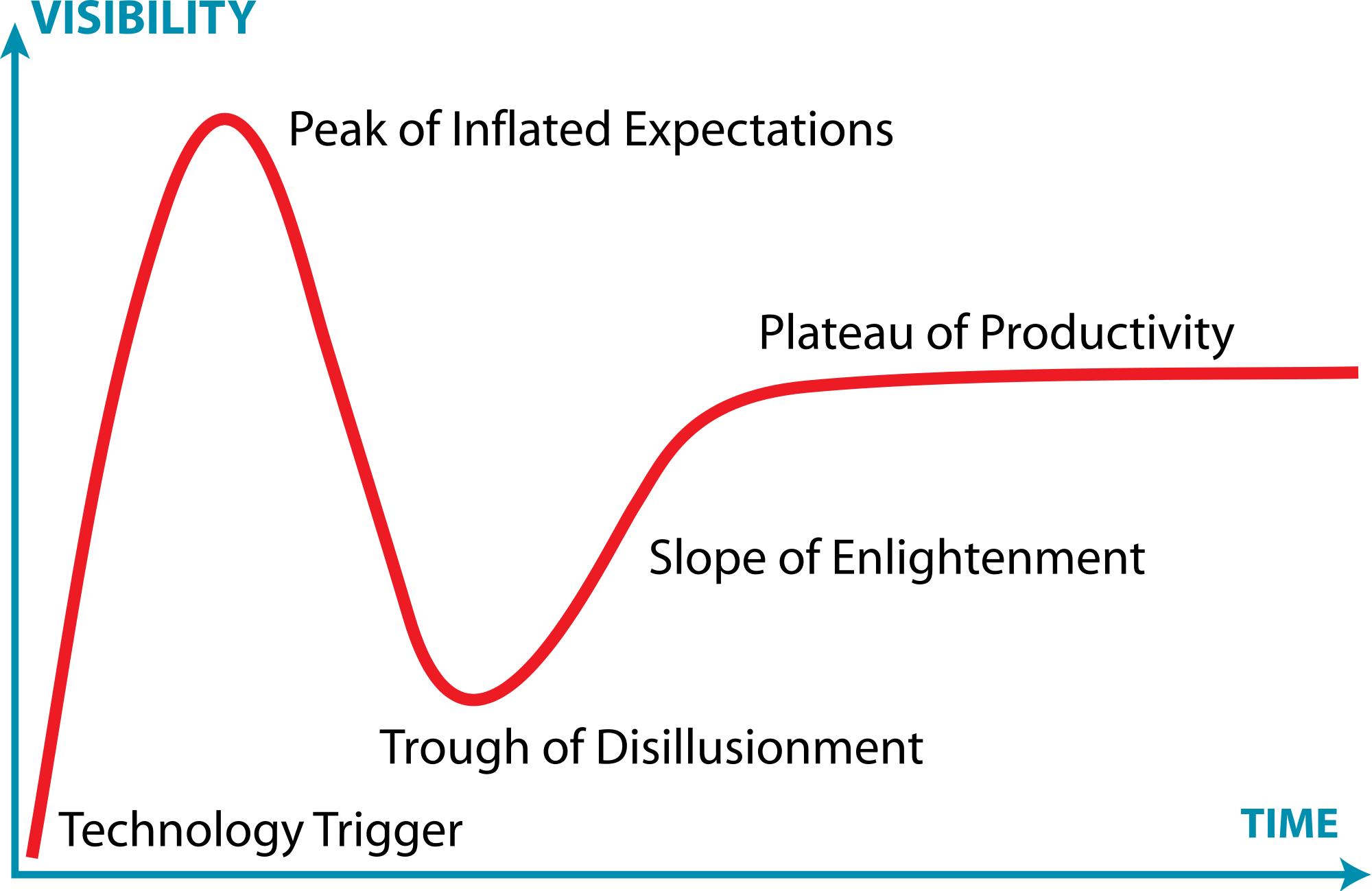
 IoT is hotter than ever! Gartner just placed IoT at Peak of Inflated Expectations in their Hype Curve and forecast 5-10 years until the Plateau of Productivity. But our baby is growing much faster than anything else we have seen before and I stick to my previous view that our baby will be grown up, but still young, 2016 after only three years as teenager. Good enough technology and infrastructure are in place since a couple of years and when organizations started to go from Powerpoint and thinking to trials and pilots we reached the teens. Four things have been missing to leave the teens behind: solid participation from the IT players, a hot M&A market, active and seriously engaged enterprises and efficient easy-to-use prototyping tools for users of IoT. All these things are starting to happen now which is one of the reasons why I dare to challenge Gartner on their projection. But there is another aspect of IoT which is underestimated: how the value is created.
In most cases we build something and when it’s done we start harvest. And if customers like what we built it takes off. It might take a couple of years at least to plan, develop and start produce, then we start market and after another year or so it might take off. That explains Gartner’s 5-10 years to Plateau of Productivity, if one ever gets there. But IoT applications deliver value when the information created is distributed to an IT system, shows up in an app, makes an alarm go off somewhere or change a road sign. Initially all IoT applications had to be created end to end – from sensor to terminal – which made them expensive to make and maintain. But now we can leverage existing networks, platforms, tools, terminals and applications making it much cheaper and quicker. So far we have seen this primarily in the consumer market where a connected sensor providing data to an app has been good enough. In enterprises data management and delivery is more complicated and changes in processes and business models takes time, but they are getting there. When they do, the operational value (cheaper, faster, etc) will be obvious and the strategic value (brand, innovation, employer attractiveness, etc) will be visible in the horizon. One only has to look at what
GE is doing with Industrial Internet to understand that the impact will be massive.
Everyone promoting the story about billions of connected devices delivering data to impressive Big Data systems creating trillions of $ benefits clearly put IoT at the peak of inflated expectations. But all hard-working organizations and entrepreneurs working on industry or company specific IoT applications, well-integrated and cleverly implemented, are changing the world very fast. These efforts will start pay off soon putting competitors who haven’t started yet in a very difficult situation similar to when the frequent flyer program happened or Richard Fosbury jumped 2.24 at the Olympic Games in Maxico City 1968 using a “redicolous” new technique.
The only major difference between when we connected people and businesses to the Internet and when we connect things is that ignorance will not be an acceptable excuse this time. Beyond some clever start-ups the winners will be organizations who best understand when and how to improve their business using IoT solutions.
 1 Comment |
  Business Models, IoE, IoT, M2M, Tools and platforms, User Interaction | Tagged: Business model, efficiency, Fosbury, Fosbury-flop, Gartner, GE, hype, Hype curve, Internet of Everything, IoE, IoT, M2M, operational value, safety, security, smartphone, strategic value, sustainability |
  Permalink
 Posted by magnusmelander
July 26, 2014
The creation of the Internet of Everything has been going on for a while now. It is easy to find estimates of the number of connected devices some years from now and how much the market will be worth but still hard to find the evidences that it actually happens and in which pace. A year ago I declared that we entered the teenage phase meaning that early moving customer started to go from power point and plans to pilot trials and roll-out. I still believe we are in the teenage phase but another important indicator – mergers and acquisitions – is starting to show that we are coming closer to the real take off. Because of this I will try to track relevant M&A deals in my blog onwards.
Intel recently acquired
Basis Science with their advanced health tracker,
Google has spent about $5B acquiring
Waze,
Nest and
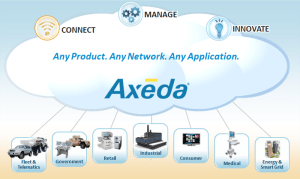
Dropcam but PTC’s recent acquisition of
Axeda for $170 million in cash following their $112 million
Thingworx acquisition in December are even more interesting to me.
PTC provides systems and solutions to a long list of very large companies globally and they obviously believe being a leader in IoT system and service enablement is key. I believe the Internet of Everything will be grown-up in less than two years from now and insist that the key difference from when people and companies were connected to the Internet is that ignorance will not be an acceptable excuse this time.
1 Comment | Business Models, Cloud computing, IoE, IoT, M2M, M2M Service Enablers, Tools and platforms | Tagged: Axeda, Basis, Business model, Dropcam, Google, Intel, Internet of Everything, Internet of Things, M&A, Nest, PTC, ThingWorx, Waze | Permalink
Posted by magnusmelander
June 24, 2014
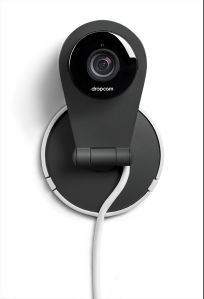 Mergers and acquisitions indicate rapidly growing markets ahead. Google made a 3.2B$ acquisition of Nest in January. Now they just followed on with an acquisition of the Wi-Fi surveillance camera maker Dropcam for 555M$. Thermostats, smoke alarms and cameras – what is Googles plan? I think it is the homes and maybe offices they are after. There are many thermostats, smoke alarms and smart cameras available but Nest and Dropcam definitely comes with a cool design which should at least bring home healthier margins. People love nice products! Google has always been interested in Wi-Fi and it’s not a wild bet that there will be Wi-Fi in homes and offices. But this can’t be enough, they must be going after a service model with recurring revenues and collecting data from these devices to store, manage, analyze and sell. I have always claimed that “data is the gold of M2M” and I am confident that Google shares that view.
Provided I’m right, I still questions that idea. Even if Google spend another couple of B$ to buy companies with cool things (Sonos could be a good target) they will never get market share over maybe 5-10% and scattered around. I understand that they could sell the information back to the users of these devices but that seems to be a difficult path to get the money back. And if they try to sell the data elsewhere I would believe the owners of the devices and policymakers would have a view on that. But Google knows all that. The recurring revenues are obviously attractive but it feels questionable to pay this much to get there.
On top of all I believe their will have to be at least three separate wireless networks in homes: an unmanaged Wi-Fi with good performance but only best effort services, a really secure fully managed network for security related applications like door locks, surveillance and medical monitoring, and maybe even a third managed low bandwidth network for connecting things like fridges, coffee machines, etc. And even worse, we will see a mix of WAN and LAN technologies being used as well. I simply don’t see how one can deliver sensible services like surveillance or smoke detection over an unmanaged best effort Wi-Fi network. Successful companies with such services like Verisure today typically manage their own network.
So I am probably wrong. Goggle sees something I don’t. And they also understand the down-side of connected hardware since Nest just had to recall 440.000 smoke alarms due to a potential risk that they didn’t alarm immediately. But I am happy for their acquisitions since it stimulates entrepreneurs, customers and other companies who consider playing a sincere role in building the Internet of Everything.
1 Comment | Business Models, Consumer market, IoE, IoT, M2M | Tagged: Business model, camera, Dropcam, Google, Home network, Internet of Everything, Internet of Things, Machine-to-Machine, Nest, Smart home, Smoke detector, Sonos, Surveillance camera, thermostat, Wi-Fi | Permalink
Posted by magnusmelander
May 11, 2014
 M2M or Internet of Things is not an industry. It’s more of a process describing that we are continuously connecting more things to the Internet. And it is a way to segment markets like how many dishwashers are connected and how many SIM cards are used in other things than phones and pads. Connecting things is not a big deal by itself but the data collected over the connection can make a huge difference when it shows up in systems for decision-making, process management, document management, monitoring and alarms, security and so on. It is when the data becomes information in relevant systems that the value appears. This is why I believe the IT industry must play the key role in pulling together the complete applications delivering the value thus enabling the investment decisions. A complete application always include the collection of data (sensors, networks, gateways, etc), management of data (i.e. making useful information for the application) and distribution (i.e. integration, app development, etc). Three distinct parts and at least three different industries.
This is well understood in the enterprise world which also explains why it takes some time to get going. But make no mistake – it will happen in all industries, it will bring massive effects and will redefine many businesses. GE is probably the best possible example of a large enterprise who identified this early on and got going with massive investments and rapid results. The future of the Internet of Everything is created by doers not politicians, thinkers, analysts, researchers, etc. The best approach is to keep eyes open for interesting examples from real life. Not only from your own industry. Identify and select problems and challenges relevant for this technology and start prototype and test. An agile approach with rapid prototyping and real-time testing with users is the way forward.
Up until now we have seen a lot of early successes by companies doing it all. There are companies like that in every single country. This is the obvious winning approach to overcome severe complexity in a new market. But this will change rapidly and new partnerships and value chains will be created to bring solutions to customers in different industries. This is how the IT industry solved issues before and this is why they are needed to participate in building the Internet of Everything. One area where we will see this change very fast is connected accessories like watches, wristbands, etc. A couple of years ago companies started to launched their wristbands and connected watches with an application or service attached. Good start to get to market but obviously not the right way moving forward. We want services where you can connect your devices of choice which allows you to also manage your data properly and distribute the information as you like.
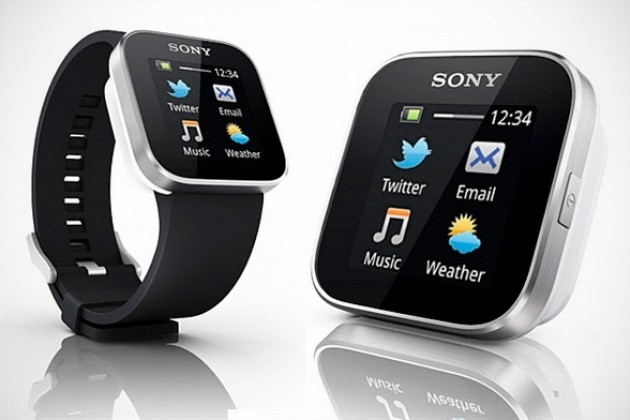
Nobody expected the wristbands to become the new smart phone or pad, but sometimes I meet people who believe smart watches or Google Glasses is the next big thing. I think that is way off. These things are accessories and play in the same league as keyboards and mice. I think we will see the brands focus more on the services maybe with a branded device to show the way. The devices will be more standardized to fit all major services and we all will have to look for the next big thing somewhere else. I just received a 50$ quote for 500 units of a no-brand connected watch which looked quite nice and sophisticated and had decent features and specs. These accessories are about to become commodities and will soon show up in the weekly flow of deals in your inbasket. Data is the gold of M2M – that’s where the value is and that’s where the brands will want to be.
1 Comment | Business Models, Consumer market, IoT, M2M | Tagged: GE, google glass, Internet of Everything, Internet of Things, IoT, IT, smart watch, User interaction, watch, wristband | Permalink
Posted by magnusmelander
April 30, 2014
 In April last year I wrote that the M2M industry was leaving the connectivity focused baby phase and entered its teens. This was great news and happened much faster than when we connected people and businesses to the Internet. In essence this meant that all players who wanted to be part of building the Internet of Everything, not only the connectivity guys, started to gather around the table. Looking at when Internet of people and businesses was developed made it obvious that no one could make it alone and partnerships became the name of the game. That’s pretty much where we are today and these efforts are very promising.
A major change has to take place before the industry leaves its teens and the building of Internet of Everything gains solid momentum – the IT companies have to take the lead. Up until now connectivity players have been enabling and driving but since “data is the gold of M2M” it has to be the IT players who take over before we really can get going. The value of any M2M application is realized when the information collected or created shows up in a decision-making system or a system managing processes of any kind. This is why application developers, system integrators, app developers, architects, UX designers, CIO:s, business analysts and others are key to bring on board. And this is why leading IT companies will have to join the party before take off.
I have been waiting for the first ones to walk the talk and I’m delighted to share with you that it’s happening here and now! Cisco has rapidly been ramping up their efforts in the Internet of Everything space with research, reports, speeches, acquisitions, idea challenges, etc. And last week they joined our Swedish M2M Service Enabler (SMSE) alliance as the first sponsor from the IT industry. This was very well received by our 26 members of the alliance and media. I expect collaboration and results quite rapidly and I am convinced we will have the leading IT players in Sweden, vendors and consultants, in our alliance before summer. My aim is to make Internet of Everything for Real 2014 in Stockholm June 18 the first event where leading connectivity and IT players will discuss how to create and promote the Internet of Everything together with the entrepreneurs and customers.
Yet another evidence of the importance of IT in building the Internet of Everything was an interview with Klas Bendrik, Group CIO at Volvo Cars, in CIO Sweden today (in Swedish). Mr Bendrik says that everything change when both customers and products are connected – how they develop, design, sell and service cars. It influences the entire life cycle of the car and redefines the entire foundation for their company. “I and our IT function get involved in all business development when IT becomes part of the core processes in the car life cycle”. Voila! Data is the gold of M2M. The only difference from when Internet of people and businesses was built is that ignorance will not be an acceptable excuse this time. Decision makers need to look into what the Internet of Everything will mean to their business and industry now.
Leave a Comment » | Business Models, IoT, M2M | Tagged: Business model, CIO, Cisco, Internet of Everything, Internet of Things, IoT, M2M, SMSE, Volvo Car | Permalink
Posted by magnusmelander
March 27, 2014
 Last night I participated in my first hackaton. It was arranged by Evothings who has developed an open source tool which includes libraries and API:s for connected devices like Arduino, Rasperry Pi, sensor tags, iBeacons and Philips LED-lamps and provides the ability of speedy development of IoT apps for IOS, Android and Windows Mobile. We were around 30 men (M2M unfortunately still means Men to Men) who got a 15 minute introduction, free pizza and a great experience. After two hours of playing with Evothings Studio, smartphones and some connected devices we had a “show-and-tell” session where the participants shared their experience and results.
Even though I’m quite well aware of what can be done in the field of IoT I was blown away to see how easy it was to put things together into a working prototype. Two young participants demonstrated how they controlled a small cannon from their smart phone, aiming and shooting. In two hours without having seen Evothings Studio before. My colleague came with an idea to extend their offering to retailers using iBeacons and I believe these two hours gave him what he needed to make the first prototype for a pilot test with a client.
I think this is very important to realize: not only is the Internet of Everything being built here and now with massive impact on industries, individuals and society. It takes minimal programming skills, little time and almost no money to develop a working prototype and see what happens. The democratization of IoT development tools together with modern phenomena like crowd-funding, crowd-sourcing and open API:s brings immense change. For sure.
EIT ICT Idea Challenge is a competition for start-ups in EU launched at CeBit some weeks ago. It includes eight different categories, each with 40K/25K/15K€ prices, and the IoT category is managed from Sweden. Before last night I thought that maybe 100 participants per category would be realistic. But after yesterdays experience I could easily see thousands of participants per category!
Leave a Comment » | Business Models, M2M, M2M Service Enablers, User Interaction | Tagged: Android, apps, Arduino, crowd funding, crowd sourcing, Evothings, Evothings studio, Hue, iBeacon, Idea Challenge, Internet of Things, IOS, IoT, LED lamp, open api, Philips Hue, Rasperry Pi, sensor tags, smartphone, User interaction, Windows Mobile | Permalink
Posted by magnusmelander
March 19, 2014
 Up until recently most operators had a similar approach to M2M: “it’s a very interesting opportunity, we’ll build a devoted team, we will make or buy a device connectivity platform, we will not be providing only connectivity but we are not ready to go down the verticals so we will build a partner program.” But things are changing. Telenor Connexion went their own way when they decided on a connectivity agnostic strategy to be able to follow their customers over time. Then they acquired the experienced M2M service enabler and developer Iowa in order to help customers from idea to ready to roll solution. And at MWC they announced adding Jasper’s platform to the Ericsson Device Connectivity platform already in use which as far as I know is a unique move. But perfectly in line with their customer centric strategy.
Last week, Tele2 finally announced their M2M strategy and plan at their M2M Talks event in Stockholm. Rami Avidan and his team declared loud and clear that they will provide connectivity and for the rest, work with and through partners. This was as clear and easy to understand as surprising. At the event they introduced a couple of partners including CSL and Wipro – two really well established and strong international players in the field of M2M.
It is promising and interesting that operators are starting to place their M2M bets differently now. With different approaches and offerings we will have more choices and constellations which will serve customers better and speed up the creation of the Internet of Everything.
Leave a Comment » | Business Models, M2M, M2M Service Enablers | Tagged: CLS, Ericsson, Internet of Everything, Internet of Things, IoT, Iowa, M2M, Machine-to-Machine, Mobile World Congress, Tele2, Telenor Connexion, Wipro | Permalink
Posted by magnusmelander
March 6, 2014
 Device connectivity platforms for mobile operators have been discussed for years. There have been two primary platforms on the market – Ericsson and Jasper – with Ericsson more focused on the ability for the operator to manage M2M business efficiently and Jasper having been more focused on adding solution partners to their platform thus to their mobile operator customers. Up until now most mobile operators have had one of these platforms and in many cases an in-house alternative somewhere. But at MWC Telenor Connexion announced that they add Jasper to their Ericsson platform (once acquired from Connexion). According to Per Simonsson, CEO at Telenor Connexion: “Deploying services from the two leading platform providers ensures greater flexibility and enables us to collaborate with new partners and operators in global deployments“. I believe Telenor Connexion has a clever long-term strategy to become technology agnostic when it comes to platforms and bearer technologies in order to get a strong position for global business and to become flexible in supporting customer’s changing needs over time.
This announcement caused some stress here and there since some operators used the situation of being the only Jasper customer in a market as a differentiator. This is of course not a sustainable way to create a position in a market and it was only a matter of time until the opportunity would have been gone anyway.
I have always argued that mobile operators should refrain from a GSM-only approach in M2M and that they should be aware that Jasper’s business model is quite comparable with an MVNO from the operator’s point of view: The operator get some additional traffic but might loose the relationships with partners and customers and once and for all become a pure connectivity provider. Nothing necessarily wrong with that but most mobile operators active in M2M state that they don’t want to become just a connectivity provider. Yesterday I read that Jasper is launching the world’s first commercial end-to-end Global SIM product based on Giesecke & Devrient (G&D) technology. It’s is aimed at the IoT market and will allow enterprises to remotely manage embedded SIMs over the air (OTA).
The ability to change operator over-the-air is a necessity in M2M and I saw a GSMA demo at MWC 2012 demonstrating this. Mobile operators who don’t have the ability to go down the verticals and applications in M2M thus “outsource” partnership and business development, might be stuck with plumbing when the OTA provisioning is in place. I see only two main roads ahead for operators (including the M2M MVNOs): invest and get engaged in applications, solutions and verticals or provide the connectivity. And anyone getting involved in applications and solution, service enablers or operators, need to use a connectivity agnostic approach like Telenor Connexion.
Leave a Comment » | Business Models, M2M, M2M Service Enablers | Tagged: Business model, EDCP, embedded sim, Ericsson, giesecke & devrient, Internet of Things, IoT, Jasper, M2M, M2M MVNO, Machine-to-Machine, Mobile World Congress, MVNO, mwc, OTA, ota provisioing, SIM, Telenor Connexion | Permalink
Posted by magnusmelander
February 28, 2014
 Yet another humongous Mobile World Congress is over. Almost 90.000 people from around the globe have spent a couple of days together in Barcelona with decent weather, amazingly good organization and an interesting mix of cava, business cards, pickpockets, technology and rock’n roll. This year was very much about improvement and evolution and little news and revolution. That is both serious and good but unfortunately less exciting and makes a show like this a little sleepy. Beyond a couple of quite expected things like Mozilla’s 25$ smart phone and that Nokia goes Android you mainly heard words like security, virtualization, big data, robustness and improved BSS/OSS at the show. From a helicopter perspective I believe it is a slow process of marrying IT and Telecommunications that we are looking at.
And then, of course, M2M and Internet of Things. It’s on everybody’s lips now, and it’s mainly questions. Ranging from companies considering to enter the market and wonder where to start to people already there trying to figure out where to go next. And my previous conclusion that we have left the connectivity phase behind and focus on the data and use of it was more clear than ever. I heard reference to the 50B devices three times during the entire event to be compared with hundreds of times a year ago.
I was there with a common stand in the Swedish Pavilion with nine of the 21 members of the Swedish M2M Service Enablers alliance: Kombridge, Springworks, Maingate, Possio, WSI, Fym, Evothings, Info24 and WBIRD. And I was amazed to see the interest in talking to experienced specialized m2m service enabler companies with solid solutions in use by real customers. From across the world we had operators, potential customers, vendors, analysts, regulators, consultants, investors and governments visiting us. We counted collectively to over 300 meetings with reasonable business potential after day three of the event. We also got the opportunity to explain to our Swedish Minister of ICT and Energy, Anna-Karin Hatt, that we are working hard together in SMSE to make Sweden the obvious country to go to for leading edge skills and knowledge in M2M aka Internet of Things.
So what’s the state of the nation? Most players have understood that data is the gold of M2M, that the value of M2M is realized when the information is properly distributed to decision-making systems, business process applications, etc. and that a proper M2M solution consist of three different components: connected devices and sensors, collection and blending of data most often in the cloud and distribution of the information to apps, ERP systems, etc. The challenge is that each of these three components is a competitive industry by itself and each M2M solution must include all three to deliver the value. This is obviously not possible to solve without well working partnerships. The transition from quite ok complete generic proprietary M2M solutions to excellent M2M solutions for an industry or more often a specific organization is similar to what the IT industry went though over some 20 years starting from IBM providing everything from Nobel prize research and silicon to post service and financing. Our transition will be brutally fast and enable the fully international and layered Internet of Things industry needed for the real take-off. Companies perceived as providers of generic products or services with no edge will fade away in this process and simply just not be seen. This is why operators and vendors talk partnership now. It is needed but very difficult. To set up a well designed and attractive partner program is not rocket science but a lot of work. But making people work well together goes far beyond that. It is little about technology and a lot about trust, way of working, culture, business models and not the least “similar children play best” as we say in Sweden. And entrepreneurs are stressed people who have little to no patience with things that don’t contribute to their business. Partnerships are also initiated by government bodies and research organizations and a new LinkedIn group on IoT or M2M is established at least weekly.
It will be really interesting to follow how this will develop. In my mind this is mostly a commercial issue why any working partnership will have to be driven by people closest to the customers, who understand the context of the data and application the customers are looking for. Progress and success will only come when people start doing thing also in this field. Nobody, not even McKinzey or Accenture, designed the value chains, the standards or the API:s when we connected people and organizations to the Internet. It was created by people trying things and finding ways that customers liked. This is how the Internet of Things will be established as well. And this is the thinking behind our Swedish M2M Service Enablers Alliance. Avanti!
Leave a Comment » | Business Models, M2M, M2M Service Enablers | Tagged: Accenture, Android, Anna-Karin Hatt, Big Data, Business model, Evothings, Fym, IBM, Info24, Internet of Things, IoT, Kombridge, M2M, Machine-to-Machine, Maingate, McKinsey, Minister of ICT, Mobile World Congress, mozilla, mwc, Nobel prize, Nokia, OSS/BSS, Possio, security, SMSE, Springworks, virtualization, WSI | Permalink
Posted by magnusmelander
December 23, 2013
 Mobile operators are working hard to formalize alliances for the M2M market. Global M2M Association recently added Bell Mobility and Softbank to the team of collaborating operators. The other GMA members are TeliaSonera, Deutche Telekom, Orange and Telecom Italia. The M2M Multi-Operator Alliance just re-branded themselves to M2M World Alliance and includes SingTel, Telefonica, Etisalat, NTT Docomo, Rogers, KPN, Telstra and Vimpelcom. The aim is to provide something like a similar customer experience across the covered countries, making the alliance brothers and sisters look attractive to customers and partners.
This sounds easy, obvious and becomes a way to compete with the really big players like AT&T and Vodafone. But reality bites. Even if they all use a very standardized network it is very challenging to bridge national, cultural, strategic, technical, operational, practical and political differences between the large organizations and countries involved. And on top, most M2M business is and will remain local. The devices are in many cases fixed why roaming is less of an issue. One can argue that by collaborating with colleagues operators will learn from best practice and further down the road they might make collective decisions on systems to use etc. That would be good but not really so much benefit for the M2M customers as for the operators themselves.
Another way of looking at it would be that as long as these efforts circles around connectivity and related services like billing, support, certification and device monitoring chances are realistic that they could be fruitful. However, the value delivered would be difficult to charge for since customers expect this to work already. And having operators to collaborate on industry specific solutions with increased revenue potential seems less realistic. And as long as all territory isn’t covered the common facade will need odd additions to give some customers what they are looking for. Yet another challenge to the alliance concept is all M2M solutions using other connectivity than the cellular networks. And even worse, it’s obvious that most solutions will use a mix of connectivity and the mix will change over time. Mobile operators have almost 200M M2M subscriptions in use by now and the growth rate remains 25-30% per year. But there are a lot of devices connected using other fixed and wireless technologies. A quite common estimate is that some 10% of the connected things will have a SIM card.
Don’t get me wrong: I really like the airline alliances and appreciate the efforts undertaken by the operators to collaborate. But I don’t think these efforts will change the destiny of M2M in any substantial way.
Leave a Comment » | Business Models, M2M | Tagged: Global M2M Association, Internet of Things, IoT, M2M, M2M Multi-Operator Alliance, M2M World Alliance, Machine-to-Machine | Permalink
Posted by magnusmelander
 IoT is hotter than ever! Gartner just placed IoT at Peak of Inflated Expectations in their Hype Curve and forecast 5-10 years until the Plateau of Productivity. But our baby is growing much faster than anything else we have seen before and I stick to my previous view that our baby will be grown up, but still young, 2016 after only three years as teenager. Good enough technology and infrastructure are in place since a couple of years and when organizations started to go from Powerpoint and thinking to trials and pilots we reached the teens. Four things have been missing to leave the teens behind: solid participation from the IT players, a hot M&A market, active and seriously engaged enterprises and efficient easy-to-use prototyping tools for users of IoT. All these things are starting to happen now which is one of the reasons why I dare to challenge Gartner on their projection. But there is another aspect of IoT which is underestimated: how the value is created.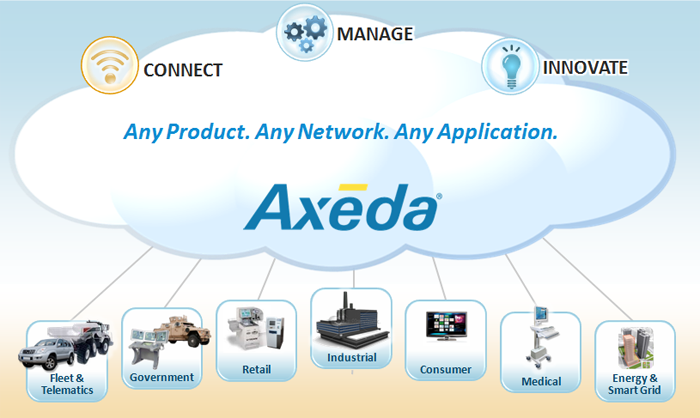






 connectcompute