June 1, 2017
It’s common wisdom that what you measure becomes important. That’s how we humans work. A clock makes you focus on time and so on. I consider myself a good driver having been driving 39 years without serious accidents and only a few speed tickets. When my kids practiced for driving license I heard about eco driving and thought that was a great initiative for the youngsters.
In November last year I signed up for the
TeliaSense service which promised an easier car ownership through innovative services and features accessible from a nice app. I opted in to an annual inspection service from
Bilprovningen, a maintenance service from
Bilia and a road side assistance service from
Viking which added good value to the car related services and Wi-Fi already in the app. Then in February I got a message that Eco Driving was added to the app and I immediately took a look more out of curiosity than to verify my superior driving skills. What! A big red and angry smiley starring at me! And in that moment I painfully recalled all the times my wife have told me that I’m driving aggressively.
From that day I have looked at the coloured smileys every single day. And guess what, it has changed my driving habits a lot.
I am amazed over my own behaviour! Yes I am a fighter and hate to lose but I would never have guessed that it would take me three months to become a better driver for my wife, my fellow drivers on the road and most importantly for the planet just because my driving was measured from an eco driving point of view and presented in my face.
I have also been presented statistics about what happens to people’s electricity consumption when their consumption is visualised to them and believe visualising individualised behaviour is a really good way to create value from IoT.
I’m working with
Springworks who deliver this unique connected car service country by country together with mobile operators like Telia and it feels really good to see all work we do become something as meaningful as this!
 Leave a Comment » |
  Automotive, Consumer market, Eco Systems, Inspiring example, IoT, Operators, Transportation | Tagged: Automotive, Bilia, Bilprovningen, connected car, Springworks, TeliaSense, Viking vägassistans |
  Permalink
 Posted by magnusmelander
September 3, 2016
 Victoria and her team are true entrepreneurs! After many successful years, their current market weakened and through serious discussions with their customers they found the “next big thing” – printing active light. Sounds crazy but that’s what they do to respond to serious needs for people to be seen when falling into the ocean, running in the evenings, skiing, working in dangerous environments or simply to look fantastic. The material they have developed is connected to a battery and can be washed and applied on wearables, helmets and so on. When they won 2015 Outside Gear of the Show together with POC at Interbike 2015 in Las Vegas, their journey really took off.
Today
Light Flex Technology are involved with a number of global brands who see great and innovative opportunities in their respective markets. The
POC ski helmet is one of my favorites. Light Flex moved to
THINGS from Barcelona about a year ago, have won a lot of awards and continue to excite people they get in front of like at the Grand opening of the
Olympic Games in Brazil.
Leave a Comment » | Consumer market, Inspiring example, IoT, M2M, Safety and Security, wearables | Tagged: Interbike, IoT, PoC, SMSE, Things, wearables | Permalink
Posted by magnusmelander
August 17, 2016
 Sensus is an absolutely gorgeous electric guitar connected to the Internet, loaded with sensors and with features like any synthesiser. It’s developed by Mind Music Labs, a startup at THINGS in Stockholm founded by Michele Benincaso, an Italian “Maestro” from Cremona’s Antonio Stradivari Luthiery’ School. After having worked in the guitar world for more than ten years producing guitars for world-famous guitar players, Michele understood that while the world was changing at a fast pace and musicians’ needs were constantly evolving, guitars and most music instruments were stuck in the ’60s – with artists increasingly resorting to electronic equipment and computers to fill this gap. Michele and his dream-team of experts have developed Sensus and a couple of months ago they were ready to show the world. They did a YouTube video that immediately went viral and ever since they have been winning piles of awards. In June at Midem Cannes they were selected the most promising music startup of 2016 among more than 150 submissions representing 31 countries from around the world!
Sensus is a very inspiring example by itself but also underlines that it takes deep industry knowledge and a wide range of hardware, software and communication expertise to develop a great IoT solution. Avanti!
Leave a Comment » | Inspiring example, IoE, IoT | Permalink
Posted by magnusmelander
November 5, 2015
 Swedish real estate giant Riksbyggen develops and maintains buildings across the country since 75 years. Some 350.000 people live in buildings managed by Riksbyggen. Maintenance of buildings is expensive, dangerous and surrounded by a lot of regulations and policies. Just imagine climbing snow-covered rooftops in the cold and dark Swedish winter. Riksbyggen have an innovative and business focused CIO who started study the development of drones for building maintenance 2008 to try save money, time, lives and the planet. Early this year they tried the DJI Phantom med 4K-camera and the concept worked. An inspection takes some 10 minutes instead of two hours and the result is digitally documented in 4K, ready to show the customer and to be saved for planning of future maintenance etc. Just to check the snow indicators on the roofs takes a couple of minutes for a whole block instead of having to climb up on each roof to take a look. With an IR camera mounted on the drone additional checks can be done. Today Riksbyggen has 9 trained operators and are currently running a pilot with a couple of customers. Imagine how many similar applications there are for drones to revolutionise!
Leave a Comment » | Business Models, Inspiring example, IoE, Safety and Security | Tagged: 4K, dji phantom, drone, Riksbyggen | Permalink
Posted by magnusmelander
July 31, 2014
 Less is more! A young team in Sweden, Shortcut Labs, are developing a small really useful generic BLE-connected button called flic which you can program to do almost anything with your smartphone. OK? Well, there are three ways to use it: click, double-click and keep pressed. And so what? It’s easily programmable. And what should I use it for? A remote trigger to take photos with your smartphone. Call home from your car with a single click on a button. Turn on Spotify and one of your three favorite playlists on your MC. Tell your family where you are walking if you don’t feel hundred percent safe. Start Siri. And so on.
Leave a Comment » | Consumer market, Inspiring example, IoE, IoT, M2M, User Interaction | Tagged: BLE, Bluetooth, button, Internet of Everything, Internet of Things, IoT, SMSE, usability, User interaction | Permalink
Posted by magnusmelander
July 21, 2014
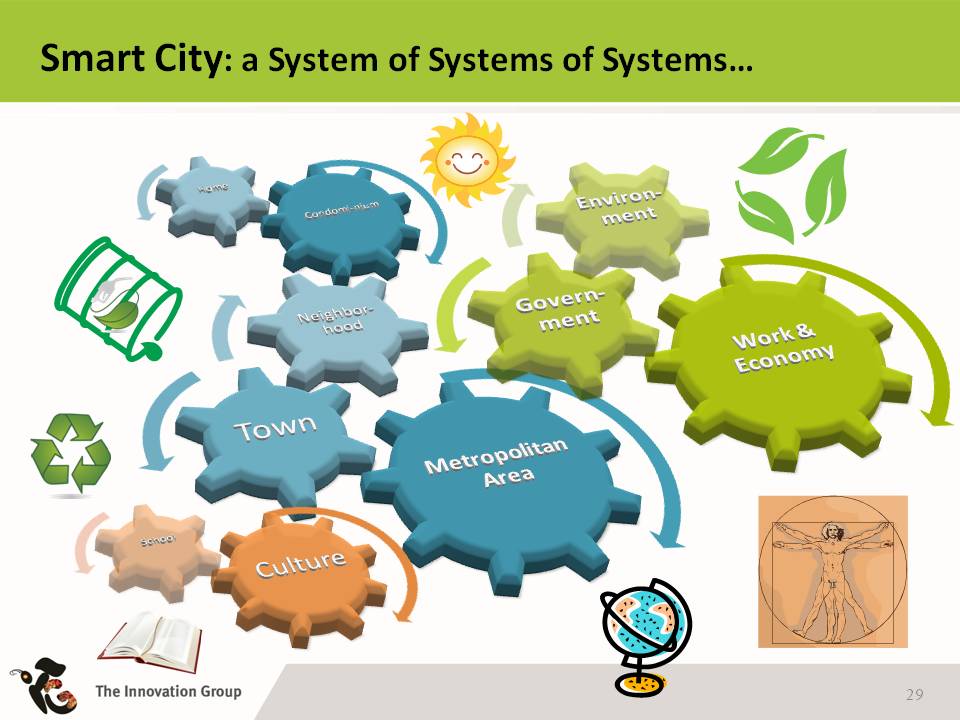
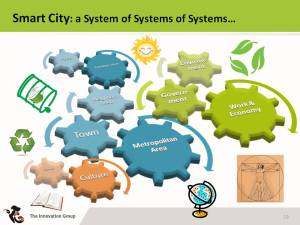 One of the most talked about areas for Internet of Things is Smart Cities. Cities themselves invest to become one. Most of the large players in IoT focus on Smart Cities. There are events, predictions, articles and show cases everywhere and each and everyone use their own definition of Smart Cities. A city is a very complex and dynamic location which from an ICT point of view could be described as a system of systems. It is obvious that sub-systems could be more efficient using IoT solutions and that the overall system of systems could be improved if the data collected was shared cleverly between the systems. No wonder Smart Cities is a perfect topic to focus on both for suppliers and municipalities.
But how much smarter has cities become over the last years? Well, there are of course impressive reference cases here and there and a lot of sub-systems in a lot of cities have become better using IoT solutions. But the size and complexity of pulling it all together in a city is difficult to deal with both from practical and technical perspectives.
This is why I am really impressed by Infracontrol, their pragmatic approach to Smart Cities and what they have been able to do. They started about 20 years ago to help cities connecting mainly traffic related things like tunnel alarms, ventilation systems and traffic lights. As they grew bigger in several cities and with new applications they developed Infracontrol Online™ 2003 to connect cities and citizens for better services. Today they have 56 Swedish municipalities using Infracontrol Online™ and their first ones in Portugal in place as well. Their customers report 60% better service quality, 30% savings in maintenance expenses, a lot of energy savings and higher citizen satisfaction. Sounds smart to me! Needless to say Infracontrol is a member of the Swedish SMSE-alliance!
Get inspired by Jenny Gustavsson’s 5 minute pitch on Infracontrol at Internet of Everything For Real™ 2014!
Leave a Comment » | Cloud computing, Inspiring example, IoE, IoT, ITS, M2M, M2M Service Enablers, Safety and Security, Transportation, Utilities | Tagged: Infracontrol, Internet of Everything, Internet of Everything For Real™, Internet of Things, IOE2014, IoT, M2M, Municipality, Smart City, SMSE, sustainability | Permalink
Posted by magnusmelander
July 4, 2014
 Better use of energy is one of the key challenges to our society today and smart metering is the first step towards a smarter electricity system. It makes it possible to understand the overall level of electricity consumption and for example compare it with historical data or similar buildings. But in order to understand which devices consumes what in a house, office or apartment we have had to put a meter on that specific device for a while and track the result.
But
Watty, a small start-up in Stockholm, is taking a completely different and much more elegant and scalable approach – they listen to the electricity and identify patterns they recognize. In a similar way as
Shazam identifies music they can see fridges, heat pumps and washing machines. Their detective mounted on the smart meter send the data to the cloud where Watty use their clever algorithms to analyze and report back in an easy to use app. They can even detect appliances that might go on fire or an open door to a fridge.
I think this is brilliant and the right approach to better energy use. Take a couple of minutes to listen to Eva Andersson at Watty presenting what they do in the Case Marathon at
Internet of Everything For Real™ 2014 in Stockholm: https://www.youtube.com/watch?v=QyfBrbh840o
Watty is of course a member of
SMSE together with 27 other Swedish start-ups in the IoE space.
Leave a Comment » | Cloud computing, Inspiring example, IoE, IoT, M2M, Utilities | Tagged: Electricity, Internet of Everything, Internet of Things, IoT, Mobil Business, smart meter, SMSE | Permalink
Posted by magnusmelander
April 14, 2014
 Companies have moved manufacturing of things to developing countries since many years. The reasons have primarily been competitiveness and profitability and the results of this are well-known and documented. Focus on software and the Internet made knowledge of making and marketing touchable products, things, scarce in countries like Sweden. It’s not that we are lacking ideas or can’t make a nice design but manufacturing, service and communication of products need to be closely integrated for superb results. Great ideas and designs are gradually taken down towards “normal” for every consultant, advisor, middle-man, controller and purchaser that gets involved. Huge cost-efficient factories only manufacture huge quantities and cost consciousness efficiently replace odd designs and components to those easier to manufacture and cheaper to buy. Most of this is obviously very good since we don’t want a world with only guordiously designed and incredibly expensive things! But take a look at things around you and you will see a lot of “global look and feel” in neutral colors and with rounded corners. Smartphones are really good examples – a huge, growing, rapidly changing and innovative market with youngsters showing the way should produce some sexy products but they all look more or less the same.
But the pendulum is swinging back again! There are many reasons why we will start to see much more things being designed and built “at home” onwards. Let me give you a couple:
– democratization of development is enabled by cheap and easy to use components like Arduino, Raspberry Pi, iBeacons, Sensor tags, easy to use cost efficient tools like Evothings Studio and powerful smartphones and pads everywhere.
– methods and approaches like open source, crowd sourcing and crowd funding gives new opportunities for entrepreneurs
– 3D printing is happening right now and creates new ideas and ways of working
– Internet of Things makes a lot of people wanting to build their connected thing, at least the prototypes
– Technologies like Bluetooth Low Energy and Sigfox makes it possible to build tiny connected products with battery life of 4-5 years
– Human beings love smashing design
– It is often easier to get reasonable pay for things than software or services alone
– Creative processes require rapid response. Iterative prototyping och testing is key these days.
Nest is a good example of what is coming,
Panono as well. Last week I participated in a great IoT Sweden meet-up with two fantastic presentations from
Humans since 1982 and
Teenage Engineering. David Cox walked us through how Humans since 1982 built their famous and fascinating clocks of clocks starting from animations and Jesper Kouthoofd guided us through yet another fantastic project: the development of the OP-1 synthesizer. Both speakers work in innovative and creative teams with all possible profiles and backgrounds, they obviously love what they do and they make wonder. I had a smile on my face the entire evening since these two cases made me understand that making things is back now.
Let me also take this opportunity to share a wonderful piece from the Q&A where someone asked David Cox about connectivity and David responded that “we design our clocks to last for 50 years”. Reality bites!
1 Comment | Consumer market, Inspiring example, IoT, M2M, User Interaction | Tagged: hardware, Humans since 1982, Internet of Things, IoT, Teenage Engineering, Things, User interaction | Permalink
Posted by magnusmelander
April 10, 2014
While brands like Kodak and Agfa rarely are mentioned together with photography any longer, people are taking and dealing with photos all the time and everywhere. This is yet another astonishing example of what happens when an industry moves from analog to digital. The famous “Kodak moment” belongs to history and mobile phones with powerful cameras, panoramic pictures, SnapChat and selfies are here. With 24 or 36 photos in an expensive roll with even more expensive development and printing needed, we paid a lot of attention to each and everyone of our photos. Today we take shots to remember the registration plate of the car we rented, what was written on the whiteboard and to digitalize a piece of paper and transfer it somewhere.
But today I met the founder of a start-up in Berlin who immediately blew my socks off. His company is called
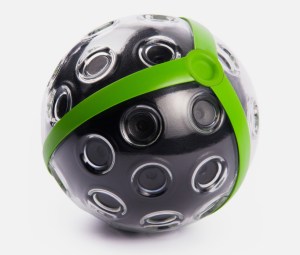
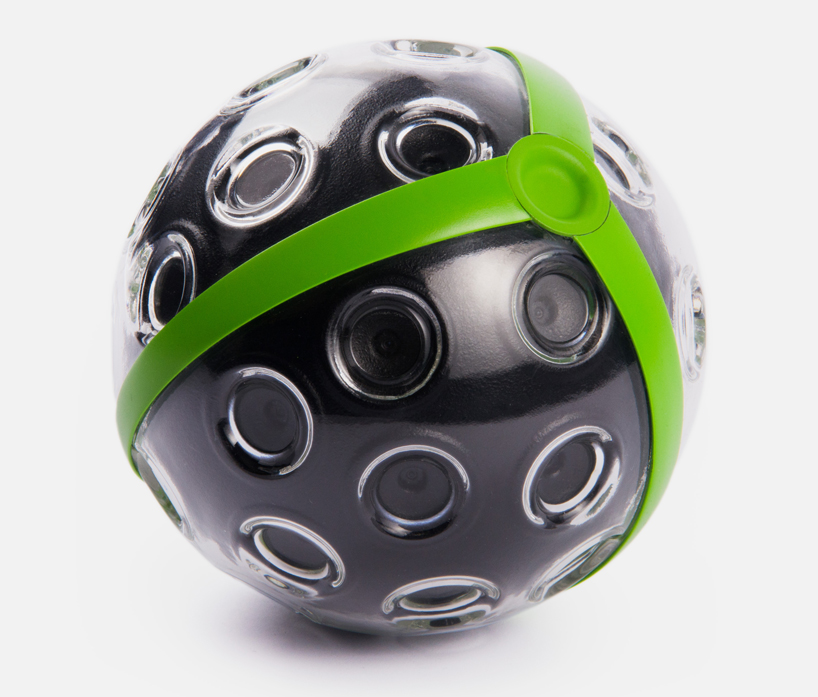
Panono and they have put 36 cameras in a small ball loaded with sensors and technology. With one quick toss of the Panono Ball Camera will capture everything in every direction into a high resolution 360° X 360° full- spherical panoramic image. What a wonderful idea! And even better, you will be part of the photo yourself! That takes selfies to a new level.
It goes without saying that the Panono Ball Camera is connected via mobile phones to the cloud.
For only 549€ this wonderful product is yours! Support truly innovative entrepreneurs! Go buy!
1 Comment | Consumer market, Inspiring example, M2M | Tagged: ball camera, camera, EIT ICT, Internet of Things, IoT, M2M, Machine-to-Machine, panino, panoramic, User interaction | Permalink
Posted by magnusmelander
January 31, 2014

What a wonderful idea: a cute teddy bear full of sensors to track vital signs of the kid who is playing with it. Vulnerable babies will be measured and monitored without being bothered. And even better, the data collected will be more accurate than when they are bothered by a nurse or doctor. As well as taking measurements, nurses and parents can also communicate with their children remotely by playing songs and recording bedtime stories through the toy.
Two master students from Zagreb, Croatia, Josipa Majic and Ana Burica, came up with the idea and their joint baby, Little Teddy the Guardian, is now for sale at 169 EUR. He keeps an eye on health parameters like heart rate, oxygen saturation, body temperature, and stress levels. The idea behind disguising medical tech in a lovable toy is to provide pediatricians as well as parents with more accurate, consistent and reliable data points that will give a meaningful and complete insight in the child’s health condition. Every time a child takes Teddy The Guardian by the hand or puts Teddy’s paw on his forehead sensors detect the values, capture them and transmit in real-time to a mobile app where data is analyzed, visualized, managed and downloaded by the medical staff and parents.
I can see a lot of applications where sensors embedded in something else could open new possibilities and opportunities.
1 Comment | Consumer market, Healthcare, Inspiring example, M2M, User Interaction | Tagged: babies, children, croatia, eHealth, healthcare, Internet of Things, IoT, M2M, Machine-to-Machine, mHealth, monitoring, sensors, teddy the guardian, User interaction | Permalink
Posted by magnusmelander





 connectcompute