February 8, 2012
 With the GSM mobile phones came the SIM-card (Subscriber Identity Module) 1991 turning a subscription into a tangible thing that could be removed, put into another phone and stolen. Users could bring their GSM identity to another phone without involving the operator which is very convenient. By removing the payment relationship from the subscription and adding possibilities for pre-payment a brand new and very popular type of mobile service was invented. Adding some memory available for the user made it possible to bring data, typically phone numbers, along with the SIM card to another phone.
In the early days of mobile M2M operators sent single SIM cards in envelopes which added an administrative issue to the already complicated task of deploying M2M solutions. Today we have a range of solutions to deal with SIM cards for M2M deployments. Making SIMs smaller is important in the handset market and in some specific cases we can leverage this development also in the M2M market, but most often the size doesn’t matter. With iPhone4 came the micro-SIM and next in line is nano-SIM measuring approximately 12 by 9 millimeters, 30% smaller than the micro-SIM. The thickness of the nano-SIM is reduced about 15%. The standardization of the nano-SIM is expected to be implemented through ETSI by the end of the year and the first nano-SIM phones will probably hit the market 2013. This will help phone vendors create thinner devices and free up room for additional memory and larger batteries but unless we are dealing with really small devices, this will probably not be important for the M2M market.
A much more interesting development for the M2M market is the over-the-air (OTA) SIM update, accepted by GSMA earlier this year. This will enable device manufacturers to sell devices with SIM cards included from factory and provision the subscription afterwards in a secure fashion. Apple, Google and others have been pushing in this direction for obvious reasons but some mobile operators were quite negative to the idea. Now it seems like the M2M players are making this happen first. Industry expert Northstream predicted that the SIM cards will disappear in the cloud maybe already this year. In the M2M market this would make life much easier for vendors of things with embedded M2M connectivity. The M2M connectivity could be built in at manufacturing, associated with a specific operator at the local resellers and expensive field maintenance could be avoided as well. The OTA SIM will bring a lot of transparency to the mobile industry removing practical and financial barriers thus making life easier for everyone involved.
 Leave a Comment » |
  M2M, Networks | Tagged: B3CC, Internet of Things, M2M, Machine-to-Machine, micro-SIM, nano-SIM, Northstream, SIM |
  Permalink
 Posted by magnusmelander
January 31, 2012
“I would say that 2G is not going away anytime soon, but if you are concidering new M2M installations today I would definetly recommend going with 3G compatible devices and to use 2G/3G compatible SIM cards. There is no guarantee of a maintained functionality in 2G networks looking ten years down the road (a normal life span for many M2M installations), and 2G CAPEX and OPEX will decline with all operators. Even if you take a slightly higher investment initially using a 3G device you will avoid the risk of having to exchange both SIM card and modem during the life span of your installation. Besides, prices on 3G modules are dropping and are rapidly approaching similar price levels as 2G units. This is of course dependent on the life span of you M2M installation and the amount of data you need to transfer. From an operator point of view, I am curious of which industry will first make use of 4G networks and M2M to rapidly transfer streaming video for specific surveillance tasks or other data intensive applications.”
Martin Svensson, M2M Product Manager, Tele2
1 Comment | M2M, Networks | Tagged: 2G, 3G, 4G, B3CC, CSD, Internet of Things, IoT, M2M, Machine-to-Machine, Tele2 | Permalink
Posted by magnusmelander
January 29, 2012
 Today some 95% of the mobile M2M connections are 2G. It is absolutely natural since the functionality and capacity needed for most of today’s applications is fulfilled in 2G and the modules are substantially cheaper. An off the shelf 2G SIM card would cost around $3-4 per month plus $0,5-2/MB data transmitted (in Sweden) and CSD, GPRS and SMS is enough for most M2M applications today. But there are dark clouds in the horizon! We don’t know how far away or how fast they come forward, but they are definitely there. Let’s try look at what these clouds contain.
A typical M2M deployment would count on terminals to be in service more than five years, often 10 or even 15 years. That’s long time! It is about 20 years since the GSM services came to market, and betting on the same networks to still be there with great coverage and good service might be something to consider carefully. A customer service person at my previous mobile operator in Stockholm told me: “sorry but we don’t invest in the 2G network anymore”. One of my companies, Possio, help mobile operators to move analog devices from the fixed network, PSTN, to mobile networks using primarily circuit switched connections in 2G (CSD). They experience operators, one by one, deciding not to introduce any new CSD based services in their network. They keep the existing ones, but obviously not for ever. I believe CSD will not disappear over night but this is worth looking into when making the bets
The connect part of M2M is the least interesting and rewarding. It is the compute part that makes the difference. IP is today, by all means, the dominating communication platform across all industries. The IP development environment is solid and rich, application support endless and skill is really everywhere, from developers to support people. An M2M bet today should in most cases be built on IP and one should really try understand if performance in 2G GPRS/EDGE will be enough for making all wanted computing during the life cycle. It is easy to foul yourself when it comes to performance and capacity. My first business trip with IBM went to Copenhagen 1983 where serious old men unanimously stated that with this capacity nothing is stopping us any longer. This was an ISDN conference.
The end-of-life problem is always something to take into account. Module manufacturers normally bring to market new pin compatible modules for their most popular models. But one day they will issue an end-of-life notice and then it is last order date and finally the spot market to rely on before it is over. In other words, when a market decrease it’s a chicken race between the module vendors. They not only want to understand how fast the market disappears (remember they have good numbers to watch) but they also want to ensure the best moment to bring their customers forward on a new platform and not lose them to a competitor.
The cost of modules for 2G or 3G differs a lot. As of today a 3G module would be roughly double the price of a 2G module and the difference could be $25-30. That is a lot especially if you need many. But it is important to look at the entire cost envelope, both capex and opex, over time. The cost of the actual deployment is normally high since it takes human beings to prepare the installation, to ensure other people involved are available, to get and verify permission for entrance and finally to go on site. Each installation is obviously different depending on industry, security levels, distances, type of application, etc but it can easily take a couple of hours per terminal which would translate into hundreds of dollars. One of my companies is active in retail environments where they often experience a lot of problems especially with access permission and coordination with other people needed (electricians, operator staff, alarm staff, etc). This is why we need to get it right first time – we can’t afford to go back – and why the installations will have to be operational for many years. When planning an M2M solution this might well be the most important aspect of the business case and the biggest risk for failure.
I believe this question – should I stay or should I go – is very important for all of us in the M2M business. There are no generic answers to the question about going 2G or 3G but it seems inevitable that sooner or later 3G will be the primary network why focus and investments thus quality and coverage in 2G networks will erode. How fast this happens is of course also depending on geography. In order to put more light on this important question I will ask a couple of knowledgeable individuals from within the industry about their views and post them here.
1 Comment | M2M, Networks | Tagged: 2G, 3G, B3CC, B3IT, CSD, Internet of Things, IoT, isdn, M2M, Machine-to-Machine, modules, networks, Possio, PSTN | Permalink
Posted by magnusmelander
January 23, 2012
 The car industry was early adopter of M2M solutions. Wireless systems where the car called for assistance in case of an accident was introduced early on. Two major early initiatives where OnStar formed by GM together with EDS and Hughes already 1995 and Wireless Car started 1999 by Volvo, Telia and Ericsson. GM started to use an analog OnStar solution in Cadillac DeVille, Seville and Eldorado models from fall 1996 which created a lot of discussions and interest in both the car and telecom industries. The idea of connected cars was and still is a great idea and the connections would be used for a lot of great things. Initial reports talked about the rapidly increasing number of cars equipped with the service and entrepreneurs, car manufacturers and investors (including me) invested in this promising idea. But after a while, when car owners were supposed to pay for the service which typically was delivered for free at purchase, usage dropped significantly. Exciting visions surfaced and most was based on a 3G broadband connection to the car to download music and movies to the in-car entertainment systems, maps to the in-car navigation systems, etc. We do actually enjoy music, video and navigation in cars today but most often with our own devices brought to the car and the car manufacturers more focused on connectivity for these devices than in-car systems. It’s actually quite similar to the BYOD (bring your own device) development we see in enterprises today.
It has taken the industry 10-15 years to come up with cost efficient and attractive solutions for connected cars and today OnStar is a subsidiary of GM and Wireless Car is owned by the Volvo Group reporting into Volvo IT. OnStar claims more than 6M subscribers now and their primary network partners are Verizon (US), Bell Mobility (Canada) and China Telecom. They offer a range of services including emergency, vehicle diagnostics, directions and stolen vehicle tracking. Their plans are typically between 20 and 30 US$/m. Wireless Car of today describes themselves as an automotive telematics service provider (TSP) providing manufacturers of cars and commercial vehicles with customized telematics services to end customers world-wide. Among their reference customers are Volvo Cars, Volvo Trucks, Volvo Construction Equipment and BMW.
Looking at these two M2M-in-cars pioneers is interesting: they are both in business, they are integrated in GM and Volvo Group presumably for strategic reasons and they have both tried different technical solutions, business models and focus areas. But even though they started at more or less the same place, they ended up as quite different businesses. While Wireless Car is more of a generic telematics provider world-wide, OnStar remain focused on the cars with a quite rich and innovative portfolio (I love the stolen vehicle slow down feature) in targeted geographies.
Connecting vehicles to the Internet is required to address a whole range of issues including community wide ones like sustainability, safety and security as well as issues for owners and drivers of vehicles like cost of ownership, efficiency and convenience. The commercial vehicles are in most cases ahead of cars when it comes to being connected because of a combination of legislation and business benefits. The consumer fleet is not really connected yet due to a combination of difficulties to see good affordable deals and availability of good alternatives for some of the needs like music and navigation. But I think this is changing now since the solutions are becoming affordable, innovative use of the connectivity together with apps on smartphones and pads gives users very concrete advantages (i.e. turn on my heater) and last but not least government policymakers push for connected cars. The eCall project in EU for example aims at having a fully functional road assistance service in place across all EU countries by 2015 and connecting the cars is of course a requirement. The emergency data is automatically sent from the vehicle to a local emergency center and the aim is faster response to minimize death and injuries of people involved. And this is serious: according to CARE (EU road accidents database) some 35.000 people die and 1,5 million are injured in road accidents per annum in Europe (the leading cause of death in EU for people under 50 years old) to be compared with some 1.500 deaths in rail accidents and some 50 on an average in air accidents.
The transport industry is my personal favorite M2M market since it is huge and complex, the three M2M promises (efficiency, sustainability, safety/security) are all very relevant, the challenges are humongous and we have a common vision and framework in place with ITS.
1 Comment | M2M, Transportation | Tagged: B3CC, BYOD, car navigation systems, eCall, GM, Internet of Things, IoT, M2M, Machine-to-Machine, On Call, OnStar, Traffic, Transportation, Volvo, Wireless Car | Permalink
Posted by magnusmelander
January 3, 2012
 One way of describing M2M solutions is in the three steps: collect data, process data, use data. These three steps need to have standardized interfaces in order to avoid re-inventing the wheel every time we need something from the M2M solution in place. This is true when data is collected, processed and used internally but even more so when some or all data should be made available to someone else. M2M solutions are most often deployed internally with a business case developed to support the investment. They are typically there to respond to very specific internal challenges or opportunities why it’s not fully natural to think about sharing data externally when the systems are designed. However I believe we will see increasing business opportunities for owners of data collected in M2M (and other) solutions. I see at least three types of opportunities:
– making internal data available to selected or even all developers might boost perceived service levels for the company. A good example is tåg.info in Sweden where information about trains and stations are made easily available for developers who have developed popular apps like Train Info Sweden and Tågtavlan. I am convinced these apps have increased the overall perceived services by the train operators. Another great example is the “City of Stockholm Open API” where a lot of information is made available to developers and where I expect to see more and more information from M2M solutions in the city.
– making internal data available on commercial terms will probably be increasingly interesting. The more services made available, especially for smart phones and pads, the more important will quality of the service and differentiation become. And adding interesting data from a second and maybe innovative source might single out a specific service from the crowd. Let’s use weather forecasts as an example where the service with the best forecast quality can charge more or get most of the advertising money.
– making internal data available might impact the brand positively. An example could be creating indexes from the internal data which could be used by the public as comparisons and means of learning how to save energy at home, green driving, what to pay for things, etc.
Needless to say a very well thought through strategy has to be in place in order to avoid major mistakes like giving away the crown jewels or challenging peoples integrity.
In order for the big M2M boom to happen we need to make bits and pieces fit better together, end to end, in order to drive down cost for development and maintenance, to avoid duplication of efforts, to avoid fork lift upgrades of systems, simplify integration with partners and to improve time to market of services. Standardized and open API:s are important parts of that development and I think we will see an increasing amount of independent middle-men collecting data from different sources then cleaning and organizing the data in order to sell it. Such companies would help establishing standard API:s which is good for the M2M industry.
Leave a Comment » | M2M, User Interaction | Tagged: B3CC, City of Stockholm Open API, Internet of Things, IoT, M2M, Machine-to-Machine, open api, smartphone, tåg.info, tågtavlan, Train Info Sweden, User interaction | Permalink
Posted by magnusmelander
December 27, 2011
 Utilities normally come up first when talking M2M. Primarily electricity but also water and gas. It’s huge global businesses and infrastructures dealing with things that are closely related to the sustainability issues as well as safety and security, everyone on the planet including politicians are involved one way or another and on top it’s one of few areas where M2M solutions already have been used in large scale. Many utility companies have telecommunication business experience which makes them knowledgable buyers.
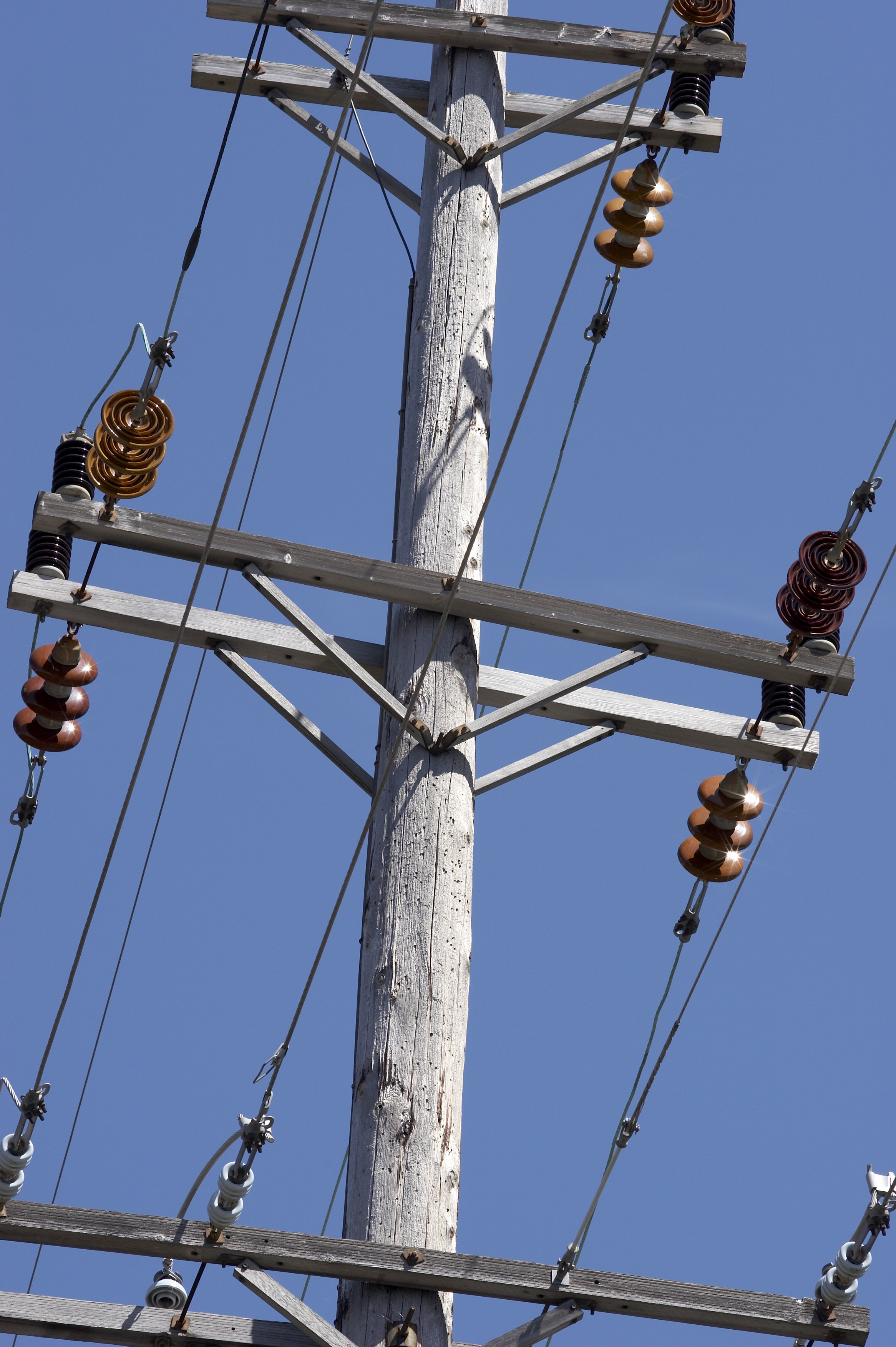
Smart Grid is the white paper or vision for how the electricity industry will cope with the new world where production, distribution and consumption of electricity is managed in real time all around the grid and where usage is optimized over time. The basic idea is to connect everything and add computing on top. If the smart grids happen we are looking at a new industry of “Internet size” in 30-50 years which has made many large corporations starting to dig there already.
Given the limitations of our globe it is obvious that we have to do something and I am convinced “connecting and computing” is a major part of it. But the scale of the project means it will take a lot of time, financing has to be sorted out, concepts and solutions have to be proven and so on, which explains why we still see primarily pilot projects and trials. And when it happens big way, most of it will be a game for large players with big projects and thin margins like most infrastructure business.
The first step towards the smart grids are connected electricity meters for automated meter reading (AMR) and we are in the middle of that huge roll out project right now. Global shipments of smart meters exceeded 100M 2011 and is estimated to be 250M by 2016 (ABI Research). EU wants 80% of the meters to be smart by 2020 and Italy and Sweden are already done. North America has already more than 50% meters connected (Berg Insight) after the American Recovery and Reinvestment Act (ARRA) which included US$ 43 Billion plus tax incentives for the energy sector. Also Asia is speeding up their efforts with Japan having the most advanced power grid monitoring systems in place, China announcing a five year AMI plan, Singapore working on their Intelligent Energy System and South Korea their Smart Grid Demonstration Project. Some 1,5B smart meters will be deployed during the next 10 years and meter manufacturers like Landis & Gyr, Sensus and Itron and communication module providers like Telit, Cinterion and Sierra Wireless are all working hard to capture this big business opportunity. But since the traffic per smart meter is tiny (probably less than half MB per year) it is not obvious that the smart meters is the salvation for network providers. A mix of different technologies is used to connect the meters to the central applications. Reportlinker estimates 38% of M2M connections in the utilities industry today to be cellular connections growing to 57% by 2020. MAN, including power line communications (PLC) and community WiFi, accounts for 53% today and is estimated to 28% by 2020.
Even though energy companies and governments are keen on rolling out smart electricity meters some consumers are not. Several US consumer groups like in Naperville, Illinois, are fighting the smart meter roll-outs in order to give the consumers the option to stay with the old meters. But more often consumer groups are pushing smart meters to put the consumers in control.
Replacing meters for electricity, water and gas with smart ones is only the beginning. Making the grids smarter will require a lot of relevant networks and IT systems to be made available. The grids are also part of the national critical infrastructure protection efforts why I believe we will see governments getting very much involved in how to build, operate and protect this infrastructure onwards.
Leave a Comment » | M2M, Safety and Security, Utilities | Tagged: AMR, B3CC, B3IT, centerion, CIP, Critical Infrastructure, Internet of Things, IoT, Itron, Landis & Gyr, M2M, Machine-to-Machine, PLC, sensus, Sierra wireless, smart grid, telit, WiFi | Permalink
Posted by magnusmelander
December 14, 2011
What networks are used for M2M applications today? We know a lot of applications use the fixed network (PSTN) but I lack data on that. I visited a friend with a quite small but modern grocery store the other day and beyond the main connection provided by headquarters for cash registers, computer systems, telephony etc, he has three separate PSTN lines to his shop: one for a video surveillance system, one for recycling machines and one for an alarm. When talking to a friend at a fixed line operator recently he mentioned that they have energy companies with water power plants with thousands of PSTN subscriptions for level gauges.
The 2G networks are by all means the most utilized mobile networks for M2M today. Beecham Research claims over 95% of M2M applications use 2G today. Good coverage, reasonable prices, limited capacity required, affordable modules and history explains this situation. And despite push for 3G from vendors and operators, not a lot is happening except for some specific applications. Vendors obviously want to sell new products and some operators want to re-use 2G spectrum or move users for other reasons. For people developing or operating an M2M solution a key question must be to understand when the time is right to change from 2G to 3G (if ever) and how to implement the change. A clear detailed roadmap could be a competitive edge for an operator. Interestingly enough some, primarily vendors and operators, already claim 4G is the way to go for M2M.
Most of Ericsson’s modules business ended up in ST-Ericsson some years ago and they re-entered in 2007 to provide cost effective broadband modules to be built into PCs. Quite silently they announced the end of their broadband modules business in December 1, 2011. The reason provided for the exit was: “our position on the market does not provide the scale we need to achieve the desired profitability”. I believe the actual size of the market for 3G modules also is part of the explanation. ABI claimed last summer: “USB configurations are outselling embedded modems by a ratio of more than three to one” and expected USB configurations to stay bigger until at least 2017.
3G has been around for some ten years now and in dense populated areas it is heavily utilized and 4G is starting to be deployed. But in rural areas most people relay on 2G (some even don’t have 2G) and in some developing countries they haven’t even started to deploy 3G yet. In the end of the day it is market requirements that decide when and to what extent networks will be built, upgraded and utilized, not operator or vendor desire. Still today most M2M applications don’t need much more than decent connectivity (I don’t include Pads, tablets and Smartphones in M2M), and for these to go 3G we need competitive coverage, prices and module prices compared to 2G.
Leave a Comment » | M2M, Networks | Tagged: 2G, 3G, 4G, B3CC, B3IT, Ericsson, Internet of Things, IoT, M2M, Machine-to-Machine, PSTN | Permalink
Posted by magnusmelander
December 7, 2011
 Users
Users are typically more interested in what things and services do or deliver than how they work. They want to get the work done. Still most products and services are too cumbersome to install and use and even if they help solve important problems people are reluctant to buy and use them. Coming from IBM to Apple at the time for the Mac made me see the difference between function centric and user centric development approaches.When there is a reasonable choice,
users always chose the products they like. Some 3,5 billion people had a mobile phone when the iPhone was launched June 29 2007. It brought a completely new user experience to the market and despite many technical limitations and a high price it rapidly and fundamentally changed the mobile industry. Operators were chocked and Nokia lost. There has always been application developments for mobile phones but by enabling any and all developers to develop easy to install and use apps for millions of iPhone users and efficiently distribute and maintain them, enormous forces were released. All of a sudden a completely new way of solving small to big problems was at hand and a massive amount of apps were made available. Like when Internet took off many said “there is mainly useless garbage around”. Development started from the users. The users downloaded some 30B apps 2011 and the revenues are expected to be some 15B$ (Gartner). The users are kings.
The relevance of this for M2M is that whenever users will be involved, they must be able to use the device or devices of their choice to interact with the service. And the usability of the service needs to be in pair with what they are used to already. There will continue to be several terminal platforms and we have to support them all even if it is hard. Up until now most employers had standardized terminals but also that is changing rapidly. BYOD – Bring Your Own Device – is spreading like wildfire promoted by Cisco and others. In essence we can chose between developing apps for the different platforms, using HTML5 or using cross platform tools like MoSync, PhoneGap and Appcelerator. These choices are critical since the success of an M2M service depends on how they interact with their users.
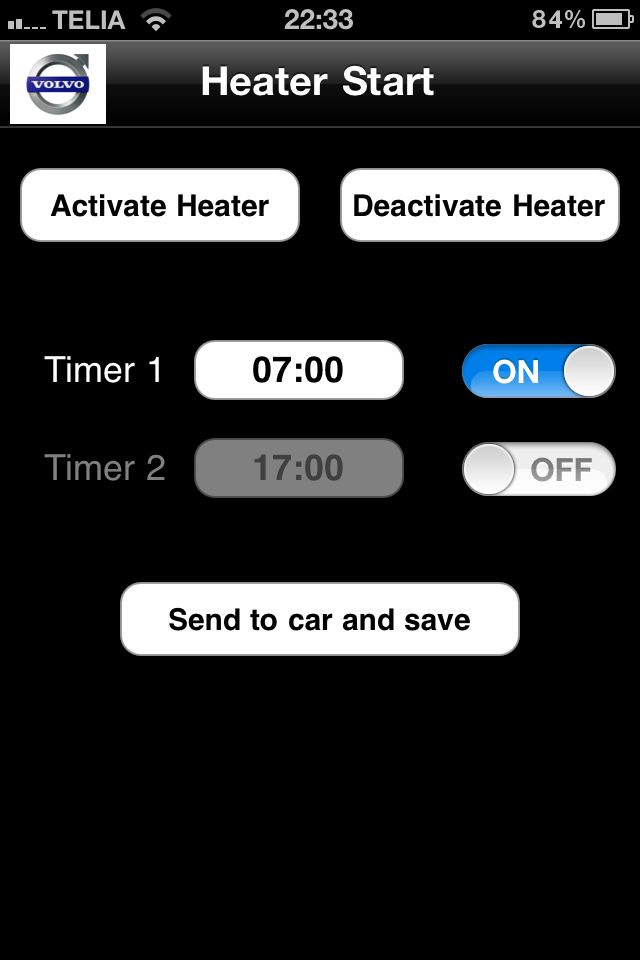
Volvo cars released an iPhone and Android app in June 2011 which use their On Call cellular service to allow users to lock the car, find their car, look at the dashboard, start the parking heater and other useful things. I’m told the app is a roaring success and if so I believe the reason is that Volvo car owners immediately understand which problems it solves for them, how it works, they can use their device of choice and it works like anything else on that device. The entire On Call technology, system and networks are invisible to them. It just works. That is a good example of how I believe M2M solutions should interact with their users.
Leave a Comment » | M2M, User Interaction | Tagged: apps, B3CC, B3IT, BYOD, Internet of Things, IoT, M2M, Machine-to-Machine, On Call, usability, user, User interaction, Volvo | Permalink
Posted by magnusmelander
November 30, 2011

I have never heard people asking for M2M but have talked to a lot of people about ways to solve problems in their operation by using an M2M solution. The way I look at it there are three key M2M promises we can make:
Efficiency. As soon as we connect things together and add computing on top, we can collect, analyze and react very fast. Processes become quicker, problems are detected and solved faster, better control prevents fraud and mistakes and so on.
Sustainability. The desire to save the globe is well spread and most organizations and individuals try improve the way they do things to make their contribution or at least to look good. M2M solutions are often part of attempts in this field and play key roles specifically in the Utilities and Transport industries.
Safety and Security. Connecting things and adding computing on top enables very efficient monitor and response systems. Today important assets like boarders and critical infrastructure are monitored by M2M systems using a range of different sensors, video surveillance equipment and other terminals to perform the task. Data is collected and analysis triggers the right response to each situation. In homes, offices and public areas we use similar but simpler solutions to protect people and assets.
Efficiency, Sustainability, Safety and Security go well together. When we solve a problem in one of these areas we often gain also in the others. In my experience it’s often a good approach to try identify important problems in any of these ares, prioritize them and start look at solutions using the connect and compute approach. Since we start from serious problems for the organization we are looking at and since we know that the three promises go well together, chances are good that we will deliver a solution which meets or exceeds expectations.
Needless to say efficiency can be translated into things like competitiveness, better margins lower cost and improved service which always are of interest in all organizations. This often makes it quite easy to put together tangible objectives for M2M projects, sell them to key decision makers and measure the results.
Leave a Comment » | M2M | Tagged: B3CC, B3IT, Internet of Things, IoT, M2M, Machine-to-Machine | Permalink
Posted by magnusmelander
November 22, 2011

Machine-to-Machine solutions have been around since analog modems came to market and millions of elevators, alarms, nurse phones, vending machines, franking machines, fax machines, recycling machines and level gauges utilize the fixed telephone networks (PSTN) to communicate. I have been trying for years to collect data on the number of machines connected to PSTN but it is information very hard to find. Operators typically don’t know what is behind the first socket of a PSTN installation and it is common that phones and machines share subscription.The two
key limiting factors for M2M over PSTNare obviously that machines have to be connected by wire and the cost involved. The PSTN subscription alone is typically 100-300$/year which immediately prevents massive roll-out. The situation differs from country to country but it is often so that cost for new installations has to be carried by the subscriber and in some markets it takes forever to get a new subscription.Mobile networks rapidly grew to cover most of the geographies, modules were developed for none-phone usage and some operators started quite early on to build a new wireless generation of M2M solutions. This together with the massive Internet forces created a mobile M2M hype around year 2000 and our VC, BrainHeart Capital, invested in Wireless Maingate and Wireless Car at the time. I think most would agree that the ideas were great but it was far too early since technology, networks and services where not ready enough to fly.
GSM was developed to support packet switched data communications (GPRS) but a quite well hidden secret is that GSM also supports the circuit switched data communications (CSD) used in the traditional fixed phone networks (PSTN). CSD made it possible to move terminals from PSTN to GSM-networks which still is an attractive approach in networks where CSD is enabled. Typical usage has been encrypted phones and mobile fax. Still today this is an attractive way to move fixed terminals to a mobile network to save money, add flexibility, enable wireless offices or to enable fixed line operators to remove parts of PSTN that never can be upgraded to broadband and/or don’t have subscribers enough to carry the infrastructure cost. There is an important difference between moving an existing PSTN terminal to a mobile network and to replace an existing PSTN terminal with an IP-enabled mobile terminal. Reasons for moving terminals include taking advantage of made investments in products and education, a desire to make changes step by step and last but not least that some applications like fax is technically very difficult if not impossible to do over a packet switched network (like GPRS). On top of technical arguments are things like the need to call a place and not an individual. Mobile phones are personal and fixed phones often shared.
The PSTN networks are on their way to be replaced by mobile networks but the situation differs a lot from country to country. In Sweden TeliaSonera has started to take down PSTN in rural parts of the country replacing the subscriptions with mobile alternatives. At the same time subscribers leave their fixed phone subscriptions behind and it was recently proposed that the concept of area codes are taken away to mirror the fact that the fixed phone is going away. The number of fixed line subscribers in Sweden are 2,5 million, almost half of ten years ago, compared to 13 million mobile subscribers. The concept of mobile one phone offices once invented by Spring Mobil in Sweden is now very popular in Northern Europe. By moving the switch to the network and removing the fixed phone infrastructure companies save a lot of cost and increase accessibility and flexibility. But the fixed infrastructure was often used also for other things that has to be taken care of including fax, door opening systems, conference phones, alarms and franking machines. I think the one phone offices will continue to spread and this will be the single biggest market for moving terminals from PSTN to mobile networks over the next couple of years. But it has to be underlined that it is not a simple thing to do since both fixed and mobile networks behave differently and many of the fixed network devices use odd protocols for communication. Most difficult of all is fax since it uses a very sensitive protocol.
In developing countries we often see fixed networks with limited coverage and mobile networks gaining momentum due to speed and cost of deployment. Most of these networks are still 2G and in combination with extensive use of paper mobile fax is a popular CSD application. But generally speaking I think GPRS will be the predominant connectivity method for M2M applications in developing countries many years ahead.
Moving devices from PSTN to mobile networks is an important part of the M2M industry. Since it seems like nobody has good enough data on the size of the M2M over PST market I would appreciate any data you could share with me on connected machines to PSTN and I hope one day to be able to share a decent overview helping us all to address this part of the M2M market which I often refer to as the narrow band data opportunity.
1 Comment | M2M, Networks | Tagged: B3CC, B3IT, CSD, fax, Internet of Things, IoT, M2M, Machine-to-Machine, mobile office, one phone office, PSTN | Permalink
Posted by magnusmelander
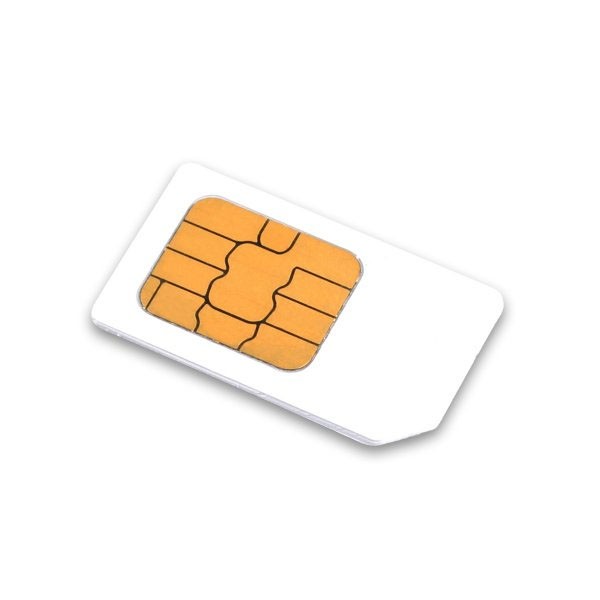 With the GSM mobile phones came the SIM-card (Subscriber Identity Module) 1991 turning a subscription into a tangible thing that could be removed, put into another phone and stolen. Users could bring their GSM identity to another phone without involving the operator which is very convenient. By removing the payment relationship from the subscription and adding possibilities for pre-payment a brand new and very popular type of mobile service was invented. Adding some memory available for the user made it possible to bring data, typically phone numbers, along with the SIM card to another phone.




 connectcompute