July 22, 2016
 The pace of technological development remains vivid and it takes great people and sharp focus to understand what to use it for and how. Like if this wasn’t challenging enough, a new generation of internet is rapidly emerging where things are added to the people and organisations already connected. The three key deliverables from IoT are efficiency, security and sustainability and this alone will make huge impact on business and society. Almost everything will be affected why it’s vital to start work on risks and opportunities in all fields now. The only big difference from when Internet arrived is that ignorance will not be an acceptable excuse this time.
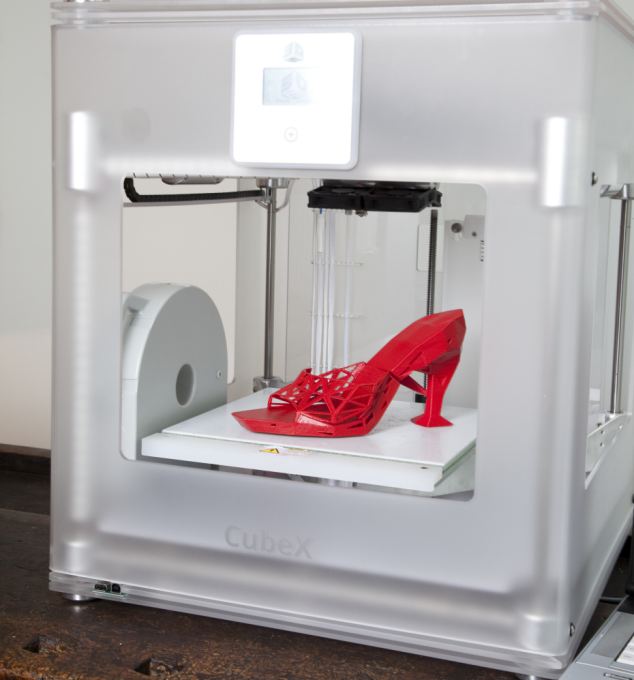
Imagine combining 3D scanning, Internet, data analytics, design software and 3D printing. What would that do to fashion, retail, healthcare and distribution? Or heat cameras, drones, Internet, cloud computing and data analytics. What could that do to fire fighting, border control, building management and search for lost people.
We are facing huge change in the magnitude of when we went from farming to industry and it’s really time to start working on all the opportunities and issues.
Most new solutions involve connected hardware which makes life somewhat more difficult. Hardware adds complexity and time, requires financing, impact the environment directly and increase financial risks. Large scale manufacturing has moved to developing countries and with that also experience and skills. It’s quite easy to see the value added by data from the connected things but unless someone connect them there will be no data. We simply will have to cope with the fact that things will stay in the physical world even if the virtual world is much easier and faster to work with. One important implication of that is that innovative and successful startups with hardware as part of their solution hardly can scale up to become global since it will take too long time. This is why we have to learn how to transform innovation in sharp startups to value creation in large international companies.
We started the hardware hub THINGS downtown Stockholm in March 2015 to learn how to make this transformation. We have some 30 carefully selected startups and Sweden’s biggest maker organisation in our 2000 m2 building at the campus of KTH Royal Institute of Technology. And we have a handful of export companies including ABB, Assa Abloy, NCC and Husqvarna as main partners. Since hardware is too broad we focus on themes agreed with our partners and these are IoT, sensors, wearables, 3D scanning/printing, automation and robotics. We have been practicing for over a year now with all types of meetings, events and workshops with our industry partners and other enterprises including Deutsche Telekom, Daimler, l’Oreal, Airbus and Nike. By now we have learnt enough to scale up our efforts and involve more startups and enterprises. The current startup community involved includes some 150 startups now and in June we launched THINGS Enterprise Circle to build a community of Swedish and international enterprises who want us to help start or accelerate their technology innovation and digitalisation efforts.
At this point it’s clear to me that efforts to learn how to transform innovation from small to large companies have to be based on processes not one-off events, absolutely common interest (i.e. IoT and hardware are far too generic but battery technology and energy harvesting or wearables are ok) and really careful selection of companies and people for workshops. The purpose of a workshop is to inspire and bring new ideas and approaches to the enterprise and the aim is to have the enterprise to buy projects and prototypes from the startups to get the collaboration going.
Small and large companies who learn how to work together in an efficient and mutually beneficial manner will be the winners in the networked society. We are determined to figure out how to make this happen at THINGS and welcome enterprises and startups who want to be part of our journey.
 Leave a Comment » |
  Business Models, IoT, M2M, Safety and Security, Things | Tagged: 3D print, 3D scan, Cloud computing, data analytics, digitalisation, drones, innovation, IoT, networked society |
  Permalink
 Posted by magnusmelander
July 19, 2016

Crossing the chasm is hard for start-ups which Geoffrey A. Moore explained so well already 1991. It is also a well-known fact that going from a consulting business model to a product model is really difficult. There are practical challenges like cash flow sales and marketing but the mind-set related ones are the most difficult ones. In essence a consulting sales person always tries to sell at least what a customer is asking for while a product sales person have to manage customer expectations to release dates, price and features. Still companies are trying since the ability to scale faster and more profitable is seducing and the ones who succeed can end up in a much more interesting situation. No risk no glory! There are also examples of bets where companies separate the platform they use as consultants from the consulting and SAP is a great example of that.
In the IoT space I believe we have an additional strong argument for going from consulting to product. All IoT solutions include hardware, connectivity, data collection, data analysis and distribution of information. Customers want to leverage these systems to improve their business why most IoT solutions are customer, application or industry specific. The traditional way to develop an IoT company is to “get hold of” a platform to develop customer applications on. So most IoT companies come with a technical asset which they try to turn into a solution for a specific customer need. The challenge is to learn enough about an industry or application to make customers impressed and eager to buy. Wherever I go today I meet IoT startups with solid but quite generic platforms and some customers, often in different industries to make it even more complicated. They might have invested a couple of million dollars to develop and maintain the platform most often using external money. The combination of IoT rapidly becoming an international business and quite local and not really specialised IoT platform companies will unfortunately create problems in many IoT startups.
I have now seen a couple of IoT startups successfully going from consulting to product and believe it is a great way to go. By taking the de-tour as consultants they can finance their company themselves as long as they need. In the consulting stage they might test different potential markets for their product, they build relationships with customers, partners and potential recruits in the target market and they can develop their product back home in stealth mode if they like.
The most dangerous point in the development of a company like this is when they decide to jump from consulting to product. A clean-cut is required to make sure all resources are focusing on the product from day one and to manage legal, ethical and practical issues. It has to be well planned to secure cash flow and a fair chance to have paying customers. Marketing and sales have to be ready to roll right away. The end result is a well focused, prepared and customer centric IoT company which founders still own. If it fails, it is still painful but clean and quick.
It is still challenging to go from consulting to product like this but if this is the plan already from start one can mitigate risks by hiring product people and structure the company as a product company. And again, no risk no glory!
Leave a Comment » | Business Models, IoT, M2M | Tagged: chasm, consulting, crossing chasm, iof platform, platform, product, SAP | Permalink
Posted by magnusmelander
July 17, 2016
 The telecom industry got a head start in the early days of IoT aka M2M. Ericsson took the lead with the 50B connected devices mantra which translated well into an obvious role for huge operators with millions of connected users and massive investments in wireless networks. And it went without saying that the obvious providers of technology and solutions would be the telecom vendors already in the family. This was a clever and well executed plan by primarily Ericsson since the operators were looking for the next massive growth opportunity after having connected most people and given them data buckets. Operators went for it with one primary caveat – we will not only provide connectivity.
Now, only few years later IoT has gone from a connectivity focused baby to a data centric young adult. IoT is only a new phase of Internet – we’re adding things to people and businesses already connected – which explains the speed of development. From a usage point of view, Internet including IoT and the enabled services and solutions will remain customer focused and very fragmented and the operators will continue working hard to figure out their role beyond connectivity.
Here’s what I would do. The two major challenges for IoT are security and privacy. The smaller one is security since we are used to repair and plug holes as we go, and since we tend to have a very short memory. But privacy is really challenging since nobody knows how the requirements will develop over time. When your data is out you can never get it back why any service will need a solid privacy architecture to cope with future requirements without having to rebuild from scratch. The user must own his or her data and decide who should get hold of it.
But privacy is not only a technical issue why we need trusted partners to help us manage our data. Today most of us trust serious banks to manage our financial data as an example. Our trusted partner needs big muscles to force and enforce proper agreements and obviously have to walk the talk themselves. Operators already manage a lot of our private data and provided they do that well, this is a great position to build the trusted partner role on. The trusted partner role can also be required to build and orchestrate a fair and robust sub-eco system in a specific market like smart homes or connected cars.
So why is privacy of importance anyway? Today most users of internet applications sign up without even reading the agreements. One often hear “I’ve nothing to hide” as the key argument to avoid the hassles of reading and thinking. But with today’s capabilities in data analytics, all digital traces and information we leave behind can quite easily be used to picture an individual, understand how a product is designed, see patterns, understand security procedures and arrangements and so on. In the wrong hands this can be really bad and this type of information is already very useful for burglars to know when people are away and industrial espionage for example. A small example of what could, technically, be in use today is recruiters knowing without asking that a female candidate is pregnant, don’t exercise or have a heart problem.
I am absolutely convinced neither consumers nor policymakers will let this development continue as today. And this is where I believe operators with a relevant brand can find their role in IoT beyond connectivity. A role which will be increasingly important and valuable as far out as I can see. Two good examples of operators I see moving in this direction today are Telefonica and Telia Company (see FAQ 6 and 7).
Leave a Comment » | Business Models, IoT, M2M, Operators, Privacy, Safety and Security, User Interaction | Tagged: agreements, consumers, Ericsson, imse, policymakers, security, trust, trusted partner | Permalink
Posted by magnusmelander
February 7, 2016
 IoT will make major impact on how we do things and what can be done, across industries and borders. Adding things to the Internet creates a massive opportunity in pair with what Internet have done to us to date. The major challenges are as always to be found in organisations and processes, rarely in the technology as such. However, if we cut the cake differently, and look at it from people making bets on creating and implementing IoT products and services, I would argue that the two biggest challenges are security and privacy. And security is the smaller of these two big ones! We have always had security challenges, but they can be mitigated and fixed on the go. Fixing bugs and problems are part of the development so to speak. If someone finds a back-door and steal our jewels, we will install a lock on the door and hope people will forget it, if you see what I mean. The vendor of the door takes a hit but people have a tendency to forget quite rapidly.
But with privacy it’s a matter of architecture and trusted partners. If data that at some point in the future is considered sensitive is “out there”, it’s too late to take it back. In the digital world nobody knows how many copies there are, who has them, what they use it for, and so on. Most countries have laws and policies for this already, sure, but the first issue is that policymakers probably will shape up rules and policies down the road. Nobody will be badly punished for data that is made available before the changes, obviously, but it might take fundamental changes of systems and services to meet the new policies if the architecture isn’t there already. The second, and much more difficult challenge is that people themselves might change their views over time on what is acceptable and not. Such changed requirements are neither planned nor managed within countries or companies. They might come and go, spread across by social media and gather less or many people behind. And policy makers are always influenced by public trends, media etc. so these “unmanaged public policies” can force rapid legal changes as well.
If your clients suddenly believe that the data they “produce” in their homes or when they shop belongs to them, it will be hard to keep them happy if you don’t let them control it. And even more so if you sell the data to third parties. And to let users be in control of their data requires an architecture supporting that – it’s not something hard to add on the go.
I believe connected cars, homes, cities, cloths, pets, shops, bikes, gardens, etc. sooner or later will meet privacy requirements from policymakers and people that will be necessary to meet and very challenging for those without an architecture to supporting. The role of a trusted partner will be absolutely key and for those being trusted it will be a fantastic foundation for creating brand value and profitable business. The jury is out who can take this important and valuable role. I believe it is a national player and I put my bet on a responsible mobile operator with a solid brand.
Leave a Comment » | Business Models, IoT, M2M, Privacy, Safety and Security | Tagged: IoT, mobile operator, Privacy, security, trusted partner | Permalink
Posted by magnusmelander
January 11, 2016
 The need for a narrowband wide area network devoted to IoT was obvious but it is only recently it has become obvious for many. We need them to connect cats, bikes, fire detectors and things like that. We only need to send heart beats, position and events but the devices often need to be tiny, with low cost and most importantly very very power efficient. The connectivity to connect a pet can’t be more than maybe 5-10$/year. Many have developed such network solutions but until Sigfox came up with an operator model and a global ambition, nothings was there to attract developers.
Now these networks have got a category name:
LPWAN – Low Power Wide Area Networks – and
numerous articles and reports explain, compare and calculate business opportunities. As always within IoT the numbers are huge. While
Sigfox is a proprietary network with base stations from Sigfox but modules and tools from a range of vendors,
LoRa is a more orchestrated approach. A couple of mobile operators including Orange, Bouygue and KPN have declared publicly that they plan to build LoRa networks and I know several others looking into LoRa and other LPWAN network options. Sigfox has networks deployed in several countries including France, Holland, Spain and UK.
Also 3GPP have been working hard to come up with a standard for narrow band IoT data – NB IoT – which is expected to be published as part of 3GPP’s Release 13 in early 2016. The first networks are supposed to be deployed late 2016. Orange recently said that they will trial NB IoT technology alongside their launch preparation of a LoRa network. Also 5G seems to include a LPWAN solution, LTE-M.
LPWAN has quite rapidly gone from “not needed” to an obvious part of the communication mix for IoT. Now Telefonica and SK have invested in Sigfox, others look into deploying Sigfox, LoRa and the 3GPP NB IoT. This reminds me of Wi-Fi which was “not needed now when we get 3G” and now Wireless Broadband Alliance, started some 10 years ago by a couple of mobile operators, gather some 600 delegates for their Wi-Fi Global Congress events.
The development of several LPWAN solutions is a sign of a grown up IoT industry. But let’s remember that building the infrastructure is only the beginning – getting it used big way is the real challenge. LPWAN is a low cost high volume business and the winning technology will be the one who gets the developers excited.
I’m looking forward to seeing how the different camps will address the IoT developers and will do my best to ensure that the Swedish IoT developers will get well served and successful also in the LPWAN space. LPWAN will be a focus area 2016 both for my alliance of 48 Swedish IoT start-ups – SMSE – and our hardware hub in Stockholm – THINGS.
Leave a Comment » | IoE, IoT, M2M, Networks, Tools and platforms | Tagged: LoRa, LPWAN, NB IoT, Sigfox, SMSE, Things | Permalink
Posted by magnusmelander
August 28, 2015
 Companies who want to utilise a new technology have to work hard to get on top of it. First they need to understand how it works and what it could be used for in general and the emerging eco system. Then they need to understand how it fits into what they currently do and what could be achieved if they were able to utilise this new technology. From there on they need to make a business case quantifying what it takes and what it could give. Then comes changed processes and organisations, mitigation of risks, prototyping, testing, competitive analysis, marketing and sales strategies and plans and so on. It definitely takes a while.
With shorter cycles, fierce competition, parallel developments and challenged management comes pressure to move fast and show progress. That’s when companies typically only have three options: partnership programs, alliances and competitions.
When IoT came on top of Gartner’s Hype curve most organisations wanted to be part of the IoT revolution and get their fair share of the 50 billion connected devices. Most of us involved know that IoT solutions are very complex with several industries involved in any solution, combinations of hardware, software and communication is hard to develop and manage and huge fragmentation to meet specific industry and customer demand. By now very few organisations have figured out what to do with IoT why we probably have beaten all possible records when it comes to partner programs, alliances and competitions. This is an interesting paradox since it is quite unlikely that one alliance will standardise the intelligent buildings and that partnership programs suddenly will create a lot of business. But the biggest paradox of them all is that while tech entrepreneurs need to focus on developing their solution with customers we keep them really busy filling in applications and forms, pitching at events and twitter.
Leave a Comment » | M2M | Tagged: alliance, challenge, competition, Gartner, IoE, IoT, M2M, partner program | Permalink
Posted by magnusmelander
June 2, 2015
 In August 2012 AT&T announced that their 2G network would be shut down latest January 1 2017. This was somewhat surprising to me since roughly 90% of all M2M devices connected to mobile networks used 2G. (https://connectcompute.com/2012/08/08/what-will-be-the-impact-on-m2m-of-announcement-to-shut-down-2g/) Given that 3G is something of a compromise I would have believed that 2G and 4G would be a better bet – one with cheap modules, low bandwidth and great coverage and one focusing on data intensive terminals and applications.
Since two years, we have started to see mobile operators taking different roads for IoT. Good examples include Tele2 who only provide connectivity and great partnerships, Telenor Connexion who was the first to use both Jasper and EDCP (because they follow their customers) and KPN who returned back to Holland, building their business from there with excellent roaming.
And here we go again! Telenor Norway’s CTO, Magnus Zetterberg, said at an investor meeting in London that the company plans to completely shut down its 3G network in 2020, five years before it closes 2G in 2025. “It’s better to retain 2G than 3G because all the devices today are still embedded with 2G, so you will lose out without the network,” he said. “2G is still important for the M2M market.”
I believe this is a good approach since replacing all 2G M2M modules installed across the country to something else, even if only a SIM-card from someone else, is a disturbance and cost the customers neither expect nor like. The labour cost involved in changing are typically far bigger than the hardware. And Telenor is creating yet another criteria for customers to evaluate when picking mobile operator for their IoT applications. And with a 2G/4G approach an operator probably has a better answer to a customer who want to deploy a large IoT project today with an ROI calculation for 8-10 years.
Leave a Comment » | IoT, M2M, Networks | Tagged: 2G, 3G, 4G, AT&T, EDCP, Jasper, KPN, roi, Tele2, Telenor Connexion | Permalink
Posted by magnusmelander
June 1, 2015
Dear readers, I have to apologise for not having posted more than a couple of posts this year. The reason is that I have worked really hard together with Linda, Carolina and Pär to build THINGS™, our new 2000 m2 co-working space for start-ups with hardware as part of their solutions, at KTH Campus dow ntown Stockholm. We started last spring and opened our house officially March 26 with a great party with over 300 people. It’s been a fantastic journey and we already have 21 start-ups in our house, and five industry partners: Assa Abloy, ABB, Husqvarna, NCC and SP.
This is a fantastic project, trying to exploit the perfect storm created when the two mega-trends IoT and Makers Movement meet. The best way of following us is by signing up to THINGS NEWS, visiting our web thingstockholm.com from time to time and following us on twitter @sthlmthings.
I remain devoted to IoT and my alliance for Swedish IoT start-ups, SMSE, now has 41 members and 13 partners. I’m now working on our annual IoE For Real™ event in Stockholm June 17 and the International IoT Get Together at THINGS the night before (sign up for free using code “connectcompute”).
From now on I will start focusing on my blog again. Nobody knows how IoT will develop and I believe it is really important with original views, thoughts and opinions from people spending their lives working with IoT. Today, on top of the Gartner hype curve, everybody want to be part of IoT and there are 13 announcements and competitions on a dozen right now. We need to put these right and put them into context. Most recently Google announced Brillo and Weave. I’m not very impressed and I will come back to that very soon in my blog.
Avanti!
Leave a Comment » | IoE, IoT, M2M, Things | Tagged: ABB, Assa Abloy, Brillo, Husqvarna, Internet of Things, IoE, IoE For Real, IoT, SMSE, Things, Weave | Permalink
Posted by magnusmelander
March 18, 2015
 Adding things to the Internet will make extraordinary impact on industries, businesses, nations and people’s lives. And I hope it will make us take better care of our globe too. The three major deliverables of IoT – safety, sustainability and efficiency – together with convenience will do the trick. In essence IoT fuels digitization of processes and allows us to base decision-making on better, often real-time, data. Applications like preventive maintenance and scheduled repairs will make us tremendously more efficient to name one example. And one day “if it aint broken don’t fix it” might be hard to understand. The Internet of Everything is rapidly coming together and I believe we’re leaving the teens already 2016.
Another rapidly developing major trend is the Makers Movement. Equipment and tools have become much easier to use and really affordable. And new types of equipment like 3D printers together with a host of new materials and techniques complete the opportunity to democratise manufacturing. In other words a couple of people could easily get together and buy what it takes to make at least prototypes of their ideas. And that is exactly what has happened – there are makers everywhere, in more or less organised and specialised organisations, sharing tools, skills and facilities, training each other and building new micro startups en masse.
FabLabs,
TechShops and Makerspaces are popping up everywhere and 3D printing and scanning by itself promise massive changes on how we design and produce things, e-business, healthcare and so on.
It is hard to predict what will happen when these two mega trends meet but let me share a couple of observations to get going:
– It’s more difficult and resource consuming to design, manufacture, market and service hardware than just software
– Hardware requires more money and a wide range of expertise
– Working with hardware requires more physical interaction and relevant facilities
– Early stage investors are often reluctant to invest in hardware today
– Crowdfunding services like
Kickstarter and
Indiegogo are already loaded with hardware, often with great innovative design compared to mainstream products
– Apple combines gorgeous things with ease of use and Internet bringing continuous innovation and record profits
I find the meeting of these two mega-trends very interesting and have worked for a year with some friends trying to figure out how to turn this into serious solutions and big business. One important conclusion is that successfully making solutions with things included require great engineers, great designers, great entrepreneurs and internationally successful enterprises with things part of their solutions to collaborate with. That makes it a perfect fit for Sweden and I will do my best to help the Swedish hw start-up community become successful. We have started to use #sthlmthings for our community and I would welcome other communities to gather around similar hash tags to make it easier to follow and interact in and between “things communities”.
Things matter!
Leave a Comment » | IoE, IoT, M2M, Things | Tagged: #sthlmthings, crowdfunding, hardware, hw, Internet of Things, IoE, IoT, M2M, makers, SMSE, wearables | Permalink
Posted by magnusmelander
February 11, 2015
 I’ve been talking for years about the need of a network to connect “cats, bikes and smoke detectors” in order to reach the billions of connected devices people talk about. The only thing it needs to provide is heart beats, position and events, thus very very little data. The requirements are very cheap connectivity, very small and light hardware and tiny power consumption so batteries can last maybe 4-5 years. This infrastructure will complement the other ones we have and it will allow me to connect my dog for maybe 10€ a year without any over-night charging of batteries.
I have been in favour of Sigfox approach to this issue for years why todays announcement that Telefonica, NTT DoCoMo, SK Telecom, Air Liquide, GDF Suez, Eutelsat and U.S. hedge fund Elliott Management together with existing investors Elaia Partners, iXO PE, Partech Ventures and Idinvest invested 102 M€ in Sigfox came as really good news.
This gives the muscles for Ludovic and his team at
Sigfox to really start conquer the world. And this is something many of my 36 members in the Swedish IoT Alliance
SMSE have been waiting for.
Avanti!
Leave a Comment » | IoE, IoT, M2M, Networks | Tagged: Air Liquide, Eutelsat, GDF Suez, narrowband, NTT DOCOMO, Sigfox, SK Telecom, Telefonica | Permalink
Posted by magnusmelander



 connectcompute