July 3, 2012
The European Parliament just adopted a resolution where they call on the European Commission and Member States to make sure eCall is installed in every new vehicle by 2015. The Parliament consider this resolution a major step towards the roll-out of eCall in Europe that will have a significant impact on citizens’ safety.
This is certainly a good intention and with 35-40.000 Europeans killed and over a million injured in road accidents per year something needs to be done. But it is not obvious that eCall will make a big difference in that regard. Some countries don’t have national response centers which will make implementation more difficult and similar services from car manufacturers haven’t really become commercially popular. I guess the road towards less road traffic accidents starts with better drivers, better cars and better roads but I obviously hope eCall will save a lot of lives.
But connecting all new cars in a similar fashion could potentially make a difference in other ways. If some data would be made more openly available we could see a lot of new innovative services made available to drivers, owners, insurance companies and government agencies. Imagine apps like the Volvo App managing the parking heater etc becoming available for all cars, maintenance data becoming available to third party service companies, real time position data available to ITS systems, etc. And if some of these services really would take off the vehicle M2M retrofit market would be huge. We all know it by now: data is the gold of M2M.
 Leave a Comment » |
  ITS, M2M, Safety and Security, Transportation, User Interaction | Tagged: apps, B3CC, data is the gold of M2M, eCall, European Commission, European Parliament, insurance, Internet of Things, M2M, m2m retrofit, On Call, open api, Traffic, Transportation, Volvo |
  Permalink
 Posted by magnusmelander
April 24, 2012
 Services like Skype and Spotify utilizing the Internet just as a connection are often referred to as over the top services or OTT. Consumers normally love them but operators typically have a more complex view of them: great since they create demand for their IP services but not that great if they replace services the operators charge for. Most M2M applications are really tiny in terms of traffic generation which explains why over 95% of the mobile ones still use 2G. For mobile operators M2M is more of a subscription business than a data business today. It is hard to estimate how M2M solutions will impact data volumes since it’s a combination of actual applications and volumes of connected devices.
I always claim that the M2M consumer market is a great place to look for innovation and interesting examples to bring to the business market. One example is what could be referred to as M2M OTT, where vendors of connectable devices use people’s ordinary mobile devices to connect to the Internet and an application in the cloud or elsewhere. This can make the device cheaper and smaller to manufacture and use. By using for example Bluetooth to connect to the phone and leverage the existing subscription and data plan. Data from the device can be made available to an application somewhere typically adding no cost to the user. And no new revenues but more traffic to the operator. There are many examples of this in the consumer market today and the personal health and fitness segment is one worth looking at. A mix of books, trends, research, services and products has created a rapidly growing movement and industry. Dr David B. Agus’ bestseller “the end of Illness” and the sleep monitor Zeo are good examples. The Zeo is a complete system taking sleep analysis out from the labs. By connecting a Zeo headband to an iPhone or Android phone via Bluetooth, the sleep data collected is made available to an app for reporting. But the sleep history data is also made available to the user’s account at mysleep.myzeo.com where analysis, backup and other services are available.
Using the mobile devices for local collection and presentation of data and access, over the top, to an application and services in the cloud is a model we can use in other situations. There are obviously downsides having to deal with Bluetooth, phones running out of power or stolen etc. But for some applications this is a great model maybe also in the business environment. There is simply not one or two models for M2M but many, and it is important to carefully look at all possible approaches available when implementing an M2M project.
Leave a Comment » | Cloud computing, Consumer market, M2M, Networks | Tagged: 2G, Agus, Android, apps, B3CC, B3IT, Bluetooth, Internet of Things, IoT, iPhone, M2M, Machine-to-Machine, OTT, over the top, SIM, smartphone, zeo | Permalink
Posted by magnusmelander
March 5, 2012
 Mobile World Congress 2012 is over and to me it was a busy congress without any exciting major themes or news. Nobody is using Bluetooth headsets any longer, most exhibitors used apps on pads and smartphones to visualize what they deliver and the expected grand return of Nokia never happened. Among the most interesting things were Mozilla’s Open Web Devices – a mobile open source os built-in html5 – and Wireless Power Consortium with their prototypes.
M2M was presented, discussed and promoted almost everywhere but it was more the presence of M2M at the congress than what was demonstrated that made impact on me. Once again there was a Connected House filled up with consumer products connected to Internet and a couple of cars outside. The Embedded SIM was demonstrated by GSMA in partnership with Gemalto and Giesecke & Devrient and it was cool to see over the air provisioning of operator credentials in action. This ability to change mobile operator over the air will make life easier for owners of M2M installations and vendors of connected things.
The take-a-way from MWC 2012 was the M2M momentum in the industry. Nothing surprising yet good to see. I heard statements like “M2M is one of the few growth areas we are investing in” over and over again during the week. It feels like M2M is here to stay now.
1 Comment | M2M | Tagged: apps, B3CC, connected house, embedded sim, gemalto, giesecke & devrient, html5, Internet of Things, M2M, Mobile World Congress, mozilla, mwc, open web devices, pads, smartphones, wireless power consortium | Permalink
Posted by magnusmelander
December 7, 2011
 Users
Users are typically more interested in what things and services do or deliver than how they work. They want to get the work done. Still most products and services are too cumbersome to install and use and even if they help solve important problems people are reluctant to buy and use them. Coming from IBM to Apple at the time for the Mac made me see the difference between function centric and user centric development approaches.When there is a reasonable choice,
users always chose the products they like. Some 3,5 billion people had a mobile phone when the iPhone was launched June 29 2007. It brought a completely new user experience to the market and despite many technical limitations and a high price it rapidly and fundamentally changed the mobile industry. Operators were chocked and Nokia lost. There has always been application developments for mobile phones but by enabling any and all developers to develop easy to install and use apps for millions of iPhone users and efficiently distribute and maintain them, enormous forces were released. All of a sudden a completely new way of solving small to big problems was at hand and a massive amount of apps were made available. Like when Internet took off many said “there is mainly useless garbage around”. Development started from the users. The users downloaded some 30B apps 2011 and the revenues are expected to be some 15B$ (Gartner). The users are kings.
The relevance of this for M2M is that whenever users will be involved, they must be able to use the device or devices of their choice to interact with the service. And the usability of the service needs to be in pair with what they are used to already. There will continue to be several terminal platforms and we have to support them all even if it is hard. Up until now most employers had standardized terminals but also that is changing rapidly. BYOD – Bring Your Own Device – is spreading like wildfire promoted by Cisco and others. In essence we can chose between developing apps for the different platforms, using HTML5 or using cross platform tools like MoSync, PhoneGap and Appcelerator. These choices are critical since the success of an M2M service depends on how they interact with their users.
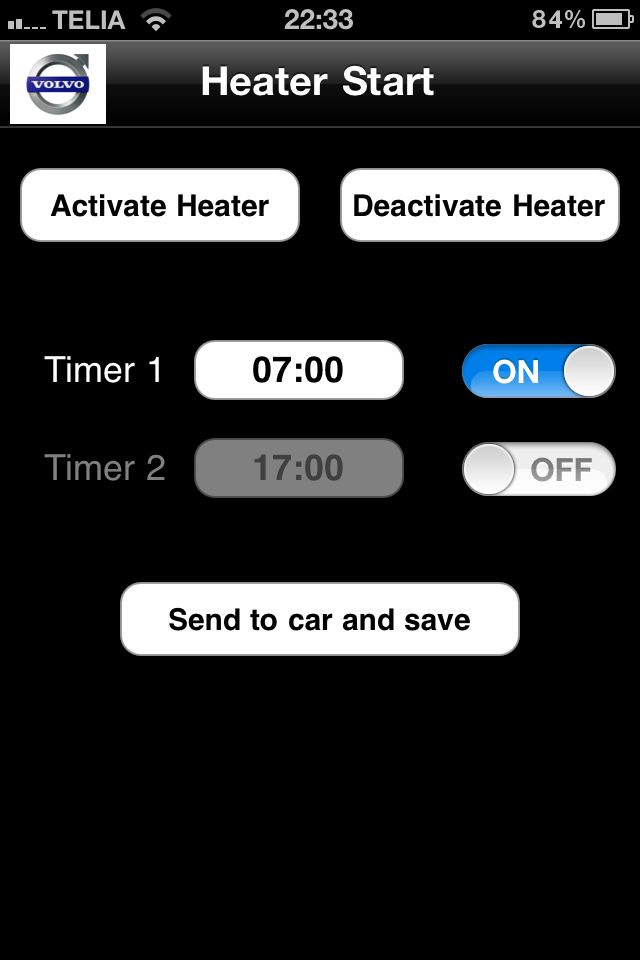
Volvo cars released an iPhone and Android app in June 2011 which use their On Call cellular service to allow users to lock the car, find their car, look at the dashboard, start the parking heater and other useful things. I’m told the app is a roaring success and if so I believe the reason is that Volvo car owners immediately understand which problems it solves for them, how it works, they can use their device of choice and it works like anything else on that device. The entire On Call technology, system and networks are invisible to them. It just works. That is a good example of how I believe M2M solutions should interact with their users.
Leave a Comment » | M2M, User Interaction | Tagged: apps, B3CC, B3IT, BYOD, Internet of Things, IoT, M2M, Machine-to-Machine, On Call, usability, user, User interaction, Volvo | Permalink
Posted by magnusmelander

 connectcompute