Connected watches and glasses are not the next big thing

May 11, 2014

Sony-Smart-WatchM2M  or Internet of Things is not an industry. It’s more of a process describing that we are continuously connecting more things to the Internet. And it is a way to segment markets like how many dishwashers are connected and how many SIM cards are used in other things than phones and pads. Connecting things is not a big deal by itself but the data collected over the connection can make a huge difference when it shows up in systems for decision-making, process management, document management, monitoring and alarms, security and so on. It is when the data becomes information in relevant systems that the value appears. This is why I believe the IT industry must play the key role in pulling together the complete applications delivering the value thus enabling the investment decisions. A complete application always include the collection of data (sensors, networks, gateways, etc), management of data (i.e. making useful information for the application) and distribution (i.e. integration, app development, etc). Three distinct parts and at least three different industries.

This is well understood in the enterprise world which also explains why it takes some time to get going. But make no mistake – it will happen in all industries, it will bring massive effects and will redefine many businesses. GE is probably the best possible example of a large enterprise who identified this early on and got going with massive investments and rapid results. The future of the Internet of Everything is created by doers not politicians, thinkers, analysts, researchers, etc. The best approach is to keep eyes open for interesting examples from real life. Not only from your own industry. Identify and select problems and challenges relevant for this technology and start prototype and test. An agile approach with rapid prototyping and real-time testing with users is the way forward.

Up until now we have seen a lot of early successes by companies doing it all. There are companies like that in every single country. This is the obvious winning approach to overcome severe complexity in a new market. But this will change rapidly and new partnerships and value chains will be created to bring solutions to customers in different industries. This is how the IT industry solved issues before and this is why they are needed to participate in building the Internet of Everything. One area where we will see this change very fast is connected accessories like watches, wristbands, etc. A couple of years ago companies started to launched their wristbands and connected watches with an application or service attached. Good start to get to market but obviously not the right way moving forward. We want services where you can connect your devices of choice which allows you to also manage your data properly and distribute the information as you like.

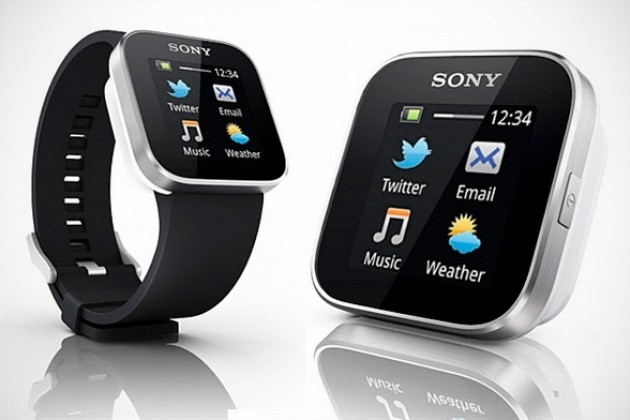
Nobody expected the wristbands to become the new smart phone or pad, but sometimes I meet people who believe smart watches or Google Glasses is the next big thing. I think that is way off. These things are accessories and play in the same league as keyboards and mice. I think we will see the brands focus more on the services maybe with a branded device to show the way. The devices will be more standardized to fit all major services and we all will have to look for the next big thing somewhere else. I just received a 50$ quote for 500 units of a no-brand connected watch which looked quite nice and sophisticated and had decent features and specs. These accessories are about to become commodities and will soon show up in the weekly flow of deals in your inbasket. Data is the gold of M2M – that’s where the value is and that’s where the brands will want to be.


Time for IT players to step forward

April 30, 2014

layout-databaseIn April last year I wrote that the M2M industry was leaving the connectivity focused baby phase and entered its teens. This was great news and happened much faster than when we connected people and businesses to the Internet. In essence this meant that all players who wanted to be part of building the Internet of Everything, not only the connectivity guys, started to gather around the table. Looking at when Internet of people and businesses was developed made it obvious that no one could make it alone and partnerships became the name of the game. That’s pretty much where we are today and these efforts are very promising. 

A major change has to take place before the industry leaves its teens and the building of Internet of Everything gains solid momentum – the IT companies have to take the lead. Up until now connectivity players have been enabling and driving but since “data is the gold of M2M” it has to be the IT players who take over before we really can get going. The value of any M2M application is realized when the information collected or created shows up in a decision-making system or a system managing processes of any kind. This is why application developers, system integrators, app developers, architects, UX designers, CIO:s, business analysts and others are key to bring on board. And this is why leading IT companies will have to join the party before take off.

I have been waiting for the first ones to walk the talk and I’m delighted to share with you that it’s happening here and now! Cisco has rapidly been ramping up their efforts in the Internet of Everything space with research, reports, speeches, acquisitions, idea challenges, etc. And last week they joined our Swedish M2M Service Enabler (SMSE) alliance as the first sponsor from the IT industry. This was very well received by our 26 members of the alliance and media. I expect collaboration and results quite rapidly and I am convinced we will have the leading IT players in Sweden, vendors and consultants, in our alliance before summer. My aim is to make Internet of Everything for Real 2014 in Stockholm June 18 the first event where leading connectivity and IT players will discuss how to create and promote the Internet of Everything together with the entrepreneurs and customers.

Yet another evidence of the importance of IT in building the Internet of Everything was an interview with Klas Bendrik, Group CIO at Volvo Cars, in CIO Sweden today (in Swedish). Mr Bendrik says that everything change when both customers and products are connected – how they develop, design, sell and service cars. It influences the entire life cycle of the car and redefines the entire foundation for their company. “I and our IT function get involved in all business development when IT becomes part of the core processes in the car life cycle”. Voila! Data is the gold of M2M. The only difference from when Internet of people and businesses was built is that ignorance will not be an acceptable excuse this time. Decision makers need to look into what the Internet of Everything will mean to their business and industry now.


Different operator approaches will speed up the creation of the Internet of Everything

March 19, 2014

choicesUp until recently most operators had a similar approach to M2M: “it’s a very interesting opportunity, we’ll build a devoted team, we will make or buy a device connectivity platform, we will not be providing only connectivity but we are not ready to go down the verticals so we will build a partner program.” But things are changing. Telenor Connexion went their own way when they decided on a connectivity agnostic strategy to be able to follow their customers over time. Then they acquired the experienced M2M service enabler and developer Iowa in order to help customers from idea to ready to roll solution. And at MWC they announced adding Jasper’s platform to the Ericsson Device Connectivity platform already in use which as far as I know is a unique move. But perfectly in line with their customer centric strategy.

Last week, Tele2 finally announced their M2M strategy and plan at their M2M Talks event in Stockholm. Rami Avidan and his team declared loud and clear that they will provide connectivity and for the rest, work with and through partners. This was as clear and easy to understand as surprising. At the event they introduced a couple of partners including CSL and Wipro – two really well established and strong international players in the field of M2M.

It is promising and interesting that operators are starting to place their M2M bets differently now. With different approaches and offerings we will have more choices and constellations which will serve customers better and speed up the creation of the Internet of Everything.


Big Data for M2M – too much too soon

October 27, 2013
Walker Information

Walker Information

The M2M aka Internet of Everything market is developing quickly. It is interesting to see how analysts, vendors and journalists over the last few months collectively shifted from one big number to another – from number of connected devices to Big Data business potential for Internet of Everything. It is a sign of growing up that we leave the connection focus and huge abstract estimates on number of connected devices for a focus on data and information. Data is the gold of M2M and I’m pleased that the industry focus is shifting towards the information. The industry loves buzzwords and in the M2M case we ended up in the Big Data bucket. ABI just estimated that Big Data and Analytics in M2M will generate revenues of $14 Billion in 2018. We are in the beginning of M2M aka Internet of Everything and organizations are starting to gather useful information from sensors and things. We see more open API:s and people have started blending the collected M2M data with other data to enrich the value of the information. But few if any are even close to a situation which Big Data is addressing. Most data collected in M2M applications are a couple of bytes from time to time. When mobile networks are used its predominantly tiny data in 2G networks, a lot of narrow band wireless sensors are used and when POTS is used it is typically a couple of seconds transmission. And it is not likely to change! Most of the data we are collecting from things are meter reading data, positions, status information, health data, times and so on. Nothing of that comes close to Big Data. But with big volumes of sensors and transactions we will rather need sophisticated decision support systems.

So why are Big Data brought into the M2M aka Internet of Everything discussions? First and foremost people understand that focusing on number of connected devices isn’t interesting any longer and since the solutions and applications most often are industry, function or company specific it is really difficult to translate them into mind-blowing numbers. But by looking at it from a Big Data point of view new huge market numbers are the results. Secondly, as we become more data oriented the IT companies are getting involved in Internet of Everything. And since many of them are preaching the need for Big Data solutions it is easy to bring the “M2M stuff” into the Big Data story.

I see a risk that the Big Data twist on M2M will make organization miss the ball in their own M2M efforts. Volumes, velocity and variety is not among the key issues in M2M projects today. It is too much too soon. In my experience the best approach is to get going, connecting a couple of things together with a relevant specialist M2M Service Enabler who has most of what is needed already. That way we will learn rapidly from real-time data in our own business and the trials are rapid and affordable. Then its quite easy to see what data to collect from which sources and step by step develop the collecting, management and distribution of data for maximum value to the organization. It is only when the information appears in business systems, business processes, decision-making systems or user applications that the value is realized. We simply don’t need any Big Data methods or solutions for this. It is obvious though, that sooner or later, especially if streaming data is involved, organizations will have a lot of data to process. And M2M applications will of course increasingly add to these systems down the road.