April 12, 2012

The mighty mobile industry is a major force behind M2M today. They have what it takes to connect things, they need to find growth beyond the six billion active SIM cards today and they are promoting the concept of M2M aggressively. But at the same time it is quite obvious that a lot of things will be connected without SIM card. We already have a lot of connected devices in the PSTN network, many electricity meters are connected using PLC or other wireless network technologies than the mobile networks and wireless technologies like W-Fi, Bluetooth, ZigBee and RFID are already used in many applications. Different technologies have their strengths and weaknesses, new ones are coming to market while old ones are fading away. But the concepts of wide area and local area networks remain. Generally speaking it takes technologies optimized for LAN or WAN to build cost and capacity efficient networks. Sometimes even a shorter range network structure is needed like a Personal Area Network.I believe the mobile networks will be used for some connected devices, especially moving things or if one want to avoid dealing with Firewalls. But more so as the preferred WAN solution for things connected to a local area network solution. I have come across estimates that one out of ten connected devices will have a SIM card and I think that could be a reasonable estimate. If Ericsson’s “50 Billion connected devices by 2020” would be reality, 5 Billion of them would have a SIM card. That is a lot more SIM cards than the 108 Million mobile M2M SIM cards that Berg Insight estimate are active today world-wide. But what about the other 45 Billion connected devices? How will they be connected and managed and how will relevant data generated by these devices become easily available for application developers and integrators?
The most immediate challenge for the M2M industry is to establish a rich assortment of M2M services enablers in order to make development and maintenance of M2M application more resource and time efficient. M2M Service Enablers will have different features and specialities and they can be deployed in three different ways: on top of operator connectivity services, as in-house solutions or in independent service providers.
But another very interesting area to be addressed is how to connect devices in a local infrastructure in order to enable resource efficient development, maintenance and monitoring as well as a structured way to deal with relevant data. I use to refer to “Local M2M Gateways” and I have started to look for clever ideas and solutions in the market. I am convinced there is room for a whole range of different products optimized for different situations, still providing a quite standardized interface to M2M Services Enablers. In some cases we need to connect locally using only one technology and in other situations we need to support a mix of several technologies. Connecting sensors or things with sophisticated embedded systems put different requirements on the Local M2M Gateways. The choice of WAN-connection, with or without backup, is yet another area where we will need different solutions. And whichever solution we end up using, it has to be cost efficient, easy to deploy and maintain and robust. These will be important tools when helping organizations to design relevant M2M solutions to meet their challenges and opportunities.
 3 Comments |
  M2M, M2M Service Enablers, Networks | Tagged: B3CC, Berg Insight, Bluetooth, Ericsson, Internet of Things, IoT, LAN, M2M, Machine-to-Machine, PAN, PSTN, Rfid, SIM, WAN, WiFi, ZigBee |
  Permalink
 Posted by magnusmelander
March 30, 2012
 This post was published on M2M Daily March 15, 2012: http://www.m2mdaily.com/m2m-editorials/m2m-enables-new-business-models/
Many industries end up in the huge global market with ever increasing competition putting immense pressure on cost, performance, functionality, service, etc. One approach to change game plan is to change business model from selling products to selling functionality. Something-as-a-service and pay-per-use are concepts along those lines. It is likely that clients in general prefer such offerings since it feels fair to pay for use, it feels good not to have to take care of product problems and in relevant cases it’s great not even having to host or see the products. For vendors it is easier to manage manufacturing, production and service if they own the products, they improve R&D since they get to know everything about the product life cycle but they will get their revenues distributed over maybe 34 to 60 months instead of up front. That is horrifying and require a lot of change to any company going down this path.
M2M is a key enabler to business transformation. Today we can connect products to the vendor’s relevant systems for planning, maintenance, financial reporting, invoicing, support, etc. From a technical point of view this enables change of business model to for example a pay per use model. Since we can monitor, control and manage the products remotely we can constantly improve everything that relates to the product during its life cycle including preventive maintenance, tune for more efficient energy consumption, decrease downtime due to alarms, make software upgrades over the air, etc. These are obviously relevant benefits also with a traditional business model but the point is that with full control of a product through out its life a service oriented business model looks more attractive.All of this is pure technical and no one should underestimate the complexity from a business, organization, systems and management point of view to make changes like this. But still, M2M makes it technically possible today.
We see an increasing number of cases where companies connect their products but it is most often to improve a specific thing like maintenance. And the risk is that the technical implementation works for the purpose but can’t support the next request coming up somewhere else in the company. It is still quite rare that vendors also change the business model but there are interesting examples of companies who do. Innovative business models seem more for newcomers than for established businesses. If it ain’t broken, don’t fix it! Well, if it is a good idea someone will do it and it might be disruptive.
I would argue that now is the time for companies to start look into these things. Keep an eye of what competitors and players in adjacent industries does, start play with ideas of what we could do if we connected our products and what the results would be. And most importantly, if you decide to get going, ensure you build a solution supporting needs you might have over the life time of the products.
Leave a Comment » | Business Models, M2M | Tagged: as-a-Servcie, B3CC, B3IT, Business model, Internet of Things, IoT, M2M, Machine-to-Machine, Pay-per-use, R&D | Permalink
Posted by magnusmelander
March 23, 2012
 A key challenge for the M2M industry right now is to enable time and resource efficient development of specific M2M applications to industries or even companies. As soon as the interesting devices are connected in a proper way, data needs to be collected, organized and combined with other relevant data in order to provide useful information to new or existing applications. Devices need to be monitored, alarms have to be taken care of and maybe even transfer of money needs to be handled. This is what is done in M2M Services Enablement systems – the key to successful M2M deployments.
The Services Enablement systems can be deployed in three different ways: as extensions to operator connectivity offerings, as independent services from a third-party or as an in-house service to support M2M initiatives. It seems obvious that devices in many cases will be connected using a mix of technologies which further complicates this issue. It is my experience that we always end up in different communication technologies for wide area networks, local area networks and personal area networks/short-range communications. And even though wireless most often is preferred when feasible, also fixed networks will be used onwards. Needless to say, it is challenging to build a Services Enabler solution and to choose which solution to use in a specific situation.
We need to make it easier for potential customers to understand and decide which type of solution to use in order to accelerate deployments of real M2M solutions. Six Swedish companies just joined forces under the name of “Swedish M2M Service Enablers” in an ambition to start work together on educating the market on the importance of Services Enablement solutions and to try establish some common language and even APIs. The collaboration is also an attempt to market the companies to customers and partners abroad. Please visit http://www.swedishm2m.se to read more about the initiative or take a look at the press release issued today at http://www.mynewsdesk.com/se/view/pressrelease/swedish-m2m-services-enablers-initiative-launched-to-jointly-promote-swedish-companies-with-world-class-solutions-744720
Leave a Comment » | M2M, Networks | Tagged: B3CC, B3IT, Internet of Things, M2M, Machine-to-Machine, open api, SMSE, Swedish M2M, Swedish M2M Services Enablers | Permalink
Posted by magnusmelander
March 8, 2012
This post was published on M2M Daily February 23, 2012:
http://www.m2mdaily.com/m2m-editorials/walking-in-the-customers-shoes/Mobile

M2M is back again with more support than ever. One difference from the last attempt is that now the M2M market is quantified back and forth. Another difference is that we have a huge amount of smart meters rolled out or in the process to be.
In the rear we have Ericsson’s 50 billion devices thunder roaring. And closer to the market we have analysts looking down the different verticals and mobile operators working to position themselves well now when the race is about to begin. Media sings the M2M song loud and clear and many M2M conferences, newsletters, blogs and web sites are in place, which wasn’t the case either back then, ten years ago.
I believe it is time for mobile M2M now and base my view on three things:
1) it is a great idea – connecting things and putting computing on top can help us sort out a lot of challenges
2) we have what it takes to get going – technology, services and know-how is in place and affordable now
3) we can’t do without it – efficiency, safety and sustainability are the three key promises of M2M and these issues are on the serious agenda in all countries and organizations around the world
We are still missing things like a solid standardized service layer to make application development for the very complex and fragmented market more efficient and scalable but even without that, we have what it takes to get going today.
But even if everything looks fine I see a potential risk to the M2M project. The messages come very much inside out, from the industry to the market. Still we know that nothing happens until people understand what technology will do for them and their business. Some organizations have used mobile M2M to resolve issues despite the complexity and cost involved and I must assume the reason for that has been that they saw obvious and big benefits thus an attractive ROI. But in most cases this is not obvious and that is something we in the industry have to resolve by more interaction with potential clients directly and through extensive partnerships. More outside in. When we look at our selves we know that most of the maybe 100M M2M SIM-cards activated today are used in electricity meters pushed by politicians and in eReaders and other “big phones”. We have to work harder and smarter to address the more complex and fragmented “real” M2M market where ROI is king and the potential is enormous.
Leave a Comment » | M2M | Tagged: B3CC, Ericsson, Internet of Things, M2M, M2MDaily.com | Permalink
Posted by magnusmelander
March 5, 2012
 Mobile World Congress 2012 is over and to me it was a busy congress without any exciting major themes or news. Nobody is using Bluetooth headsets any longer, most exhibitors used apps on pads and smartphones to visualize what they deliver and the expected grand return of Nokia never happened. Among the most interesting things were Mozilla’s Open Web Devices – a mobile open source os built-in html5 – and Wireless Power Consortium with their prototypes.
M2M was presented, discussed and promoted almost everywhere but it was more the presence of M2M at the congress than what was demonstrated that made impact on me. Once again there was a Connected House filled up with consumer products connected to Internet and a couple of cars outside. The Embedded SIM was demonstrated by GSMA in partnership with Gemalto and Giesecke & Devrient and it was cool to see over the air provisioning of operator credentials in action. This ability to change mobile operator over the air will make life easier for owners of M2M installations and vendors of connected things.
The take-a-way from MWC 2012 was the M2M momentum in the industry. Nothing surprising yet good to see. I heard statements like “M2M is one of the few growth areas we are investing in” over and over again during the week. It feels like M2M is here to stay now.
1 Comment | M2M | Tagged: apps, B3CC, connected house, embedded sim, gemalto, giesecke & devrient, html5, Internet of Things, M2M, Mobile World Congress, mozilla, mwc, open web devices, pads, smartphones, wireless power consortium | Permalink
Posted by magnusmelander
February 18, 2012
 The 10 Million dollar M2M question is how to support thousands of business processes in tens of thousands of businesses in an efficient and scalable way. Beecham Research’s M2M Sector Map (see Interesting reading) makes the point of the fragmented and complex market very well. Mobile operators typically have few services with very many users while most potential users of M2M will have industry specific or even company specific needs in relatively small numbers. This is why most connected devices in cellular networks today are terminals in large volumes (typically electricity meters or eReaders) with small ARPU but also little work required by the operator per terminal deployed. The issue with this is that the electricity meters are rolled out primarily due to political decisions and one can argue that eReaders, iPads, etc are just big mobile phones and not really M2M solutions.
The other type of deployments today are primarily those where the value gained is big enough to pay for integration, software development, customization, etc. And these are “real” M2M solutions leveraging the value of connecting things and putting computing on top.
I come to think of the “bankruptcy gap” in between the only two viable business models over time: low price/low cost/high volumes and high price/great perceived value/customization. In the bankruptcy gap you will find average products with average prices. There is an obvious risk today to address the bulk of the very fragmented M2M market: quite an effort to provide what the customer want and price sensitiveness due to not big or clear enough benefits is a scary combination.
This looks similar to the bankruptcy gap but with one big difference: the driver putting businesses across industries into the bankruptcy gap is commoditization of products and services. But in the case of M2M we are in the early days! How can this be?
I think the situation is dangerous since it threatens to once again leave us with a great idea, a lot of energy and efforts, poor results and many investments and opportunities wasted. To me the key reasons why we face an artificial bankruptcy gap in M2M now are:
– Parts of the solutions, like plain vanilla 2G data subscriptions, are more or less commodities today. Other connectivity for M2M like PLC, Satellite, Wi-Fi, Rfid, NFC and PSTN are not commoditized and combinations of them are complex to deal with.
– Today it is too much effort to develop, integrate and support the M2M applications. Robust, efficient, large scale service delivery platforms are needed supporting standardized complete development stacks, different networks and numerous APIs.
Good news is that there is progress in these areas. Most mobile operators have or will deploy Service Enablement Services (SES) taking care of horizontal requirements on top of the connectivity. Module and equipment vendors, independent start-ups and others are working on similar often cloud based offerings and some of them support combinations of different connectivity technologies. Many standards development organizations have recognized the need for a common cost-efficient M2M service layer that can be embedded in different hardware and software to provide robust connectivity between terminals and the application servers. The ITU Focus Group on Machine-to-Machine Service Layer, initially focused on e-health, announced January 16 is a good example.
The best way to avoid another M2M flop is to ensure strong collaboration in establishing a rock solid common M2M service layer with standardized protocols and APIs and to always start working on real customer problems to avoid brilliant answers to questions we don’t know.
1 Comment | Cloud computing, M2M | Tagged: B3CC, bankruptcy gap, Beecham Research, Internet of Things, ITU, M2M, NFC, PLC, Rfid, Service Delivery, Service Enablement Services, service layer, SES, Wi-Fi | Permalink
Posted by magnusmelander
February 14, 2012
 The connecting part of M2M is not really the interesting one, it’s the enabler. The computing part is the interesting one and where most value is created. Connecting things becomes easier and easier technically, practically and financially. Meanwhile the computing power in the cloud is developing immensely fast. Making information collected from machines and other relevant sources available to Internet application developers using the computing power available in the cloud will push innovation to new heights provided security and integrity is taken care of properly. By utilizing computing power in the cloud, devices can be lighter, faster, cheaper and optimized for other things like interaction and usability in something quite similar to the good old client server architecture.
Governments around the world try to support their local high tech industry and most cities today have their local incubators, investment funds and support programs. A quick and quite affordable way for governments on all levels to push and support innovation is to provide access for developers to data produced in the public sector and to promote, maybe push, usage of modern innovative information technology. The access must be affordable and not too complicated for the developers.
EU issued already 2003 the PSI directive – Directive on the re-use of public sector information – which was built on the two key pillars of the internal market: transparency and fair competition. The directive defined minimum rules for re-use of PSI and recommended states to go beyond these rules and adopt open data policies. Several countries including Sweden have been chased by the Commission for slow or poor implementation of the PSI directive which in the case of Sweden is strange since we have had our legislation regarding freedom of information including the right to reprint official documents since 1766. In the most recent version of the directive, 2012, also museums, archives and libraries are covered in the scope.
Most data produced within governments remain there and their ability to attract developers to make innovative and useful applications and services for citizens and society are limited. The growing number of M2M solutions deployed will drastically increase the amount of useful data created why countries acting now will have a growing advantage to others.
1 Comment | Cloud computing, M2M | Tagged: B3CC, B3IT, Internet of Things, open api, PSI, Public Sector Information | Permalink
Posted by magnusmelander
February 8, 2012
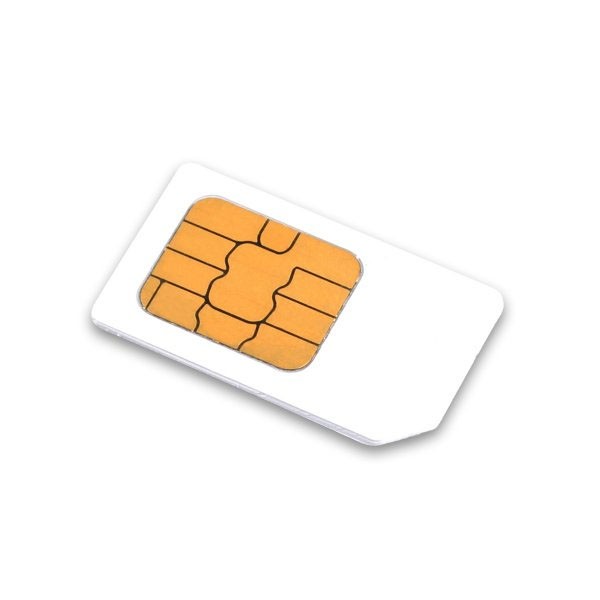
 With the GSM mobile phones came the SIM-card (Subscriber Identity Module) 1991 turning a subscription into a tangible thing that could be removed, put into another phone and stolen. Users could bring their GSM identity to another phone without involving the operator which is very convenient. By removing the payment relationship from the subscription and adding possibilities for pre-payment a brand new and very popular type of mobile service was invented. Adding some memory available for the user made it possible to bring data, typically phone numbers, along with the SIM card to another phone.
In the early days of mobile M2M operators sent single SIM cards in envelopes which added an administrative issue to the already complicated task of deploying M2M solutions. Today we have a range of solutions to deal with SIM cards for M2M deployments. Making SIMs smaller is important in the handset market and in some specific cases we can leverage this development also in the M2M market, but most often the size doesn’t matter. With iPhone4 came the micro-SIM and next in line is nano-SIM measuring approximately 12 by 9 millimeters, 30% smaller than the micro-SIM. The thickness of the nano-SIM is reduced about 15%. The standardization of the nano-SIM is expected to be implemented through ETSI by the end of the year and the first nano-SIM phones will probably hit the market 2013. This will help phone vendors create thinner devices and free up room for additional memory and larger batteries but unless we are dealing with really small devices, this will probably not be important for the M2M market.
A much more interesting development for the M2M market is the over-the-air (OTA) SIM update, accepted by GSMA earlier this year. This will enable device manufacturers to sell devices with SIM cards included from factory and provision the subscription afterwards in a secure fashion. Apple, Google and others have been pushing in this direction for obvious reasons but some mobile operators were quite negative to the idea. Now it seems like the M2M players are making this happen first. Industry expert Northstream predicted that the SIM cards will disappear in the cloud maybe already this year. In the M2M market this would make life much easier for vendors of things with embedded M2M connectivity. The M2M connectivity could be built in at manufacturing, associated with a specific operator at the local resellers and expensive field maintenance could be avoided as well. The OTA SIM will bring a lot of transparency to the mobile industry removing practical and financial barriers thus making life easier for everyone involved.
Leave a Comment » | M2M, Networks | Tagged: B3CC, Internet of Things, M2M, Machine-to-Machine, micro-SIM, nano-SIM, Northstream, SIM | Permalink
Posted by magnusmelander
January 31, 2012
“I would say that 2G is not going away anytime soon, but if you are concidering new M2M installations today I would definetly recommend going with 3G compatible devices and to use 2G/3G compatible SIM cards. There is no guarantee of a maintained functionality in 2G networks looking ten years down the road (a normal life span for many M2M installations), and 2G CAPEX and OPEX will decline with all operators. Even if you take a slightly higher investment initially using a 3G device you will avoid the risk of having to exchange both SIM card and modem during the life span of your installation. Besides, prices on 3G modules are dropping and are rapidly approaching similar price levels as 2G units. This is of course dependent on the life span of you M2M installation and the amount of data you need to transfer. From an operator point of view, I am curious of which industry will first make use of 4G networks and M2M to rapidly transfer streaming video for specific surveillance tasks or other data intensive applications.”
Martin Svensson, M2M Product Manager, Tele2
1 Comment | M2M, Networks | Tagged: 2G, 3G, 4G, B3CC, CSD, Internet of Things, IoT, M2M, Machine-to-Machine, Tele2 | Permalink
Posted by magnusmelander
January 29, 2012
 Today some 95% of the mobile M2M connections are 2G. It is absolutely natural since the functionality and capacity needed for most of today’s applications is fulfilled in 2G and the modules are substantially cheaper. An off the shelf 2G SIM card would cost around $3-4 per month plus $0,5-2/MB data transmitted (in Sweden) and CSD, GPRS and SMS is enough for most M2M applications today. But there are dark clouds in the horizon! We don’t know how far away or how fast they come forward, but they are definitely there. Let’s try look at what these clouds contain.
A typical M2M deployment would count on terminals to be in service more than five years, often 10 or even 15 years. That’s long time! It is about 20 years since the GSM services came to market, and betting on the same networks to still be there with great coverage and good service might be something to consider carefully. A customer service person at my previous mobile operator in Stockholm told me: “sorry but we don’t invest in the 2G network anymore”. One of my companies, Possio, help mobile operators to move analog devices from the fixed network, PSTN, to mobile networks using primarily circuit switched connections in 2G (CSD). They experience operators, one by one, deciding not to introduce any new CSD based services in their network. They keep the existing ones, but obviously not for ever. I believe CSD will not disappear over night but this is worth looking into when making the bets
The connect part of M2M is the least interesting and rewarding. It is the compute part that makes the difference. IP is today, by all means, the dominating communication platform across all industries. The IP development environment is solid and rich, application support endless and skill is really everywhere, from developers to support people. An M2M bet today should in most cases be built on IP and one should really try understand if performance in 2G GPRS/EDGE will be enough for making all wanted computing during the life cycle. It is easy to foul yourself when it comes to performance and capacity. My first business trip with IBM went to Copenhagen 1983 where serious old men unanimously stated that with this capacity nothing is stopping us any longer. This was an ISDN conference.
The end-of-life problem is always something to take into account. Module manufacturers normally bring to market new pin compatible modules for their most popular models. But one day they will issue an end-of-life notice and then it is last order date and finally the spot market to rely on before it is over. In other words, when a market decrease it’s a chicken race between the module vendors. They not only want to understand how fast the market disappears (remember they have good numbers to watch) but they also want to ensure the best moment to bring their customers forward on a new platform and not lose them to a competitor.
The cost of modules for 2G or 3G differs a lot. As of today a 3G module would be roughly double the price of a 2G module and the difference could be $25-30. That is a lot especially if you need many. But it is important to look at the entire cost envelope, both capex and opex, over time. The cost of the actual deployment is normally high since it takes human beings to prepare the installation, to ensure other people involved are available, to get and verify permission for entrance and finally to go on site. Each installation is obviously different depending on industry, security levels, distances, type of application, etc but it can easily take a couple of hours per terminal which would translate into hundreds of dollars. One of my companies is active in retail environments where they often experience a lot of problems especially with access permission and coordination with other people needed (electricians, operator staff, alarm staff, etc). This is why we need to get it right first time – we can’t afford to go back – and why the installations will have to be operational for many years. When planning an M2M solution this might well be the most important aspect of the business case and the biggest risk for failure.
I believe this question – should I stay or should I go – is very important for all of us in the M2M business. There are no generic answers to the question about going 2G or 3G but it seems inevitable that sooner or later 3G will be the primary network why focus and investments thus quality and coverage in 2G networks will erode. How fast this happens is of course also depending on geography. In order to put more light on this important question I will ask a couple of knowledgeable individuals from within the industry about their views and post them here.
1 Comment | M2M, Networks | Tagged: 2G, 3G, B3CC, B3IT, CSD, Internet of Things, IoT, isdn, M2M, Machine-to-Machine, modules, networks, Possio, PSTN | Permalink
Posted by magnusmelander
 The mighty mobile industry is a major force behind M2M today. They have what it takes to connect things, they need to find growth beyond the six billion active SIM cards today and they are promoting the concept of M2M aggressively. But at the same time it is quite obvious that a lot of things will be connected without SIM card. We already have a lot of connected devices in the PSTN network, many electricity meters are connected using PLC or other wireless network technologies than the mobile networks and wireless technologies like W-Fi, Bluetooth, ZigBee and RFID are already used in many applications. Different technologies have their strengths and weaknesses, new ones are coming to market while old ones are fading away. But the concepts of wide area and local area networks remain. Generally speaking it takes technologies optimized for LAN or WAN to build cost and capacity efficient networks. Sometimes even a shorter range network structure is needed like a Personal Area Network.I believe the mobile networks will be used for some connected devices, especially moving things or if one want to avoid dealing with Firewalls. But more so as the preferred WAN solution for things connected to a local area network solution. I have come across estimates that one out of ten connected devices will have a SIM card and I think that could be a reasonable estimate. If Ericsson’s “50 Billion connected devices by 2020” would be reality, 5 Billion of them would have a SIM card. That is a lot more SIM cards than the 108 Million mobile M2M SIM cards that Berg Insight estimate are active today world-wide. But what about the other 45 Billion connected devices? How will they be connected and managed and how will relevant data generated by these devices become easily available for application developers and integrators?






 connectcompute