 The next big thing is here even if it is hard to see. It’s Internet again, this time with the real world added to people and organisations already in place. That process is often called Internet of Things – IoT where the “T” refers to the physical world. And this time the impact on society, organisations and people will be even bigger than what Internet had last time since the real world most often is missing from the processes we try to digitalise today. The stock exchanges went through its digital transformation years ago since documents traded was digitalised, brokers on the floor was replaced by systems and money flows freely in cyber space. The remaining connection to the real world includes the companies themselves and some individuals still trading as well as the distance between the computers with the trading systems and the robot trader agents.
We started digitalise in the fifties but it is only when a process is fully digital the benefits appear. And most processes touch the real world why IoT is required to complete most of the digital transformation. When a process is digital, end to end, we can harvest, but more importantly we can add turbo functionality like artificial intelligence, robotics and computer vision to them and make many times better gains in speed, cost, efficiency and quality. The impact of that can easily be a drastic change in an entire industry (like when selling books left the book store era) and will for sure eliminate a lot of white and blue-collar jobs.
We are just in the beginning of this fundamental change of rules and games which probably will go on for the next 20 years or so. And who the winners will be on the other side is hard to tell but I believe there are some things that will characterise the good candidates:
Established organisations who want to master the digital transformation well has to start their journey immediately and rapidly get beyond strategies, plans, innovation managers, Powerpoint and Excel. Among the first things I suggest needs to be in place are very strong support from executive management, activities to inspire, engage and include staff, rapid prototyping capabilities in place and establishment of new relationships with a host of new companies and people who each master something that might be of great importance onwards.
It is already difficult for companies to master their own domains these days and with challenges coming from everywhere, a much wider view is required. And even more challenging: the golden rule of “asking the customers” – the outside-in approach – becomes obsolete when technology provides completely new opportunities. Like when internet came last time we’re now entering yet another era where inside-out is the name of the game.


 Posted by magnusmelander
  Autonomous cars have been a hot topic for a couple of years now. It is indeed a very interesting and complex technical challenge connected to potential resolution of very serious problems and innovative use cases. But it is also about
 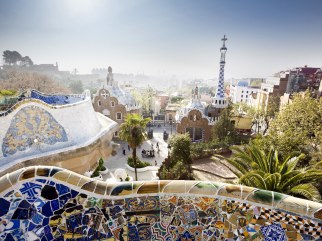 Most cities have jumped on the Smart City train and it is considered an important and good thing to do by virtually everyone. But it is unclear who drives that train, where it is going and when it will arrive. I prefer talking about Great Cities since that is something we all understand, can argue about and contribute to. A Great City to me is a safe, sustainable and efficient city where people are healthy and happy. A place I would like to live in, work in and visit. It takes systematic and continuous innovation to become and stay a Great City, and systematic innovation requires infrastructure and scalable platforms to be in place.
 Digitalisation is frequently used as the name of the game today. But digitalisation, i.e. conversation from analog to digital representation of information, started some 60 years ago and has been going on ever since. When a process is fully digitalised, from end to end, the process will be much more efficient than before. But most processes today are only partially digitalised which is like building a bridge and leve some meters here and there. Let’s take the example of a smart electricity meter, where the collection of usage data is digitalised and hopefully the receiving systems at the energy company. But then the processed details often are put on paper and sent to the customer who hopefully pays in a digital fashion or god forbid calls customer service.
 connectcompute